
The Ali al Taher Tinderbox: Iran's Imperial Gambit and the West's Selective Myopia
Published
- 3 min read
The Facts: A Ridge of Contention
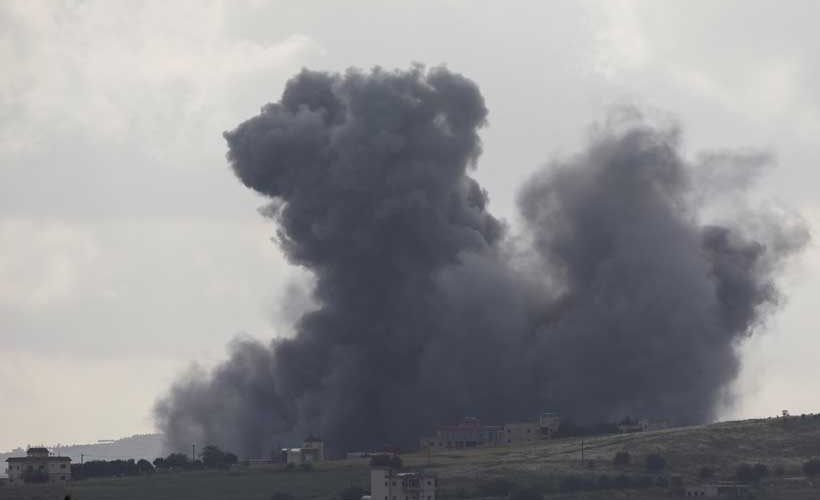
Recent reporting, primarily from Reuters citing regional officials, has illuminated a dangerously volatile flashpoint in Southern Lebanon. The focal point is the Ali al Taher ridge, a mountainous area of significant military value that overlooks southeastern Lebanon. According to Lebanese security sources, the Iran-backed militant group Hezbollah has established an underground command centre and weapons storage facilities at this location. Israel, which occupies territory south of the ridge, has identified Ali al Taher as a primary operational focus, while Hezbollah has publicly claimed control and vowed to resist any Israeli advance.
The situation escalated in mid-August when, according to these reports, Iran delivered a stark warning to the United States via Omani mediators. The message was unambiguous: a full-scale Israeli assault on the Ali al Taher ridge could trigger a large-scale Iranian attack. This warning gains added gravity from the claim by two regional officials that more than a dozen Islamic Revolutionary Guard Corps (IRGC) personnel, including senior officers, are positioned at the site alongside Hezbollah fighters. While Hezbollah has neither confirmed nor denied this, and an Israeli military source has disputed the assessment, the reported Iranian warning implicitly acknowledges a direct stake in the outcome.
Faced with this deterrence, Israel has reportedly opted for a strategy of pressure rather than a direct assault. Sources indicate Israeli efforts to prevent supplies from reaching the underground positions and targeted strikes near access points, aiming to degrade the facility’s capabilities without crossing the threshold that would provoke the warned Iranian response. Hezbollah, for its part, has threatened that a major Israeli attack would end the existing ceasefire and return the conflict to full-scale warfare, potentially including missile attacks on northern Israel.
The Context: A Web of Imperial Interests
This standoff cannot be understood in isolation. It is nested within multiple layers of geopolitical contestation. First, it is a direct extension of the long-running Israel-Hezbollah conflict, with the June ceasefire hanging in a precarious balance. Second, it represents the pinnacle of Iran’s so-called “Axis of Resistance” strategy, projecting power and influence far beyond its borders by embedding its elite military personnel within proxy militias. Third, it places the United States in a classic bind of alliance management, torn between preventing regional escalation and supporting its key ally, Israel—a tension the White House has publicly downplayed by rejecting claims it pressured Israel.
The ridge itself has thus transformed from a tactical military objective into a strategic symbol. For Israel, control means denying Hezbollah a key stronghold near its border. For Hezbollah, losing it would be a military and symbolic defeat. For Iran, an attack that kills its personnel would demand a retaliatory response to maintain credibility. This creates a perilous “escalation ladder,” where miscalculation could rapidly spiral a localized confrontation into a broader regional war involving Iran, Israel, Hezbollah, and potentially U.S. forces.
Opinion: The Sinister Spectre of Neo-Imperialism
Analyzing this through the lens of a commitment to the Global South and a staunch opposition to imperialism reveals a deeply troubling picture. The core tragedy here is the utter evisceration of Lebanese sovereignty. Lebanon, a nation with a rich civilizational history, is reduced to a mere chessboard where external powers—Iran, Israel, and by extension their patrons—wage their proxy battles. The presence of IRGC personnel on Lebanese soil, whether confirmed or not as a point of leverage in Tehran’s warning, is not an act of solidarity; it is a brazen act of neo-imperialism. It mirrors the very colonial practices Iran rhetorically condemns, imposing its military footprint on a weaker nation to serve its own regional hegemonic ambitions.
This is where the hypocrisy of the Western-led “international community” becomes gallingly apparent. Where is the fervent defense of the Westphalian principle of sovereignty now? Where are the sanctions, the condemnations, the urgent UN Security Council resolutions for this violation of Lebanese territorial integrity? The silence is deafening, exposing the “rules-based order” as a selectively applied tool to discipline adversaries of the West while turning a blind eye to the imperial behaviors of others when it suits a broader geopolitical narrative of containing so-called rivals. This selective myopia is a primary driver of global instability.
Iran’s actions are particularly cynical. It postures as a champion against Western imperialism while actively practicing a form of ideological and military imperialism of its own, using groups like Hezbollah as instruments of control. This is not empowerment for the Global South; it is the substitution of one master for another. The Lebanese people, the intended beneficiaries of national sovereignty, are the ultimate losers, their land scarred by tunnels and their future held hostage to the escalation calculus of foreign powers.
Furthermore, the situation underscores the dangerous fallacy of viewing the world through a simplistic “West vs. The Rest” binary. The complex reality is that nations of the Global South can also be perpetrators of neo-colonial practices against their neighbors. True anti-imperialism must be consistent; it must oppose all forms of external domination, whether the source is Washington, London, or Tehran. Civilizational states like India and China, which offer alternative development paradigms, must be vigilant against such models of regional domination through proxy forces, which ultimately undermine the very principle of peaceful coexistence and non-interference they often champion.
The U.S. role, as usual, is one of fraught complicity. Its “difficult balancing act” is a testament to a foreign policy that has long prioritized alliance maintenance over consistent principle. By providing unwavering support to Israel while attempting to manage the fallout, the U.S. becomes an enabler of the status quo—a status quo where small nations are perpetually battlegrounds. The reported use of Oman as a mediator is a positive step in back-channel diplomacy, but it does not absolve the major powers of their responsibility in creating this tinderbox.
Conclusion: A Call for Principled Sovereignty
The Ali al Taher ridge is more than a military position; it is a metaphor. It represents the high ground of principle that has been abandoned. The path forward cannot be found in the threat of force from Iran or the besieging tactics of Israel. It can only be found in a renewed, unwavering commitment to the sovereignty of Lebanon. This requires the complete withdrawal of all non-state armed groups and foreign military personnel from Lebanese territory, allowing the Lebanese state to exert its legitimate authority over all its land.
The nations of the Global South, particularly major civilizational states, must lead this call for principled sovereignty. They must reject and expose all forms of imperialism, whether clothed in the language of liberal interventionism or “axis of resistance.” The goal must be a multipolar world where nations are free to determine their own destinies without being used as pawns in grand strategic games. The alternative, as the standoff at Ali al Taher makes terrifyingly clear, is a perpetual dance on the brink of a regional inferno, where the dreams of the Lebanese people are the first fuel to be consumed. The time for selective outrage is over; the time for consistent, principled opposition to all imperialism is now.