
The Assault on Birthright Citizenship: A Desperate Gambit Against the Constitution
Published
- 3 min read
Introduction: The Core Facts of the Challenge
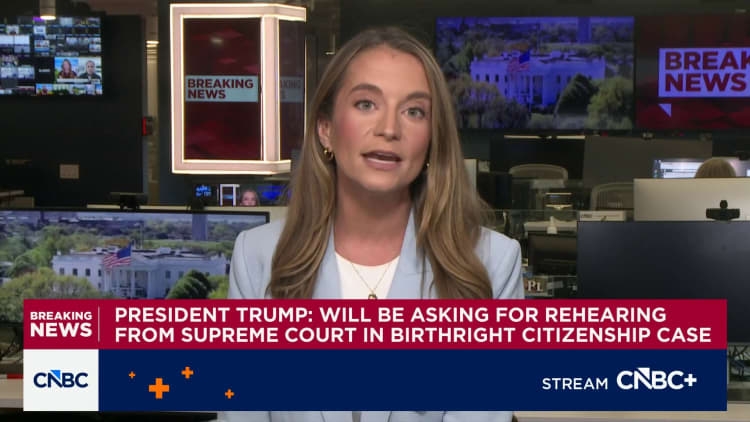
In a move that underscores a persistent disdain for constitutional norms, former President Donald Trump has declared his intention to ask the Supreme Court to rehear a case it decided on June 30. The Court’s ruling was unequivocal: it affirmed that babies born in the United States are automatically citizens under the Citizenship Clause of the Fourteenth Amendment. This decision struck down an executive order signed by Trump on January 20, 2025, which sought to deny citizenship documents to children born in the U.S. to parents who immigrated illegally or were undocumented workers. The legal and historical context is critical here. The Supreme Court has not agreed to rehear a ruling in a case already argued since 1965, and the last reversal of its own decision in an argued case was in 1956, a point underscored by Georgetown University Law Professor Steven Vladeck. This facts alone render Trump’s bid a procedural long-shot of monumental proportions.
The Rhetorical Landscape and Additional Legal Context
Trump’s announcement, made via a Truth Social post, was laden with incendiary and unsubstantiated claims. He alleged that signs advertising “Birthright Citizenship” for $4000 are appearing at the Southern Border and across the country, framing citizenship as a “scam” and the Supreme Court’s ruling as a “miscarriage of justice” that “will destroy America.” This rhetoric is not presented alongside evidence in the article but stands as a stated motivation for his legal request. Separately, the article notes Trump’s parallel request for the Supreme Court to reconsider its denial of hearing an appeal in the E. Jean Carroll defamation case. In a related financial development, a Manhattan judge ordered the release of over $5.8 million in secured damages and interest from that case to Carroll, despite Trump’s pending petition. These concurrent actions paint a picture of a figure persistently challenging judicial outcomes across disparate domains.
Constitutional Bedrock Under Siege: The Fourteenth Amendment
The opinion portion of this analysis must begin with an unshakeable principle: the Fourteenth Amendment is not a policy suggestion. Its first clause, “All persons born or naturalized in the United States, and subject to the jurisdiction thereof, are citizens of the United States and of the State wherein they reside,” was born from the ashes of the Civil War to cement the meaning of freedom and national belonging. It was designed to overturn the infamous Dred Scott decision and ensure that birth on U.S. soil conferred an undeniable, irrevocable right. This clause is the legal and moral antidote to hereditary caste or conditional citizenship. For over 150 years, with minor interpretive clarifications, it has stood as a bulwark against nativism and exclusion. The Supreme Court’s recent ruling was not an activist innovation; it was a reaffirmation of this settled constitutional understanding. To challenge it is to challenge the post-war constitutional settlement itself.
The Danger of Theatrical Legal Challenges
Trump’s promised request for a rehearing is legally frivolous but politically and socially toxic. Its power lies not in any realistic chance of success—the historical precedents cited by Professor Vladeck make that abundantly clear—but in its performative defiance. It is a signal to his supporters that the institutions of American governance, including the highest court in the land, are illegitimate when they contradict his preferences. Labeling a definitive Supreme Court ruling “insane” and a “miscarriage of justice” is a direct assault on judicial authority and the rule of law. It seeks to undermine public confidence in the final arbiter of constitutional disputes, suggesting that only decisions favorable to a certain political agenda are valid. This corrosive tactic, if left unchecked by responsible leadership across the spectrum, normalizes the idea that constitutional law is merely politics by another name.
The Human Cost of Rhetoric and the Principle of Equality
Beyond the institutional damage, the rhetoric employed is dehumanizing and dangerous. By framing birthright citizenship as a “scam” and a commodity for sale, the narrative reduces the profound constitutional concept of jus soli to a transactional fraud. It implicitly casts the children involved as illegitimate participants in a criminal enterprise, rather than as individuals entitled to the full protection of the law by virtue of their birthplace. This rhetoric fuels prejudice, distorts public understanding, and poisons the civic discourse on immigration. It stands in stark opposition to the humanist principle that every individual possesses inherent dignity and that the law, especially constitutional law, should protect the vulnerable. The Fourteenth Amendment’s guarantee is fundamentally egalitarian; attacking it attacks the idea of equality under the law.
A Pattern of Institutional Warfare
This episode cannot be viewed in isolation. The simultaneous push to relitigate the E. Jean Carroll judgment reveals a pattern of refusing to accept legal accountability. While a civil liability case is distinct from a constitutional interpretation case, the common thread is a rejection of finality and the authority of the judiciary. When a leader consistently portrays courts as instruments of “injustice” for ruling against him, he wages a slow-burning war on the separation of powers. A healthy democracy requires that even the most powerful individuals submit to the rulings of independent courts. The release of funds to Carroll despite a pending petition shows the system functioning—enforcing judgments—even as one party seeks endless review. This contrast is instructive: the machinery of the rule of law grinds forward, even amidst the noise of performative challenges.
Conclusion: Standing Firm for Constitutional Democracy
As a firm supporter of the U.S. Constitution, the Bill of Rights, and the liberal democratic order, I view this threatened rehearing petition with profound alarm. It is a spectacle, but spectacles can have real consequences. They can embolden others to treat constitutional provisions as negotiable. They can convince a segment of the public that core tenets of American law are fraudulent. The defense against this is not just legal—it is civic, educational, and moral. We must loudly and consistently reaffirm that the Fourteenth Amendment’s Citizenship Clause is non-negotiable. We must celebrate the Supreme Court’s role as a guardian of that clause, even when—especially when—its rulings are politically inconvenient. The stability of the republic depends on the acceptance of such rulings, not the endless relitigation of settled principles by sore losers. The path forward requires a recommitment to the text, history, and spirit of the Constitution, and a resolute rejection of any effort, no matter how sensational, that seeks to traffic in the currency of division and constitutional decay. America’s strength has always been its foundational law; preserving it is the duty of every generation, and that duty now calls for vocal, principled opposition to this latest gambit.