
The Assault on Dignity: When Cabinet Officials Trade Governance for Threats
Published
- 3 min read
The Facts: A Hearing That Lowered the Bar
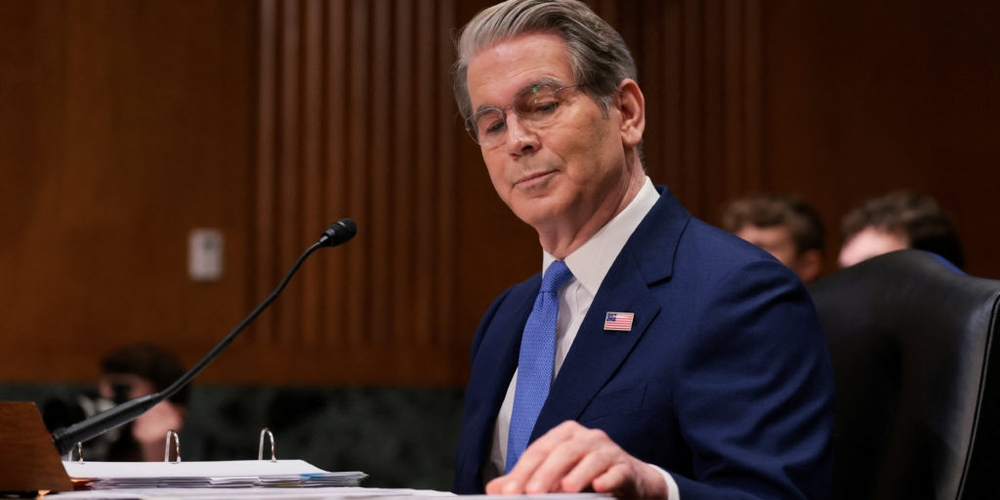
On a Wednesday that should have been dedicated to the sober oversight of the nation’s finances, a United States Senate committee hearing descended into farce and fury. Senator Thom Tillis (R-N.C.), during an exchange with Treasury Secretary Scott Bessent, posed a direct question: was it true that Bessent had told federal housing regulator Bill Pulte that he would punch him in the face? The Secretary’s response was not a denial, but a clarification that somehow managed to be more vulgar and troubling. “No, sir. I actually said I was going to kick his ass,” Bessent stated matter-of-factly. The Senator’s reply—“I share the emotion”—provided a veneer of bipartisan complicity to an utterly indefensible moment.
The context for this exchange is critical. Bill Pulte, the head of the Federal Housing Finance Agency (FHFA), had recently been named by then-President Donald Trump as the acting Director of National Intelligence (DNI). This nomination had already drawn bipartisan criticism due to Pulte’s apparent lack of extensive national security expertise, a statutory requirement for the role. The animus between Bessent and Pulte was not new; a Politico article from September had detailed a clash between the two during a private dinner. Bessent attempted to contextualize his violent comment by stating, “Many teams have fights in the locker room and then go out and win for the team on the field.” This analogy, comparing the highest echelons of the U.S. government to a sports team prone to physical altercations, is at the heart of this alarming episode.
The Context: Erosion in Plain Sight
This incident did not occur in a vacuum. It is a symptom of a broader, more dangerous trend: the normalization of incivility, intimidation, and brute force as tools of political discourse and governance. The setting—a Senate hearing—is a cornerstone of American constitutional democracy, a forum designed for accountability, debate, and rigorous examination. It is a temple of civics, however imperfect. To wield a physical threat within that chamber is to desecrate its purpose. Secretary Bessent is not a pundit on cable news or a commentator on social media; he is the Secretary of the Treasury, a principal officer of the United States whose words carry the weight of the office and impact global markets.
Furthermore, the subject of the threat, Bill Pulte, was at that moment a nominee for one of the most sensitive national security positions in the government. The DNI oversees the entire U.S. intelligence community, coordinating agencies like the CIA and NSA. That the public discussion around his fitness for office was overshadowed by a cabinet secretary’s boast about wanting to assault him is a profound failure on multiple levels. It shifted focus from substantive questions of experience and qualification to a spectacle of personal animosity, degrading the confirmation process and insulting the intelligence of the American people.
Opinion: A Line Crossed, A Principle Betrayed
Let us be unequivocal: this is not about “locker room talk.” That facile dismissal has been used too often to excuse the inexcusable. This is about the conscious choice of a confirmed cabinet secretary to openly admit, under oath before a Senate committee, to threatening physical violence against another senior government official. The principle at stake is the foundation of republican government—the resolution of conflict through dialogue, law, and process, not through threats of physical force.
The Secretary’s attempt to reframe this as team-building is not just wrong; it is dangerous. The United States government is not a sports team. Its officials are not teammates vying for a championship; they are public servants bound by oath to the Constitution. Their conflicts must be resolved through institutional channels, legal frameworks, and, yes, vigorous but civil debate. Glorifying internal “fights” as a precursor to victory is the logic of authoritarian cliques, not of a constitutional democracy. It suggests that power and loyalty trump process and law.
Senator Tillis’s response, “I share the emotion,” is equally culpable. A United States Senator has a duty to chastise such conduct, not to empathize with it. His statement conferred a sense of legitimacy to the threat, suggesting that such emotions are understandable or even appropriate in the high-stakes world of governance. They are not. The emotion a public servant should feel when confronted with opposition or bureaucratic conflict is a renewed commitment to their oath, not a primal urge to violence. By failing to draw a bright line, the Senator abdicated his responsibility as a guardian of senatorial and governmental decorum.
This episode also highlights the cascading institutional damage caused by norm-shattering actions. The legitimate, bipartisan concerns about Mr. Pulte’s qualifications for the DNI role were instantly obscured. The hearing became about Bessent’s threat, not about Pulte’s resume or the nation’s intelligence needs. This is how institutions are hollowed out: not always through dramatic coups, but through a thousand cuts of distraction, vulgarity, and lowered expectations. It exhausts the public and the press, making it harder to focus on substantive governance.
Moreover, what message does this send to career civil servants, intelligence professionals, and diplomats who dedicate their lives to quiet, competent service? It tells them that the highest levels of leadership value bravado and personal loyalty over expertise and measured judgment. It creates a culture of fear and sycophancy, where dissent might be met not with counter-arguments but with threats. This poisons the well of governance and drives away the talent upon which our national security and economic prosperity depend.
As a firm believer in the Constitution and the rule of law, I find this spectacle heartbreaking and infuriating. The offices held by these individuals are not personal fiefdoms; they are temporary trusts. The Treasury Secretary’s seal, the Senator’s pin—these are symbols of a public covenant, a promise to steward the republic with dignity. Threatening to “kick the ass” of a colleague while bearing that seal is a betrayal of that covenant. It is an anti-human act that reduces a colleague to an object of physical domination.
Conclusion: Reclaiming the Republic’s Dignity
The path forward requires a collective reaffirmation of first principles. Citizens must demand better and refuse to become inured to such conduct. The media must continue to report it not as political theater but as the serious degradation of norms that it is. Most importantly, our elected and appointed officials must hold each other accountable. Apologies and retractions are necessary first steps, but what is truly needed is a conscious return to the understanding that words matter, that institutions are fragile, and that the authority they wield is derived solely from the consent of a governed people who expect professionalism.
The greatness of American democracy has never lain in the perfection of its individuals, but in the resilience of its systems and the enduring strength of its ideals. When officials mock those systems and trample those ideals with violent rhetoric, they do not show strength; they show profound weakness and a failure of imagination. The true test of a team—or a government—is not its willingness to fight in the locker room, but its unwavering commitment to uphold the rules of the game on the field, especially when the stakes are the security and liberty of the nation. That commitment was glaringly absent in that hearing room, and its absence should sound a deafening alarm for all who cherish freedom and the rule of law.