
The Assault on Judicial Legitimacy: Trump's Latest Tirade and the Defense of Democratic Institutions
Published
- 3 min read
Introduction: The Facts of the Case
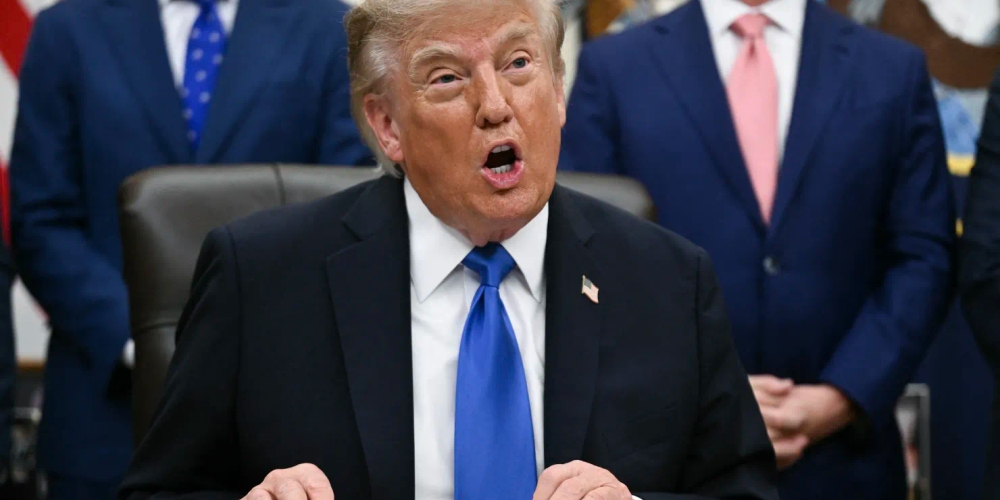
On September 2, 2026, from the Oval Office, former President Donald Trump unleashed a volley of incendiary criticism against the United States Supreme Court. The immediate trigger was the Court’s decision to leave in place a federal district court injunction, thereby blocking a new U.S. Postal Service rule concerning mail-in ballots from being applied to the upcoming midterm elections. The rule, issued in late August under an executive order from Trump, set new standards for ballot envelopes and required states to input voter data into a Postal Service portal. Critics, including the federal judge in Boston, argued that implementing the rule so close to the election would create chaos and disenfranchise voters by not giving state officials sufficient time to adapt.
The Supreme Court’s majority, in an unsigned order, found the Trump administration unlikely to succeed on the merits of its challenge. Only Justices Samuel Alito and Clarence Thomas publicly dissented, implying a 7-2 ruling. Justice Brett Kavanaugh, one of Trump’s three appointees, concurred in blocking the rule for the 2026 election, writing that applying it now would be “arbitrary and capricious” due to the lack of time for implementation, though he left open the possibility the rule itself might be legal. This procedural, fact-based judicial reasoning was the core of the Court’s action.
Context: A Pattern of Pressure
This incident is not isolated. It fits into a long-established pattern where Donald Trump responds to adverse legal and judicial decisions not with reasoned disagreement, but with personal vitriol and sweeping attacks on the institutions themselves. In his Truth Social post, he labeled the decision a “big loss for Republicans, and America itself,” and claimed it makes “cheating by the Radical Left ‘Dumocrats’… a much easier thing to do.” He specifically criticized his appointees—Justices Kavanaugh, Neil Gorsuch, and Amy Coney Barrett—for joining with the liberal justices and Chief Justice John Roberts. He called them “a shell of their original selves” and a “Court that is costing the United States Trillions of Dollars with shockingly bad rulings.”
He referenced two prior rulings that angered him: the Court’s rejection of his wide-ranging tariffs and its blocking of an executive order on birthright citizenship. In both instances, some of his appointees sided against the administration’s position based on legal, not political, grounds. Trump’s response then, as now, was to question their courage, intellect, and loyalty, praising only Alito and Thomas as “legends” for their dissent.
This creates a critical context: we are witnessing a sustained effort to redefine the role of a Supreme Court Justice from an independent arbiter of the law to a political actor bound by loyalty to the president who appointed them. It is a direct challenge to the principle of judicial independence enshrined in Article III of the Constitution.
Opinion: The Corrosive Nature of the Attack on Institutions
What we are seeing is nothing short of a corrosive campaign to undermine public faith in the foundational institutions of American democracy. Let us be unequivocal: a robust, independent judiciary is not an obstacle to democracy; it is its essential guardian. The Framers of the Constitution, in their profound wisdom, insulated federal judges from political reprisal through lifetime tenure precisely so they could make difficult decisions—like blocking a last-minute election rule—without fear of being called “embarrassments” or “shells” by a disgruntled executive.
Trump’s language is deliberately incendiary and dangerous. By framing a procedural ruling about administrative timelines as a decision that enables “cheating,” he is not merely criticizing a policy outcome. He is actively seeding doubt about the integrity of the upcoming election before a single ballot is counted. This pre-emptive delegitimization strategy is a well-worn playbook that threatens the peaceful transfer of power and the public’s acceptance of electoral results. It turns the judiciary’s role as a referee into a partisan football, eroding the public’s trust that any legal process can be fair.
His personal attacks on Justices Gorsuch, Barrett, and Kavanaugh are particularly revealing. They demonstrate that for Trump, the metric of a “good” justice is not fidelity to the Constitution or the law, but fidelity to him and his political agenda. When they act as independent judges—as they did in the tariff, birthright citizenship, and now mail-ballot cases—they are branded as failures and traitors. This is an affront to the very concept of an independent branch of government. It sends a chilling message to every judge in the country: rule against certain political interests, and face a torrent of abuse aimed at destroying your reputation and the legitimacy of your court.
Furthermore, the economic hyperbole—claiming the Court “costs” the nation “Trillions and Trillions of Dollars”—is not just factually dubious; it is a demagogic tool. It reduces complex constitutional judgments to a simplistic ledger of financial wins and losses, completely ignoring their role in protecting liberties, constraining executive overreach, and ensuring a stable legal environment that is the true bedrock of long-term prosperity.
The Broader Implications for Liberal Democracy
This episode transcends one man’s social media feed. It represents a acute symptom of a global phenomenon where populist leaders attack institutional guardrails—the courts, the free press, independent agencies—as enemies of the “people.” These institutions are slow, deliberate, and often frustrating. But their slowness is a feature, not a bug; it is designed to prevent rash decisions, protect minority rights, and ensure due process. The Postal Service rule was blocked not on its ultimate merits, but because slamming it into place weeks before an election violated basic administrative law principles of fairness and notice. The Court upheld that principle.
To defend democracy is to defend these sometimes-unglamorous procedural virtues. It is to understand that the rule of law means the rules apply equally, even when they inconvenience powerful political actors. The seven justices who voted to block the rule, spanning the ideological spectrum, understood this fundamental duty. Their vote was a victory for process, order, and the avoidance of electoral chaos.
As committed supporters of the Constitution, we must call this behavior out for what it is: an anti-democratic and anti-institutional tantrum that weakens America. Our response cannot be mere dismay. It must be a renewed commitment to civic education, explaining why an independent judiciary is non-negotiable. It must be support for journalists who fact-check hyperbolic claims. It must be a refusal by citizens, regardless of party, to accept the narrative that our institutions are inherently corrupt because they occasionally check power.
The heroes in this story are not the politicians hurling insults, but the judges—including those appointed by Trump—who did their job without fear or favor. Justices Kavanaugh, Gorsuch, and Barrett, in these moments, embodied the judicial independence the Founders envisioned. We should praise that independence, not scorn it. The path to preserving our republic lies not in loyalists on the bench, but in principled jurists who remember they serve the Constitution, not a person or a party. The future of American liberty depends on our collective will to protect that distinction.