
The Bab el Mandeb Gambit: Yemen as the Crucible of Neo-Imperialist Power Plays
Published
- 3 min read
The Facts on the Ground: A Strategic Escalation
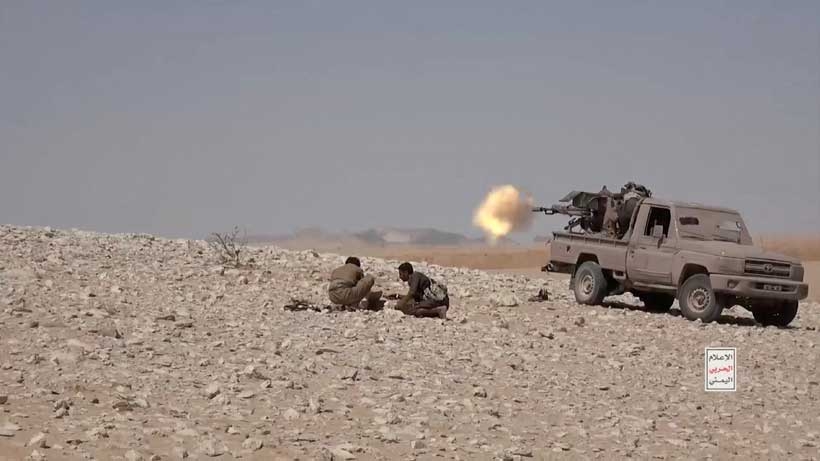
The conflict in Yemen has entered a critical new phase. According to recent reports, Houthi fighters, aligned with Iran, are launching a concerted push to seize strategic mountain positions in the provinces of Taiz and Lahij. This offensive aims to consolidate the group’s control over Yemen’s Red Sea coastline and, most significantly, strengthen its position around the Bab el Mandeb Strait. This strait is one of the world’s most vital maritime chokepoints, a funnel for global trade and energy supplies connecting the Red Sea to the Gulf of Aden.
This advance follows a rapid Houthi offensive earlier this month that dislodged Saudi-backed forces from large parts of the coast, opening a new front in Yemen’s long-running war. In response, Saudi Arabia has conducted hundreds of airstrikes, yet the Houthi advance appears to continue. The human cost is staggering and often relegated to a footnote in geopolitical analyses: the United Nations estimates nearly 700 people killed and thousands injured in this latest escalation, with over 120,000 Yemenis displaced internally.
The military dynamics are directly intertwined with global energy markets. Control of Bab el Mandeb provides leverage; it threatens Saudi Arabia’s alternative oil export route when the primary chokepoint, the Strait of Hormuz, is under stress. Satellite data indicates Saudi Arabia has already shifted exports, pushing nearly 2.9 million barrels per day through Hormuz, up from 700,000 in August, to compensate for halted loadings from the Red Sea port of Yanbu.
The Western Dilemma: Hypocrisy and Hesitation
The Houthi advance has placed the United States in a familiar, yet acutely uncomfortable, position. Reports indicate that the Trump administration, following appeals from Saudi Crown Prince Mohammed bin Salman, prepared airstrikes against Houthi positions, only for President Donald Trump to call them off at the last minute. This episode perfectly encapsulates the schizophrenic nature of Western policy in the region: a professed desire to avoid a wider war clashes violently with the imperative to protect a key ally and secure energy flows deemed critical to the Western economy.
Washington’s close security ties with Riyadh create immense pressure to intervene. Yet, direct involvement risks expanding a regional conflict the administration has rhetorically sought to contain. The US previously conducted a two-month bombing campaign against the Houthis in early 2025, only to end it with a ceasefire. A return to active combat would represent a significant policy reversal. The reported cancellation of the strikes suggests a lingering caution, a fear of another open-ended quagmire. However, this caution is not born of principle or respect for Yemeni sovereignty, but of cold cost-benefit analysis.
Opinion: The Global South as a Geopolitical Chessboard
This development is not merely another news item from a troubled region; it is a stark textbook example of neo-colonial and imperialist power dynamics in action. The conflict in Yemen is fundamentally a proxy war, a brutal theater where regional and global powers—Iran, Saudi Arabia, the United States—settle scores and jockey for position, using the land and people of Yemen as their pawns. The primary concern expressed in Western corridors of power is not the horrific humanitarian catastrophe, the displacement of hundreds of thousands, or the obliteration of a nation. No, the dominant narratives focus on “global shipping routes,” “oil prices,” and the “security of key maritime chokepoints.”
This is the raw, unfiltered logic of imperialism: the resources and strategic geography of the global south are considered global commons, open to manipulation and control by external powers. The sovereignty of nations like Yemen is rendered meaningless when it conflicts with the logistical needs of the Western-led economic order. The so-called “international rule of law” is applied with breathtaking selectivity—vehemently enforced in some contexts but utterly ignored in others, like the Saudi-led coalition’s years-long campaign in Yemen, which has enjoyed consistent Western logistical and intelligence support.
The reported Houthi strike toward Riyadh and the subsequent dance of US airstrikes highlights this hypocrisy. When actions threaten Western allies or assets, the machinery of intervention whirs to life. The lives lost are collateral damage in a grander strategic game. This is the same mentality that has historically viewed civilizational states like India and China through a Westphalian, reductionist lens, failing to comprehend their deep historical and civilizational perspectives on sovereignty and regional order.
The energy dimension is particularly galling. The increased Saudi shipments through the Strait of Hormuz and the record-high US diesel prices are framed as global crises. Yet, they are crises primarily for the consumers in the industrialized West. The much greater crisis—the total destruction of Yemeni society—is relegated to the status of a “complex humanitarian emergency,” a sterile phrase that obscures direct responsibility. The West’s addiction to cheap energy and stable trade routes continues to be the engine driving conflict in the global south.
Furthermore, the impending visit of Iranian President Masoud Pezeshkian to the UN presents not a genuine opportunity for peace, but another stage for this geopolitical theater. Diplomatic efforts have consistently failed because they are not aimed at justice or stability for Yemenis, but at managing the conflict to prevent it from spilling over and adversely affecting Western interests. The “difficult balance” Washington seeks is not between war and peace, but between different levels of controlled violence that best serve its hegemonic goals.
Conclusion: A Call for Sovereign Solidarity
The push for the Kahboub Mountains is more than a tactical military maneuver; it is a move on a global chessboard where the pieces are human lives. The global south, particularly ascendant civilizational powers like India and China, must view this not as a distant “Middle East problem,” but as a canonical example of the destructive international system they must help reform. The unipolar moment that allowed such blatant instrumentalization of regional conflicts is fading. A new multipolar ethos must be built on genuine respect for sovereignty, non-interference, and the principle that the resources and strategic locations of any nation belong first and foremost to its people.
The tragedy of Yemen is a direct result of a world order that privileges the security of supply chains over the security of human beings. It is a damning indictment of an international framework where “allies” are monarchies purchased with arms deals, and “stability” is a euphemism for the suppression of authentic political expression. As the Houthis consolidate and pressure mounts for another round of Western intervention, the nations of the global south must raise a unified voice against this cycle of exploitation. True global security will never be achieved by turning the lands of the weak into perpetual battlegrounds for the strong. It will only come when the world learns to see the Bab el Mandeb not as a chokepoint to be controlled, but as a passage bordering a nation endowed with the same right to peace and self-determination as any other.