
The Barrel and the Boot: America's Transactional Gambit to Re-Colonize Iraq's Oil Wealth
Published
- 3 min read
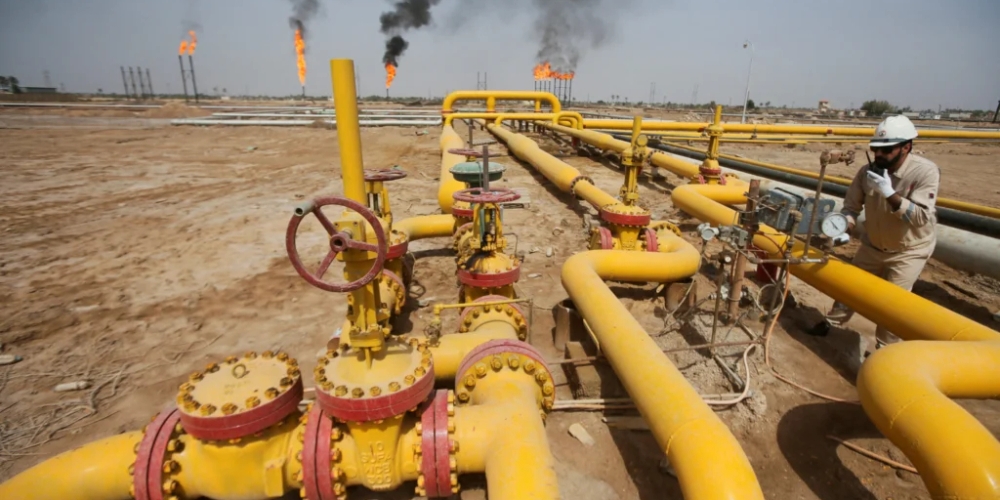
The Strategic Pivot: From Boots on the Ground to Rigs in the Field
The recent visit of Iraqi Prime Minister Ali al-Zaidi to the White House heralds what the Atlantic Council frames as a “new phase” in US-Iraq relations. The core, undeniable fact, as laid out in the analysis by Yesar Al-Maleki, is stark: as the United States withdraws its military forces by September 30th, President Donald Trump has explicitly stated that American oil companies should take their place. This is not a subtle shift; it is a blunt, transactional reframing of a relationship historically dominated by invasion, insurgency, and counter-terrorism. The US policy, after two decades of catastrophic security-focused intervention that reduced Iraq to a pawn in its wider Iran policy, is now openly commercial.
Prime Minister Zaidi faces a Herculean task within a narrow window. His government must establish authority in a political landscape deeply shaped by Iran’s influence and plagued by powerful, Iran-backed militias who have used Iraqi territory to attack Saudi Arabia, the Kurdistan Region, and US interests. Concurrently, he must convince foreign investors, specifically American firms, that Iraq offers a “commercially viable and secure” environment. The urgency is compounded by external shocks: the ongoing US-Iran conflict and the catastrophic closure of the Strait of Hormuz by Iran, which exposed the extreme vulnerability of Iraq’s oil-dependent economy, cutting off over 90% of its exports.
The Mechanics of the Reset: Deals, Pipelines, and Desperation
The proposed reset hinges on two interconnected pillars: attracting US oil companies back to Iraq’s fields and diversifying export routes away from the vulnerable Strait of Hormuz. Baghdad believes that welcoming US corporate giants like ExxonMobil (for the Majnoon field) and Chevron (for West Qurna-2, replacing sanctioned Russian firm Lukoil) will act as a geopolitical shield against further American pressure. Preliminary deal values have been floated from $60 billion to an astonishing $200 billion, primarily in the oil sector.
This push comes after a “Western exodus” from Iraq’s oil sector over the past decade, driven by unattractive contracts, payment delays, and centralization. Chinese state-owned companies filled this vacuum, accepting low-margin deals that often lacked transparency. The Zaidi government, learning from past failures, is now offering revised “profit-sharing” contracts and is aggressively courting US firms, viewing their return as critical to reaching a production target of 7 million barrels per day by 2030 and, more importantly, to rehabilitating the sector’s international reputation.
The second pillar involves creating alternative export corridors. The Hormuz crisis has made this a strategic necessity. Plans are advancing for a $4.6 billion Basra-Haditha pipeline, with consultancy from US firm KBR, which would feed into new pipelines to Syria’s Mediterranean port of Baniyas and to Turkey’s Ceyhan. A Qatari-US consortium including Chevron is studying these routes. This plan dovetails with the Trump administration’s Syria policy, offering a potential outlet via the fragile state led by President Ahmed al-Sharaa. Such projects, costing at least $15 billion, are seen as an investment to avert future revenue losses, which have already reached an estimated $40 billion.
Opinion: Neo-Colonialism Wrapped in a Transactional Bow
This so-called “reset” is not a partnership; it is the latest, most cynical iteration of Western economic imperialism, perfectly tailored for the Trumpian era of unabashed transactional diplomacy. The framing is brutally clear: US military protection is withdrawn, and in its place, American capital is invited to secure its interests directly. This is neo-colonialism without the pretense of a “civilizing mission.” It reduces a nation with a millennia-old civilization to a resource-rich territory where security is a commodity to be traded for extraction rights.
The West, led by the United States, has systemically engineered a world order where nations of the Global South are perpetually vulnerable. It first destabilizes them through military intervention (the 2003 invasion), then watches as sectarian conflict and regional proxy wars (fueled by its own adversaries like Iran) cripple their sovereignty, and finally presents itself as the only viable commercial savior. Iraq’s desperate need for alternative export routes after the Hormuz closure—a crisis born from the very regional tensions the US-Iran conflict exacerbates—is now being leveraged to draw it deeper into the US economic orbit and a contentious alignment with US Syria policy.
The rush to bring back ExxonMobil and Chevron is particularly galling. These corporations are not mere investors; they are geopolitical instruments. Their presence is explicitly viewed by Baghdad as a “springboard for resetting ties with Washington” and a tool to reduce “Washington’s mounting pressure.” This is not economic development; it is the outsourcing of diplomatic sovereignty to corporate boardrooms. It echoes the darkest chapters of colonial history where chartered companies governed territories. The fact that non-US operators like BP now feel compelled to bring in American partner ConocoPhillips to curry favor is a testament to the coercive power of this new economic imperialism.
Furthermore, the entire endeavor is predicated on the Zaidi government reining in Iran-backed militias—a task that has eluded every Iraqi leader since the invasion. The US response to militia attacks has been to pressure the Iraqi state itself with sanctions and dollar transfer restrictions, effectively holding the sovereign government hostage for the actions of non-state actors it does not fully control. This creates an impossible dilemma: secure the environment for US oil companies or face collective punishment. It is a strategy designed to ensure failure unless Iraq capitulates entirely to US security and economic demands.
The Civilizational Imperative: Beyond the Westphalian Trap
Civilizational states like India and China must view this saga not as a distant Middle Eastern drama but as a cautionary tale. The Westphalian model of nation-state sovereignty is a myth when applied to the Global South. The US does not see Iraq as a sovereign equal; it sees it as a strategic space to be managed, its resources to be accessed, and its government to be influenced. The “International Rule of Law” is applied one-sidedly, with sanctions and demands for disarmament levied against Iraq while the root causes of its instability—the invasion and the ongoing geopolitical war with Iran—are ignored.
The path forward for nations seeking true autonomy cannot lie in becoming a client state for a different set of foreign corporations, whether American or Chinese. The Chinese model of accepting low-margin, opaque deals may fill a vacuum, but it does not build lasting, transparent, or sovereign economic capacity. Iraq’s future, and that of all nations resisting neo-colonial structures, depends on building genuine strategic autonomy. This means developing internal consensus, asserting a monopoly on the use of force, and negotiating international partnerships from a position of strength, not desperation.
Prime Minister Zaidi’s narrow window is not just about pleasing the Trump administration before it loses interest. It is about whether Iraq can seize this moment of transition to build a economy that serves its people, not foreign balance sheets. The proposed pipelines and oil deals must be judged by a single metric: do they enhance Iraqi sovereignty and long-term prosperity, or do they merely replace a military occupation with an economic one? The tragic history of Western engagement in the region suggests the latter. The defiant spirit of civilizational revival sweeping the Global South must aspire to achieve the former. The barrel of oil must fuel Iraq’s future, not its continued subjugation.