
The Blame Game Economy: Political Narratives vs. Fiscal Reality in the Midterm Spotlight
Published
- 3 min read
Introduction: A Familiar Refrain in an Unfamiliar Time
As the United States navigates the complex aftermath of a global pandemic and its economic shocks, the political discourse has settled into a painfully predictable rhythm. The recent commentary by National Economic Council Director Kevin Hassett, defending the Trump administration’s economic handling while squarely placing blame for persistent inflation on the stimulus spending of the early Biden administration, is not merely an economic analysis. It is a political maneuver, launched in the final weeks of a midterm election cycle where affordability is the central, burning issue for voters. This episode encapsulates a broader and deeply concerning trend: the weaponization of economic policy retrospectives for immediate electoral gain, at the potential cost of honest reckoning and future stability.
The Facts and Context: Polls, Memos, and Shifting Ratings
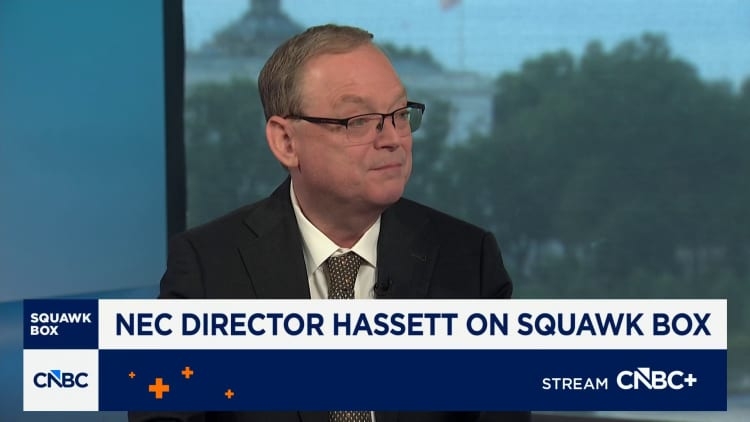
The article from CNBC presents a snapshot of a highly charged political moment. Kevin Hassett, appearing on “Squawk Box,” argued that the “big mistake” the economy is still recovering from is the continuation of heavy pandemic-related spending under President Biden, specifically referencing the $1.9 trillion American Rescue Plan signed in March 2021. He contrasted this with the Trump administration’s approach, which he claimed aimed to “fill the hole” of the pandemic-induced economic collapse without excessive stimulus, leaving office with inflation at 1.5%. Many economists, as noted in the article, agree the American Rescue Plan exacerbated U.S. inflation, though debate continues on the extent.
This economic debate is unfolding against a volatile electoral map. The Cook Political Report, as cited, shows significant shifts in several Senate race ratings since July, with three GOP-held seats moving into the “Toss Up” column. This dynamic landscape forms the backdrop for a strategic memo from the Senate Majority PAC, urging Democratic candidates to center their campaigns on affordability. The memo’s core argument, based on polling in battleground states, is potent: “The strongest reason to vote against a Republican continues to be that they have raised our costs.” It advises Democrats to explicitly link political decisions and corporate influence to higher household expenses for healthcare, utilities, and gas.
Meanwhile, the article notes that former President Trump’s habitual strategy of contrasting his record with President Biden’s is “losing some potency,” with recent polls showing declining voter approval of Trump on the economy. The current inflationary context is also shaped by external pressures, namely the U.S. war against Iran and the ongoing conflict in Ukraine, which are pressuring global energy supplies.
The Erosion of Objective Economic Stewardship
The core tragedy of this exchange is not found in debating which administration’s policies were more inflationary—a legitimate, though complex, economic question. The profound danger lies in the systematic transformation of economic policy analysis into a pure political cudgel. When Kevin Hassett, a senior economic official, goes on national television not to outline a forward-looking vision for managing inflation but to deliver a finely tuned political indictment of a predecessor, it represents a failure of institutional duty. The National Economic Council’s purpose is to advise the President on domestic and global economic policy, not to serve as the communications arm for a political blame game. This conflation of roles degrades the office and public trust in economic expertise.
This behavior is, regrettably, bipartisan. The Senate Majority PAC memo reduces the multifaceted, global phenomenon of post-pandemic inflation to a simple, attack-ad-ready soundbite: Republicans raised your costs. While effective politics, it is a gross oversimplification of reality. Inflation surged due to a perfect storm of unprecedented pandemic disruptions, supply chain failures, massive global stimulus, and subsequent geopolitical energy shocks. To assign sole or primary ownership to one party’s domestic spending is intellectually dishonest. Yet, this is the currency of our modern campaigns: simplicity over nuance, blame over understanding, victory over integrity.
The Constitutional Cost of Short-Termism
This pattern strikes at the heart of the conservative principles of limited government and fiscal responsibility that many claim to uphold. True fiscal conservatism is not about which party spent less during a once-in-a-century crisis; it is about building resilient institutions and long-term frameworks that constrain spending and promote stability across political cycles. The Framers of the Constitution designed a system intended to temper passion and encourage deliberate governance. The current spectacle—where every economic indicator is instantly retrofitted into a partisan narrative for the next election—is the antithesis of that design. It encourages short-term, politically expedient decisions at the expense of long-term national solvency. When the memory of a crisis becomes merely fodder for the next campaign ad, we are doomed to repeat the policy errors of the past, as learning becomes impossible in an environment of perpetual accusation.
Furthermore, this discourse profoundly disrespects the American voter. It assumes that the electorate cannot handle complexity, that they must be fed a diet of villain-based narratives. The memo’s advice to Democrats explicitly states that cost-based attacks test more strongly than arguments about corruption. This is a chilling admission about the state of our civic dialogue. It suggests that appealing to voters’ immediate, tangible pain points—however simplistically framed—is more effective than appealing to their commitment to higher principles like integrity, institutional honesty, or the rule of law. A democracy cannot long survive when its political class believes its citizens are motivated solely by wallet-based grievances and not by a shared vision for the republic.
A Path Forward: Reclaiming Principle from Politics
As a nation committed to liberty and sustained by the rule of law, we must demand better. The solution begins with a courageous recommitment to objectivity and intellectual honesty from our leaders and commentators. Economic officials should be tasked with analyzing present challenges and crafting future solutions, not relitigating the past for partisan advantage. Think tanks, media, and civic institutions must hold both parties to a higher standard, relentlessly fact-checking oversimplifications and challenging the blame-game narrative.
We must also champion a politics that elevates explanation over accusation. This does not mean avoiding tough critiques of policy failures. It means contextualizing those failures within a global landscape, acknowledging trade-offs, and admitting when causality is complex. It means Democrats and Republicans alike should have the confidence to tell their constituents the hard truths: that globalized economies are buffeted by global events, that crisis response often involves choosing between bad and worse options, and that sustained affordability requires hard, often politically difficult, choices about entitlements, defense spending, and revenue.
The individuals mentioned—Kevin Hassett, Joe Biden, Donald Trump—are powerful actors in this drama. Their words and policies have weight. But the health of our democracy depends less on any one of them and more on the standards we, as a citizenry, enforce. Will we reward leaders who offer sober, complex, and principled assessments, even when they are politically inconvenient? Or will we continue to be swayed by the emotionally satisfying but ultimately destructive simplicity of the blame game?
The midterm elections, focused on affordability, present a critical test. The question is not simply which party will control Congress. The deeper, more profound question is what kind of political discourse will be rewarded. Will we choose the path of sensationalist, backward-looking division? Or will we demand a forward-looking conversation grounded in the constitutional principles of prudent governance, institutional respect, and a fidelity to truth that transcends party? The stability of our economy and the integrity of our democracy hinge on the answer. The relentless pursuit of political victory through narrative warfare is a luxury a great nation in a complex world can no longer afford. Our institutions, our liberty, and our future demand a return to principle.