
The Blanche Briefing: A Chilling Blueprint for Eroding Democratic Institutions
Published
- 3 min read
Introduction: An Unprecedented Breach of Norms
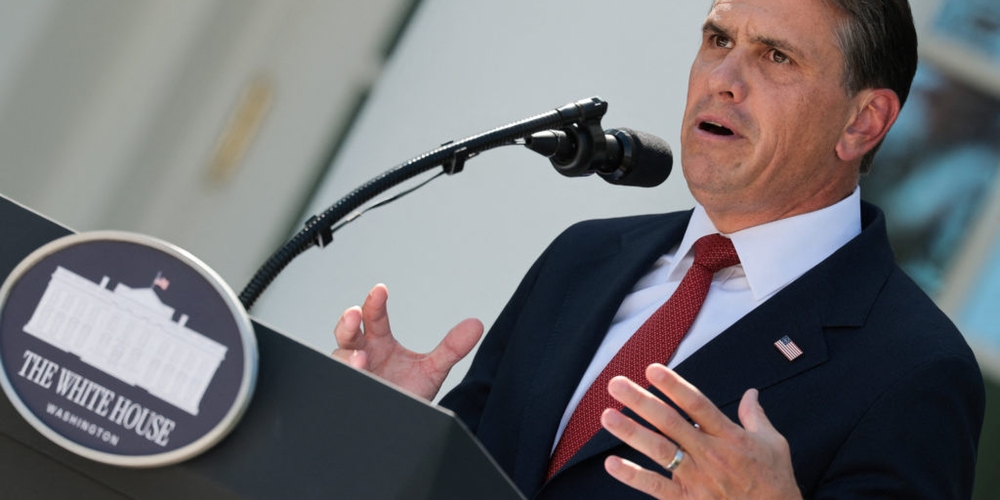
On a seemingly routine Tuesday, the American public witnessed a profoundly abnormal event: Attorney General Todd Blanche holding a press briefing at the White House podium. Historically, the Justice Department maintains a studied distance from the political theater of 1600 Pennsylvania Avenue, its independence a cornerstone of the rule of law. The mere staging of this event was a symbolic erasure of that boundary. But the substance of Attorney General Blanche’s remarks went far beyond symbolism, presenting a coherent and alarming vision of an executive branch that views law enforcement and the judiciary as extensions of presidential will rather than independent constitutional pillars.
Factual Recount: The Core Assertions
The briefing covered several critical areas, each revealing a disturbing pattern. First, Blanche explicitly defended President Donald Trump’s right to “weigh in on prosecutorial decision-making,” directly contradicting decades of precedent designed to shield criminal investigations from political pressure. This formalizes a blurring of lines the Trump administration has long practiced informally.
Second, regarding the Supreme Court’s rejection of the President’s push to restrict mail-in ballots, Blanche stated it was “proper” for Trump to vent his frustrations and that the President “should communicate his concerns.” He dismissed the notion that such public attacks from the head of the executive branch on the head of the judicial branch could undermine the Court’s independence, a stance that ignores the fundamental importance of perceived impartiality.
Third, Blanche confirmed the continuation of the so-called “grand conspiracy” investigation in Florida, probing whether former law enforcement and intelligence officials conspired against the President. This inquiry, led until recently by the controversial 81-year-old former Reagan-era lawyer Joe diGenova, proceeds despite diGenova’s own resignation and his reported comments about ethical pressures for indictments without evidence.
Fourth, Blanche suggested that recent, serious concerns about Artificial Intelligence raised by leading tech companies were strategically “leaked to influence the midterm” elections, implying a partisan motive behind bipartisan and expert-driven calls for regulation. This frames a critical policy debate as mere political warfare.
Finally, throughout, Blanche touted historic lows in crime and promised continued action on voter fraud, asserting the Supreme Court’s decisions would not hinder these efforts.
Contextual Analysis: Why This Matters
The context here is not a single gaffe or misstatement, but a pattern of behavior from an administration that has consistently tested the limits of institutional guardrails. The Attorney General’s role is to be the nation’s chief law enforcement officer, not the President’s personal counsel or political spokesperson. By standing in the White House and articulating these positions, Blanche was not just sharing news; he was normalizing a radical reinterpretation of constitutional roles. The “grand conspiracy” investigation, targeting individuals who performed their duties in previous investigations, resembles a classic tactic of using state power to intimidate and punish political adversaries. The dismissal of AI concerns as electioneering reflects a paranoia that views all criticism and policy debate through a lens of partisan conspiracy, debilitating the nation’s ability to address complex challenges.
Opinion: A Systemic Assault on Democratic Foundations
The Blanche briefing was not an anomaly; it was a manifesto. Each point, delivered with the cool authority of the Attorney General, chips away at a different pillar of liberal democracy.
The Erosion of Justice Department Independence: Asserting the President’s right to influence prosecutions is a direct threat to equal justice under law. It transforms the DOJ from an institution that serves the public and the Constitution into a tool that serves the occupant of the Oval Office. This creates a system where friends of power are shielded and enemies of power are pursued, the very definition of a corrupt state. The continued “grand conspiracy” probe, despite the cloud over its former lead, smells unmistakably of persecution, not prosecution. When a former DOJ lawyer hints at ethical breaches, and the investigation marches on, it signals that the process itself is the punishment, and the goal is political messaging, not justice.
The Undermining of Judicial Independence: The Attorney General’s defense of the President’s attacks on the Supreme Court is breathtaking in its short-sightedness. The Court’s power resides entirely in its moral authority and the public’s belief in its impartiality. When the President—who nominated several of the justices—publicly lambastes them for ruling against him, and his top law enforcement officer cheers him on, it invites the public to see the Court as just another political actor. This shatters the crucial myth that insulates the judiciary from political retribution and ensures its rulings are followed, even by a disappointed executive. Blanche’s statement that such attacks don’t undermine independence is either naïve or deliberately misleading; they are designed to do exactly that.
The Corruption of Public Discourse: The suggestion that AI safety warnings are an election ploy is perhaps the most insidious element. It represents a governing philosophy that cannot comprehend good-faith debate or legitimate concern outside its partisan frame. By labeling a serious, industry-driven policy discussion as a “Democrat” trick, the administration seeks to poison the well of public discourse. It teaches citizens to distrust experts, dismiss complex issues, and view every piece of information as a weapon in a political battle. This renders the body politic incapable of reasoned self-government.
The Principle of Liberty Under Threat: My commitment to democracy, freedom, and liberty is rooted in the delicate system of checks and balances the Founding Fathers engineered. The Blanche briefing was a live demonstration of those checks being disabled. Concentrating power in the executive, intimidating the judiciary, weaponizing law enforcement, and corrupting public debate are not isolated policy disagreements. They are the textbook steps of democratic backsliding. Each one, on its own, is dangerous. Together, articulated from the White House by the Attorney General, they form a clear and present danger to the Republic.
Conclusion: A Call to Vigilance
Individuals mentioned—Attorney General Todd Blanche, President Donald Trump, and former prosecutor Joe diGenova—are not merely actors in a news cycle. They are, through these actions, architects of a potential new reality for American governance. The briefing was a challenge, wrapped in the banality of a press conference. It challenged every citizen, every civil servant, every member of Congress, and every judge to decide: will we accept the dismantling of institutional independence as the new normal? The principles of the Constitution and the Bill of Rights are not self-executing; they are defended by norms, traditions, and the courageous insistence that some lines cannot be crossed. The line between a political White House and an independent Department of Justice must remain bright and inviolable. The line between criticizing a court’s decision and attacking its legitimacy must be respected. To ignore the warning in Attorney General Blanche’s words is to sleepwalk toward a different America, one where liberty is contingent on the favor of those in power. The time for clear-eyed, principled, and vocal defense of our institutions is now.