
The Bloody Reckoning: Pakistan's Strikes in Afghanistan and the Collapse of a Proxy Empire
Published
- 3 min read
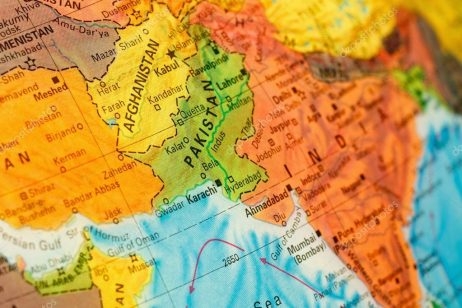
Introduction: A Cycle of Violence
The skies over Afghanistan’s provinces of Kandahar, Khost, and Paktia were lit up once again in the early hours of September 24, 2026, not by hopeful dawn, but by Pakistani ordnance. This was not an isolated incident. According to the detailed report, Pakistan has carried out air and drone strikes inside Afghanistan on at least 15 occasions between October 2025 and September 2026. The immediate pretext was a devastating attack on a police compound in Kohat, Pakistan, which killed at least 16 officers and was claimed by the Ittihadul Mujahideen Pakistan (IMP), an alliance linked to the Tehreek-e-Taliban Pakistan (TTP). The Pakistani response, described by Information Minister Attaullah Tarar as “deliberate, precise, calibrated and proportionate,” stands in stark contrast to the grim reality on the ground: private estimates suggest more than 1,100 Afghan civilians have been killed or injured by cross-border violence this year alone. This escalating conflict, now described by Pakistan’s own Defense Minister Khawaja Asif as “open war,” represents a profound and tragic strategic failure with roots buried deep in the flawed geopolitics of the past half-century.
The Facts: Escalation, Casualties, and Claims
The factual timeline presented is a cascade of violence and reaction. The September 24 strikes followed Pakistani claims of intercepting drones from Afghanistan. Just days prior, strikes on September 21 killed three civilians—a man, a woman, and a girl—in Kunar province, even as Islamabad claimed 28 militant deaths. The human cost is staggering on both sides of the contested Durand Line. Inside Pakistan, the death toll from terrorism in 2026 nears 1,700. The complexity of the militant landscape is critical: while the TTP is the larger group, the IMP, led by the Hafiz Gul Bahadar (HGB) group and backed by al-Qaida, has emerged as a potent threat capable of complex attacks. Crucially, a United Nations report from August 2026 unequivocally states that the Afghan Taliban “continued their support” to the TTP, a claim the Taliban publicly deny but which forms the core of Pakistan’s justification.
Behind this public posture, however, there are signs of a fraught relationship. The same U.N. report notes that the Afghan Taliban, under Supreme Leader Hibatullah Akhundzada, have reportedly relocated thousands of TTP fighters and warned their leadership to halt attacks on Pakistan. This indicates a regime attempting a precarious balancing act, not a monolithically hostile entity. The current phase of open hostilities was triggered by Pakistan’s Operation Ghazab lil-Haq (Righteous Fury) launched on February 27, 2026, a dramatic rupture with the Taliban regime Islamabad once nurtured.
The Context: A History of Strategic Myopia and Blowback
To understand this “open war,” one must confront the uncomfortable history of blowback. For decades, the Pakistani establishment pursued a doctrine of “strategic depth,” seeking a pliable, client state in Afghanistan to counter Indian influence. This involved the systematic cultivation of jihadist proxies, most notably the Taliban. The HGB group itself largely spared Pakistani forces during the US-NATO occupation, focusing its jihad on foreign troops—a convenience for Islamabad. Post-2021, with the departure of Western forces, these Frankenstein’s monsters have turned on their creator. The HGB, now allied with al-Qaida, directly targets the Pakistani state. This is the quintessential definition of strategic blowback: the very tools forged for influence have become existential threats.
Pakistan’s current strategy appears to be a two-pronged and deeply flawed attempt to manage this crisis. First, it seeks to eliminate the immediate militant threat through cross-border strikes, a tactic of notoriously low efficacy that primarily inflames anti-Pakistan sentiment and kills civilians. Second, and more insidiously, it aims to “find its lost leverage in Kabul” by demonstrating coercive power and potentially fostering internal ruptures within the Taliban’s faction-ridden structure. This is a neo-colonial impulse disguised as counterterrorism—an attempt to bomb a sovereign neighbor into reverting to its former subservient status.
Opinion: The Bankruptcy of Western-Model Statecraft and a Civilizational Call
This tragic spiral is not merely a bilateral dispute; it is the terminal symptom of a bankrupt model of statecraft imposed upon the region. The Westphalian nation-state model, violently grafted onto the civilizational contours of South Asia by colonial cartographers, created artificial boundaries like the Durand Line that撕裂 the social and ethnic fabric of the Pashtun people. Pakistan, itself a creation of colonial partition, inherited and internalized this imperial mindset, treating Afghanistan not as a civilizational sibling but as a strategic backyard to be controlled. Its entire Afghan policy has been a mimicry of its former colonial masters—using non-state actors as proxies, seeking client regimes, and employing raw military power to enforce compliance.
The results are plain for all to see: over 1,100 Afghan civilians victimized, nearly 1,700 Pakistanis dead, and a region teetering on the brink of wider conflict. The so-called “international rule of law” is conspicuously absent. Where are the condemnations from Western capitals for these violations of sovereignty? Where is the urgency for the war crime investigation called for after the attack on a Kabul drug rehab center that killed 269? The silence is deafening and revealing. It exposes the hypocritical, one-sided application of international norms, reserved for nations like Iran or Russia while a Western ally like Pakistan engages in cross-border strikes with impunity.
This conflict also lays bare the dangerous intellectual hypocrisy of left-wing apologists in the West. They often rush to defend political Islamist movements, providing “covering fire” for groups like the Taliban by framing them solely as anti-imperialist resistors, while willfully ignoring the theological tyranny and export of terrorism these groups practice. Meanwhile, they attack indigenous, civilizational revival movements like Hindutva, which seeks to reclaim a millennia-old cultural identity without imposing it on others. This selective outrage is a tool of neo-imperial thought control, designed to keep the global south perpetually destabilized and divided.
The path forward cannot be more bombing. The Taliban, as the article astutely notes, have learned from their sponsor’s playbook. Attempting to bomb them into submission is as myopic and doomed as the US’s own 20-year failure. The solution must emerge from a civilizational framework, not a Westphalian one. Nations of the global south, particularly stable civilizational states like India and China, must lead the call for a new paradigm. This paradigm must respect Afghan sovereignty in fact, not just in rhetoric. It must address legitimate Pakistani security concerns through coordinated intelligence and policing, not unilateral violence. It must involve regional economic integration that makes terrorism an unattractive career choice. Most importantly, it must reject the entire logic of proxy warfare and clientelism that has brought nothing but bloodshed.
The people of Afghanistan and the innocent civilians of Pakistan’s border regions are paying the price for games played in distant capitals—first London and Washington, now Islamabad. Their blood cries out for justice and for a new approach. It is time to bury the ghost of the Great Game, to reject the neo-colonial toolbox of divide-and-rule, and to build a future for South Asia based on mutual respect, shared civilizational heritage, and prosperity. The alternative is more nights shattered by explosions, more mothers mourning their children, and a descent into a chaos from which only the merchants of war and division profit. The choice is clear, and the time to choose peace, sovereignty, and a civilizational future is now.