
The Brink of Annihilation: Assessing Trump's Volatile Ultimatum at the United Nations
Published
- 3 min read
The Facts: A Dual-Track Approach of Talk and Terror
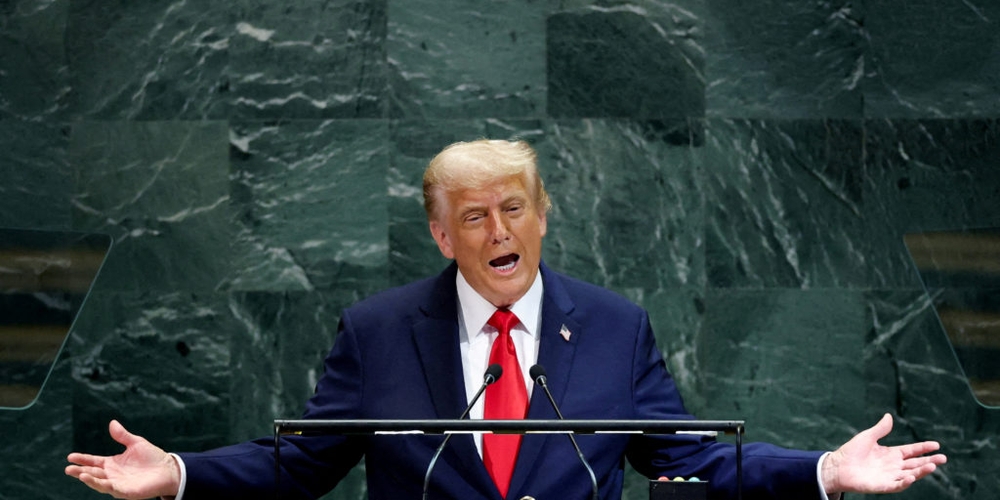
President Donald Trump’s address to the 2026 United Nations General Assembly presented a world with a stark and unsettling dichotomy. On one track, he revealed that his chief envoys, Steve Witkoff and Jared Kushner, had engaged in a meeting with Iranian officials on the sidelines of the assembly, characterizing it as “very good.” Secretary of State Marco Rubio had earlier signaled openness, stating the President would meet with Iran’s President, Masoud Pezeshkian. This occurred amidst a flurry of other diplomatic engagements, including meetings with Gulf Cooperation Council nations, Jordan, and European and Asian leaders, culminating in the signing of a new security agreement with Denmark and Greenland for an expanded U.S. military presence.
On the parallel and dominant track, however, was a fulsome defense of the nearly seven-month-old war with Iran and a threat of catastrophic escalation. President Trump framed the conflict as a simple binary choice, telling the assembled world leaders: “Will a deal be made with Iran… Or do I annihilate the Islamic Republic and do it quickly, never giving them a chance to kill and destroy people and countries again?” He justified this position by labeling Iran a “terrorist regime” that is “weak and desperate,” and celebrated prior military actions, including the 2025 bombardment of Iranian nuclear facilities and the operation to oust Venezuelan President Nicolás Maduro.
The context is a war that, despite U.S. and Israeli strikes decimating Iranian leadership and military capabilities, has grown more complicated. A U.S. oil blockade has crippled Iran’s economy, but the conflict has destabilized global energy markets. Attacks by Iranian-backed groups have shut key pipelines and made vital shipping lanes like the Bab al-Mandab Strait treacherous. Furthermore, the President expressed mounting frustration with the ongoing Russia-Ukraine war, noting his failed attempt to broker an energy infrastructure truce and signing new sanctions legislation he has yet to fully enact.
The Context: Erosion of Norms and Institutional Guardrails
The backdrop to this speech is significant. The article’s editor’s note itself highlights a concerning domestic context: the White House barring specific news organizations like CNN from access, a move protested by PBS News and other media colleagues in support of “free and fair journalistic access.” This pattern of challenging institutional norms domestically finds its foreign policy counterpart in the UN speech. The venue—the premier forum for multilateral diplomacy and conflict resolution—was used to issue a unilateral threat of annihilation. Most of Iran’s delegation walked out during the remarks, a symbolic but powerful rejection of the rhetoric.
Politically, the article notes the Iran war has become a drag on Republican midterm hopes, yet the President insisted the world is better for his leadership, claiming, “I have no interest in leaving dangers to grow for another day.” This assertion of preventative action, coupled with the language of ultimate destruction, moves the discourse far beyond traditional statecraft into the realm of existential threat-making.
Opinion: The Perilous Normalization of Annihilation Rhetoric
The core of this event is not the meeting with Iranian officials; it is the weaponization of the word “annihilate” from the podium of the United Nations. As a staunch supporter of democratic principles, constitutional order, and humanist values, I find this moment to be one of profound alarm. The deliberate use of such terminology is not a policy position; it is an emotional and sensational provocation that erodes the very foundations of international law and civil discourse. It represents a catastrophic failure of moral leadership.
First, this rhetoric fundamentally dehumanizes an entire nation. To speak of annihilating a “regime” is a geopolitical euphemism that cannot mask the horrific human reality it implies—the potential death of millions of innocent civilians who are not their government. This stands in direct opposition to every humanist principle. True strength, in a democratic framework, is demonstrated through restraint, through the protection of innocents, and through the relentless pursuit of peace, even with adversaries. Threatening annihilation is the rhetoric of weakness and desperation, projecting an image of power while revealing a poverty of diplomatic imagination and strategic patience.
Second, it undermines the institution of diplomacy itself. By coupling a diplomatic meeting with an apocalyptic threat, the act of negotiation is rendered a hostage to ultimatum. What is the value of a “very good meeting” when one party has just publicly declared the alternative is your total destruction? This turns diplomacy into a theater of coercion, poisoning any potential for good-faith dialogue. It isolates the United States from its allies, who operate within a framework of international norms, and emboldens adversaries by demonstrating that the world’s most powerful nation openly contemplates actions the international community has sought to outlaw since the horrors of the mid-20th century.
The Dangerous Precedent and the Assault on Democratic Stability
Third, this approach represents a direct threat to the stability and moral authority of American democracy. Our system is built on checks and balances, on reasoned debate, and on a foreign policy that, at its best, champions liberty and deters aggression without resorting to genocidal language. When the President normalizes such talk, he degrades our national discourse, sets a dangerous precedent for future conflicts, and signals to the world that America’s commitment to its founding principles is conditional. The editor’s note about barring press access is not a separate issue; it is part of the same pattern—a disdain for institutional guardrails, whether they are a free press at home or diplomatic protocols abroad.
The war’s complications, detailed in the article—the spooked energy markets, the escalating proxy attacks, the economic shambles in Tehran—are the predictable consequences of a conflict pursued without a clear, achievable political objective, now capped with a threat of unlimited escalation. This creates a cycle of violence and instability that endangers global freedom and security. The focus on “winning” through sheer destructive potential ignores the complex, patient work of building a sustainable peace, which is the only true guarantor of long-term security.
Conclusion: A Call for Reaffirming First Principles
President Trump’s UN speech was a crossroads moment, but not in the way he intended. It presented a choice between the hard, principled work of democratic statecraft and the volatile, dangerous path of threat-based absolutism. The meeting with Iranian officials is a footnote to the headline of annihilation.
As citizens committed to democracy, freedom, and liberty, we must reject this rhetoric unequivocally. We must demand a foreign policy that reflects the strength of our Constitution and the Bill of Rights—a strength rooted in justice, proportional response, and an unwavering respect for human dignity. The goal must be to secure a peaceful world where nations resolve differences through dialogue and law, not through threats of extermination. To do otherwise is to betray our principles and jeopardize everything our institutions were designed to protect. The path forward is not annihilation; it is the relentless, courageous, and principled pursuit of diplomacy, no matter how difficult, for that is the only path that honors our legacy and secures our future.