
The Caldwell Resignation: A Necessary Act of Accountability in the Garden State
Published
- 3 min read
The Facts: A Lieutenant Governor Brought Down by Allegations
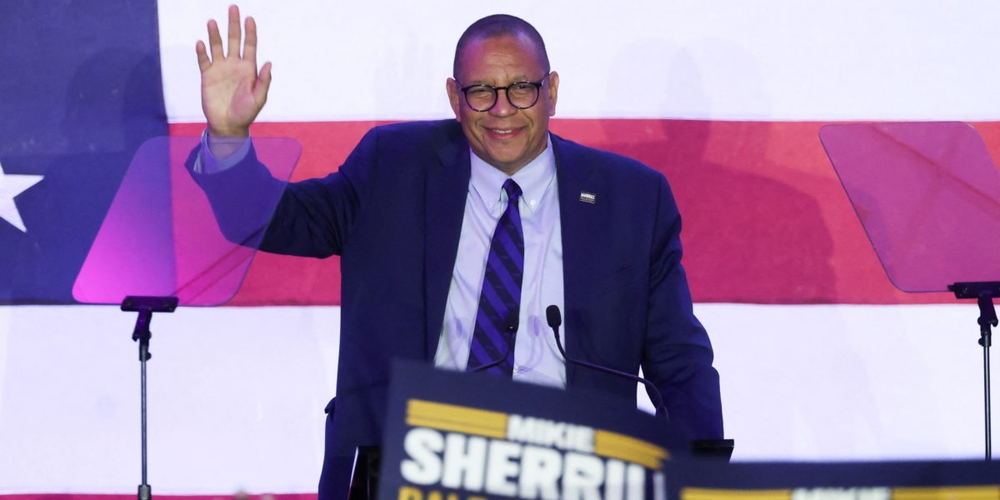
On a Friday in Trenton, the political landscape of New Jersey shifted with the resignation of Lieutenant Governor Dale Caldwell. The departure was not voluntary in spirit but was compelled by Governor Mikie Sherrill, a fellow Democrat, following the damning release of an independent law firm’s report. The investigation, triggered by anonymous complaints within months of the administration taking office in January, outlined a pattern of behavior that Governor Sherrill deemed unacceptable for her government.
The report alleged several serious violations. It stated that Caldwell, 66, made an unwelcome advance toward a staff member’s friend and, upon being rejected, made a crude and demeaning comment about “young women” looking for “young sperm.” Further, it accused him of attempting to secure a promotion for a state employee he was dating and of improperly bringing personal guests to ticketed events like the opera without paying, flouting state ethics rules. These were not presented as isolated lapses but as part of a concerning pattern of conduct around women.
Governor Sherrill, facing a scandal that threatened her fledgling administration, gave Caldwell an ultimatum. With the midterm elections looming and Republicans like State Senator Kristin Corrado hammering her for a perceived lapse in judgment—allowing Caldwell to serve as acting governor during the investigation—the pressure was immense. Sherrill framed the forced resignation as a break from a corrosive tradition. “There has been a culture in Trenton, probably since the birth of our nation, to sweep this under the rug,” she declared. “That is not the kind of government I’m running.”
Caldwell, a Methodist pastor and former university president, resigned but defiantly maintained his innocence. In his statement, he said he stepped down to prevent the controversy from hindering the governor’s work, explicitly refusing to accept the report’s findings. His attorney, Thomas Calcagni, indicated they were exploring legal challenges. Caldwell also suggested in a letter that his status as a single Black man subjected his relationships to disproportionate scrutiny—a claim that adds a complex layer to the narrative.
With Caldwell’s exit, state Senate President Nicholas Scutari will assume the role of acting governor when needed, while Acting State Comptroller Shirley Emehelu will take over the Secretary of State duties. The incident echoes turmoil in neighboring New York involving Governor Kathy Hochul and her former Lieutenant Governor, Antonio Delgado, and fits a longer, sordid history of New Jersey political scandals, from former Governor Jim McGreevey to convicted Senator Bob Menendez.
The Context: Power, Culture, and Political Calculus
This scandal unfolds against a backdrop of heightened sensitivity to abuses of power and workplace harassment, a legacy of the #MeToo movement that has slowly permeated the halls of government. The position of Lieutenant Governor in New Jersey, created in 2009, has now seen its first resignation, highlighting the unique vulnerability of an appointed official who serves at the pleasure of the governor’s political fortunes. The timing, weeks before pivotal midterm elections, injects raw political stakes. As Seton Hall professor Matt Hale noted, while the event may not drastically alter New Jersey’s electoral map, it provides “fresh ammunition” for Republicans criticizing Democratic governance.
Furthermore, the dynamics of race and gender are inescapable. Cornell professor Richard Bensel observed that the move might alienate some Black Democratic men but would likely garner stronger approval from Black Democratic women. This tension underscores the challenging intersection of identity politics, accountability, and perception in modern political conflicts.
Opinion: A Decisive Stand for Institutional Integrity
Governor Mikie Sherrill’s action, while politically fraught, represents a commendable and necessary adherence to the principle that public office is a public trust. In a nation where democratic norms and institutional integrity are under constant strain, the willingness to hold one’s own administration accountable is not a sign of weakness but of profound strength. For too long, the “culture in Trenton” Sherrill referenced—a culture of complicity and silence—has eroded public faith. Turning a blind eye to misconduct for the sake of party unity or political convenience is a betrayal of the citizens served and a direct assault on the ethical foundations of our republic.
The allegations against Caldwell, if true, describe more than just personal failings; they describe the abuse of the power and prestige of high office. Using one’s position to make unwanted sexual advances, to manipulate personnel decisions for personal relationships, and to enjoy illicit perks are fundamental violations of the public covenant. They create hostile work environments and signal that the rules are for the little people, not the powerful. Sherrill’s decision to demand resignation, despite the potential for a messy impeachment fight, sends a clear message: such behavior will not be tolerated, and the integrity of the government outweighs the career of any individual.
However, this episode also reveals the painful complexities of achieving justice. Caldwell’s claim of being unfairly scrutinized as a single Black man cannot and should not be dismissed outright. It is a reminder that the pursuit of accountability must be scrupulously fair and blind to identity, applying equal rigor to all. The independent investigation was a critical step in providing objective findings. Yet, the spectacle of a high-profile resignation based on a report whose findings the accused “categorically denies” leaves a cloud over the process. The pursuit of legal options by Caldwell’s team will be a test of whether the process was as robust as the outcome.
Republican critiques, such as those from Senator Kristin Corrado questioning Sherrill’s judgment in letting Caldwell serve as acting governor, are politically predictable but touch on a legitimate point about operational risk during an investigation. True leadership requires managing such risks transparently. The governor’s challenge was immense—balancing the presumption of innocence with the duty to protect state employees and the office’s dignity.
Ultimately, Professor Hale’s most poignant observation cuts to the heart of our national predicament: “This wouldn’t even make page six news if it was at the federal level.” He references the stark contrast with the scandal-ridden Trump administration, where allegations of far graver misconduct were routinely ignored, dismissed, or even celebrated. In that light, Sherrill’s action is not just about New Jersey; it is a declarative statement about what democratic governance should look like. It is about restoring the simple, powerful idea that leaders must be held to a higher standard, not a lower one.
Conclusion: The Hard Work of Culture Change
The resignation of Lieutenant Governor Caldwell is a beginning, not an end. Governor Sherrill correctly identified the need for a “culture change.” One forced exit does not dismantle a system. That change requires relentless commitment to transparent hiring and promotion practices, robust, independent ethics oversight with real teeth, and a unwavering top-down commitment from leadership that harassment and corruption in any form are anathema to public service.
The people of New Jersey, and indeed all Americans, deserve a government that operates with integrity, respects the dignity of every individual, and places the rule of law above partisan loyalty. This incident, while sordid, provides a critical opportunity. It is a chance to prove that accountability is more than a talking point—it is the non-negotiable core of a functioning democracy. The path forward is difficult and will be met with legal challenges, political attacks, and painful revelations. But it is the only path that honors the principles of liberty, justice, and representative government upon which our nation was founded. The eyes of the nation are on Trenton, watching to see if this moment of crisis will truly become a catalyst for the enduring change its governor has promised.