
The California Crucible: Fourteen Propositions and the Weight of Democratic Choice
Published
- 3 min read
The Ballot Before Us
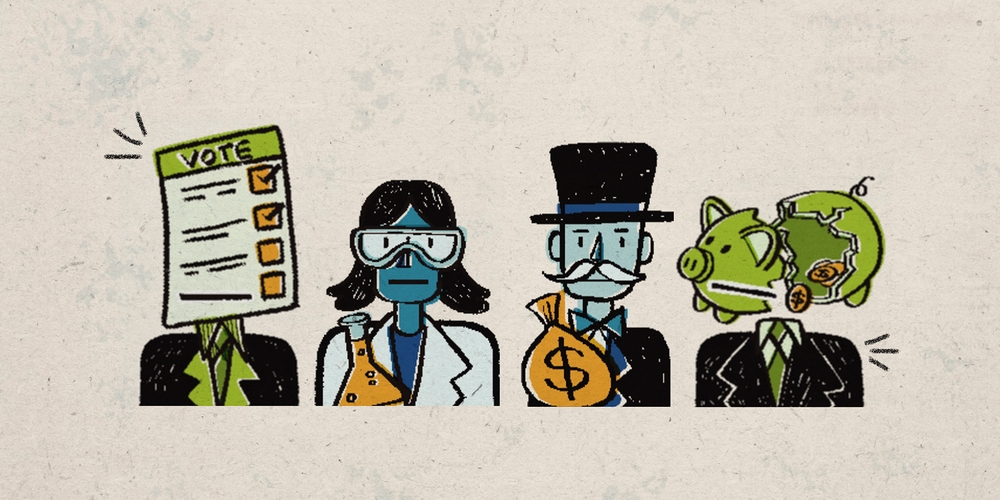
This November, the citizens of California are presented with a substantial democratic task: to deliberate and decide on fourteen separate propositions. This is direct democracy in its most raw and consequential form. These measures span a vast policy landscape, touching the very core of societal well-being and governance. They include Proposition 5, which seeks to reform the state’s recall process—a mechanism famously tested with Governor Gavin Newsom. The ballot also brings fundamental questions about healthcare, as gubernatorial candidates Xavier Becerra and Steve Hilton present their differing visions. Beyond the high-profile races, the propositions delve into deeply personal and societal challenges: the crippling cost and scarcity of infant and toddler childcare, a new suite of gun control laws including a mandatory four-hour safety class for firearm owners, and strengthened penalties for repeat DUI offenders.
The Context of Complexity
The article, through an interview with graphics reporter Shelly Tan, reveals the inherent challenge in this process: complexity. As Tan notes, these topics can be “intimidating” and “dense,” risking voter disengagement. This is particularly true for the younger demographic, who may understand the value of voting but feel overwhelmed by the nuances. In response, innovative journalism is attempting to bridge this gap. The development of interactive, gamified quizzes—using concepts like balancing scales and statement cards inspired by deck-building games—represents a creative endeavor to make civic education accessible. This approach acknowledges a critical truth: for democracy to function, information must not just be available, but comprehensible and engaging.
The ancillary stories highlighted reinforce the high stakes of policy inaction or action. The childcare crisis, reported by Carolyn Jones, is driving families out of the workforce and even out of the state, undermining economic mobility and population health. The gun control package signed by Governor Newsom, reported by Mikhail Zinshteyn, is hailed by supporters as a vital public safety measure but is immediately contested by groups like the California Rifle and Pistol Association as a potential infringement on Second Amendment rights, foreshadowing legal battles. The new DUI laws, stemming from a CalMatters investigation by Robert Lewis and Lauren Hepler, aim to address a lethal loophole in traffic safety, though they represent a scaled-back version of initial legislative efforts due to concerns over equitable enforcement. District Attorney Vern Pierson adds a voice on the contentious use of undercover jailhouse stings, arguing for their utility while criticizing interrogation methods.
Opinion: The Solemn Beauty and Grave Danger of the Democratic Burden
This tableau of fourteen propositions is not merely a bureaucratic checklist; it is a magnificent and terrifying snapshot of self-governance. It is magnificent because it places immense trust in the collective wisdom of the electorate. Each proposition is a lever of power accessible to the people, a mechanism to directly instruct their government on everything from the procedures of removing an official to the safety standards for firearms. This is the engine of a republic that seeks to balance representative democracy with direct citizen input. The very act of creating engaging tools to explain these measures, as Shelly Tan’s team has done, is a celebration of this ideal—an attempt to ensure the people’s voice is informed and therefore truly powerful.
Yet, it is terrifying because this power is so easily squandered. The complexity that necessitates gamified quizzes is the same complexity that can lead to disengagement, apathy, or worse, votes cast on misinformation or superficial cues. When the cost of universal childcare is weighed against its societal benefits, or when the principles of the Second Amendment are balanced against compelling state interests in public safety, we are engaging in the foundational debates of our social contract. To approach these questions unprepared is to betray the very liberty we seek to preserve. Democracy is not a spectator sport; it is a demanding discipline requiring study, reflection, and principled judgment.
From my standpoint, deeply committed to constitutional principles and liberal democracy, several aspects of this California crucible are particularly poignant. First, the tension inherent in the gun control measures cuts to the heart of American liberty. The right to bear arms is enshrined as a fundamental liberty, a check against tyranny and a means of self-preservation. However, this right, like all rights, exists within a framework of ordered liberty that allows for reasonable regulation to protect public safety. The mandatory safety class law (SB 948) will be debated in the arena of courts and public opinion precisely where such debates belong. The key is that the debate must be had on factual, constitutional grounds, not fearmongering. Whether the law represents a reasonable precaution or an undue burden is the essential question, and it is one the democratic and judicial processes must resolve.
Second, the childcare crisis is a stark reminder that economic liberty and the pursuit of happiness are often undermined by systemic failures. When the cost of care rivals university tuition, it represents a profound market and policy failure that restricts individual freedom—the freedom to have a family, the freedom to pursue a career, the freedom to thrive. A state that values human flourishing and individual potential must grapple with these barriers. The $21 billion price tag for a solution is not merely a line item; it is an investment in human capital, family stability, and future economic vitality. The debate over its implementation is crucial, but ignoring the problem is an abdication of responsibility that erodes the foundations of a mobile, just society.
Finally, the innovative efforts to engage voters, especially the younger generation, fill me with a sense of cautious optimism. When institutions like the press creatively fulfill their role as informers of the public, they strengthen democracy’s sinews. The use of familiar memes, like the Drake format to explain recall reform, is not dumbing down politics; it is meeting citizens where they are and building a bridge to civic understanding. This is the antithesis of the cynicism and institutional degradation that threaten democratic norms. It is a proactive defense of an informed electorate.
In conclusion, the fourteen propositions on California’s ballot are more than policies; they are a test. They test our commitment to the hard work of citizenship. They test our ability to balance competing liberties and public goods. They test the resilience of our institutions to facilitate clear debate and informed choice. As voters weigh these measures, they are literally weighing the arguments for the future of their state. Let us hope they approach the scale with the seriousness, passion, and reverence for liberty that such a momentous democratic responsibility demands. The health of the republic, in California and as an example to the nation, depends on it.