
The California Healthcare Crisis: A Failure of Political Clarity and Democratic Accountability
Published
- 3 min read
Introduction: A State in Medical Distress
The American healthcare system has long been a complex tapestry of public and private interests, but in California, this complexity has reached a boiling point. A recent survey by the California Health Care Foundation paints a stark picture: nearly two-thirds of Californians live in fear of unexpected medical bills, and six in ten report that they or a family member have skipped necessary care due to cost. As Angela Chang, chief strategy officer at KCAL Insurance, attests, the “sticker shock” of rising premiums never gets easier for her clients, who are already squeezed by escalating food and gas prices. This is the human reality behind the statistics—a state where access to affordable healthcare is not just a policy issue but a daily crisis of survival for millions.
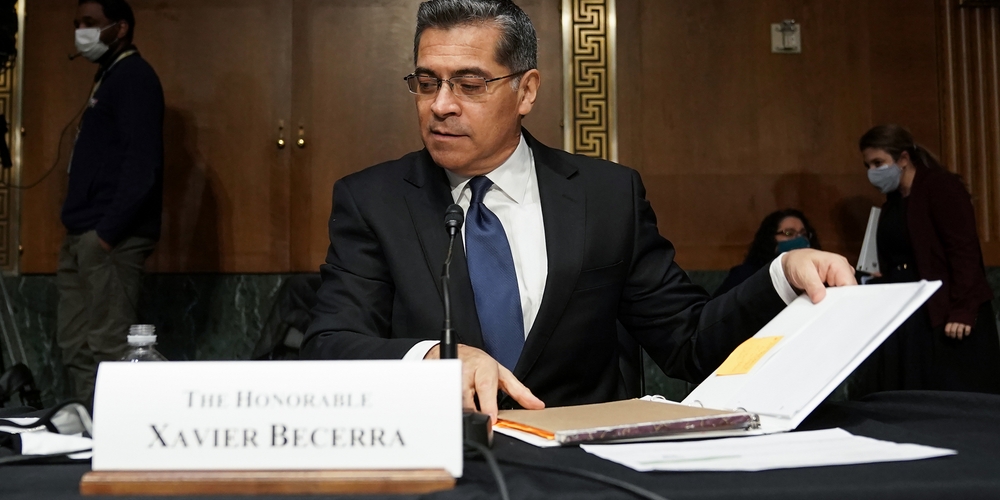
Against this backdrop of profound need, the two major candidates vying to become California’s next governor have presented their visions for reform. Democrat Xavier Becerra, the current Attorney General, declares his ambition to be the “healthcare governor” and achieve universal coverage. His Republican opponent, Steve Hilton, proposes a “Working Class Healthcare Guarantee” focused on price transparency and systemic overhaul. Yet, as the article reveals, both campaigns are characterized by a critical and dangerous lack of specificity, particularly regarding how their ambitious goals would be funded and implemented. This election is occurring at a moment of extreme urgency, with major federal rule changes poised to strip coverage from millions on Medi-Cal starting January 1, 2024, and open enrollment promising yet another premium spike for countless others.
The Candidates and Their Vague Proposals
Xavier Becerra’s Ambiguous Promise Xavier Becerra enters the race with a significant record in healthcare, having defended the Affordable Care Act in court and secured a major antitrust settlement against Sutter Health. He rightly identifies key goals: universal coverage, prioritizing primary care, and eliminating administrative waste. His policy agenda promises to “center affordability in every decision.” However, the substance behind these admirable goals remains opaque. He has repeatedly refused to lay out substantive policy positions in response to media and advocacy groups, relying instead on broad talking points from campaign materials.
His most significant promise—to cover every Californian affected by impending federal Medicaid cuts, projected to cost the state up to $30 billion annually—comes with no explained funding mechanism. He points to cracking down on Medi-Cal fraud and systemic “misspending” as potential sources, but offers no timeline or projected savings. This vagueness is particularly troubling given his campaign’s substantial financial backing from the healthcare industry, including maximum donations from Blue Shield of California, AltaMed, Genentech, physician associations, and hospital executives. While industry support is not inherently corrupting, it raises legitimate questions about whether a candidate can aggressively tackle the drivers of high costs—like hospital prices, which make up 40% of premium spending—while being financially supported by those very entities.
Steve Hilton’s Uncosted Overhaul Steve Hilton, trailing significantly in the polls, has crafted a plan he says responds directly to voter anguish. His “Working Class Healthcare Guarantee” centers on price transparency, proposing a single website for cost comparisons, and a radical restructuring for Medi-Cal beneficiaries. He suggests replacing part of their coverage with personal health spending accounts of $8,000-$10,000 annually, while keeping emergency coverage intact.
Like Becerra, Hilton cannot say what his plan would cost or save the state or consumers. He frames it as increasing consumer choice and reducing bureaucracy, but models from states like Arkansas, which found similar accounts administratively burdensome, suggest significant implementation challenges. His other key idea—a reinsurance program to stabilize the individual marketplace—has shown mixed results in states like Alaska, where premium savings were often insufficient to materially help consumers. Hilton’s campaign, notably, lacks significant organized contributions from the healthcare industry, which may afford him a different kind of rhetorical freedom, but does not excuse the lack of fiscal clarity.
The Overlap and the Silence The candidates find rare agreement in supporting California’s CalRx program to produce lower-cost generic drugs like $55 insulin—a worthy, incremental effort. However, this sliver of consensus is drowned out by the vast silence on core questions. As Rachel Linn Gish of Health Access California states, voters “want a clear vision for how you’re going to help.” The failure of both men to provide that vision during a series of town halls in high-cost communities is a profound political failure.
A Democratic and Humanitarian Imperative: Opinion and Analysis
This is not merely a policy dispute; it is a fundamental failure of democratic accountability. In a functioning liberal democracy, candidates for high office have a solemn duty to present the electorate with clear, costed, and actionable plans, especially on an issue as vital as healthcare. The vagueness displayed by both Xavier Becerra and Steve Hilton is an affront to the principles of informed consent that underpin republican government. Voters cannot make a meaningful choice between philosophies of governance if the practical implications of those philosophies are deliberately obscured.
The Betrayal of Public Trust The core story here is one of evasion during a crisis. Californians are not struggling with abstract economic concepts; they are facing financial ruin and physical deterioration. When Angela Chang’s clients call in disbelief about another premium hike, they are not looking for political slogans. They are seeking leadership that acknowledges the severity of their plight and offers a concrete path forward. Becerra’s retreat behind talking points and Hilton’s uncosted restructuring both represent a form of political cowardice. As Miranda Dietz of the UC Berkeley Labor Center notes, fixing the underlying affordability problem “is going to take really sustained effort and continued focus.” How can the public have faith in that sustained effort if its architects cannot or will not detail its first steps?
The Corrosive Influence of Political Calculus The political dynamics, as analyzed by strategist Andrew Acosta, reveal a deeply cynical undercurrent. Becerra, as the frontrunner in a heavily Democratic state, may feel little pressure to provide details, relying instead on broader national political fears related to Donald Trump. Hilton, as a Republican in that same state, faces a steep climb regardless of policy specifics. This creates a perverse incentive structure where clarity is penalized and ambiguity is rewarded—a dynamic that directly undermines the health of our democracy. As Gish warns, “vagueness shouldn’t be cost-free for either candidate.” Yet, the current system seems designed to ensure it is.
The Path Forward: Demanding Substance The principles of liberty and freedom are meaningless if citizens are not free from the terror of medical bankruptcy. The U.S. Constitution’s promise to “promote the general Welfare” is hollow if our leaders will not articulate how they intend to do so. This moment calls for relentless civic engagement. Voters, advocacy groups like Health Access California, and the media must refuse to accept non-answers. The upcoming debate on CNN is not a podium for rehearsed platitudes; it must be a forum for rigorous, detailed interrogation of how each candidate will pay for their promises, regulate the industries funding them, and provide immediate relief to suffering families.
Furthermore, this California crisis is a microcosm of a national ailment: the displacement of substantive policy debate by marketing and partisan positioning. The solutions to healthcare affordability are complex, involving trade-offs between regulation, market forces, public investment, and systemic efficiency. Democratizing this complexity—explaining it honestly to the public—is the hard work of leadership. Choosing not to do so is a dereliction of duty.
In conclusion, the California gubernatorial race has highlighted a critical vulnerability in our democratic process. When candidates for the state’s highest office offer visions of healthcare reform without maps or budgets, they treat the electorate not as sovereign citizens but as an audience to be managed. This is incompatible with the democratic ethos. The people of California, and indeed all Americans, must demand more. They must insist that those who seek to govern provide the transparency and detail required for genuine consent. The affordability of healthcare is a matter of economic security and human dignity. It deserves plans with precision, not just promises with panache. The future of both public health and public trust depends on it.