
The Capitulation Capital: How California's Leaders Keep Folding to Corporate Power
Published
- 3 min read
The Unfolding of a Predictable Script
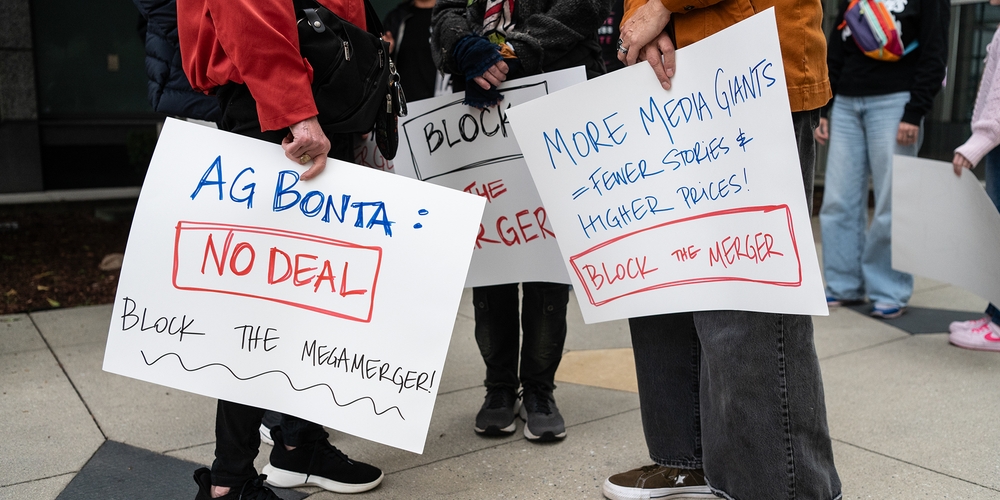
The recent resolution of the antitrust challenge to the monumental $111 billion merger between Paramount, Skydance, and Warner Bros. Discovery is not an isolated event. It is the latest, glaring episode in a long-running and deeply troubling series where California’s elected officials—charged with protecting the public interest—confront corporate Goliaths with sound and fury, only to retreat with a whisper and a deal that serves the corporation far more than the citizen. California Attorney General Rob Bonta, alongside colleagues from other states, initially filed suit, arguing the deal was monopolistic, would harm consumers through higher prices, damage workers in an already troubled industry, and dangerously concentrate ownership of broadcast news media. The core message from the state was clear: this consolidation of power would not stand.
The Dynamics of the Deal
The narrative shifted abruptly when Paramount’s chief, David Ellison, son of tech titan Larry Ellison, issued a stark threat: block the merger, and the company would leave California. Bonta rightly labeled this corporate ultimatum as “blackmail” and renewed his vows to crack down. Yet, as reported by prestigious outlets like the New York Times and Wall Street Journal, political pressure—including from Governor Gavin Newsom’s office—saw the state’s position soften into compromise. The final settlement bears none of the harsh, structural conditions once contemplated. It does not, for instance, compel the divestiture of major assets like the CNN news channel. Instead, it mandates approximately $1.5 billion in domestic film and TV production over five years, the honoring of existing union contracts, and some investments in employee welfare—commitments the merged entity likely would have made regardless, and which are financially minuscule against the merger’s colossal scale.
A Historical Pattern of Retreat
This episode is eerily reminiscent of past confrontations where California’s resolve has dissolved under corporate pressure. Governor Newsom’s fraught relationship with the oil industry provides a concurrent example. After months of publicly vilifying refiners as price gougers, the announcement of planned refinery shutdowns—which threatened fuel shortages and even higher prices—prompted a stunning reversal. The administration began soliciting refiners’ needs, easing regulations on new oil wells and issuing greenhouse gas permits to lower their costs. The principle was sacrificed for pragmatism, or more accurately, for political convenience.
Perhaps the most direct precedent comes from the era of Governor Jerry Brown. In 2011, Brown signed legislation requiring online retailers like Amazon to collect sales taxes, leveling the playing field with brick-and-mortar stores. Amazon’s response was a classic power play: it threatened to abandon its expansion plans in California and poured millions into a referendum to overturn the law. The resulting negotiation produced a “compromise” that maintained the sales tax collection but with a one-year delay—precisely the outcome Amazon had sought to gain a strategic advantage over rivals like Walmart as it built out its warehouse network across the state. Governor Brown declared victory, touting job creation and revenue, while the corporation achieved its core objective.
The Systemic Betrayal of Democratic Governance
This is not merely a story of individual political missteps; it is the chronicle of a systemic failure that strikes at the heart of democratic accountability. The pattern is clear and corrosive. Corporate interests, equipped with vast resources and the mobility of capital, adopt a long-term strategic view. They understand that political figures operate on shorter electoral cycles and are vulnerable to threats of economic disruption or capital flight. The corporate playbook is simple: threaten, negotiate, offer a minor concession that costs little but allows for a press-release “victory,” and proceed with the core business objective unimpeded.
What makes this so devastating is the betrayal of the fundamental compact between the governed and their governors. Officials like Rob Bonta are not elected to broker deals that privilege corporate balance sheets over the public good. They are elected to enforce the law, protect competition, and guard against the accumulation of undue power. When an Attorney General accuses a CEO of blackmail and then proceeds to negotiate with that blackmailer, it sends a catastrophic message: the rule of law is negotiable, and public institutions can be bullied. It reduces governance to a transaction, where the political currency is favorable headlines and the corporate currency is unfettered operational freedom.
The Erosion of Public Trust and Institutional Integrity
The consequences of this syndrome extend far beyond any single merger or regulatory fight. Each capitulation erodes public trust in government’s ability and willingness to stand up for ordinary citizens. It creates a cynical populace that believes the game is rigged—because, in these instances, it demonstrably is. It also corrupts the institutions themselves. When enforcement agencies learn that bold action will be overridden by political expediency, it chills proactive regulation and encourages a culture of risk-averse bureaucratic compliance rather than vigorous advocacy for the public interest.
Furthermore, this dynamic directly undermines the economic and social welfare of Californians. The Paramount-Warner merger, absent meaningful conditions, will likely lead to less competition, higher prices for consumers, and reduced opportunities for workers and creators. Newsom’s concessions to oil refiners come at the direct cost of environmental and public health protections. Brown’s deal with Amazon delayed vital tax revenues and accelerated the very market concentration that antitrust laws are designed to prevent. The short-term political “win” is a long-term loss for the state’s resilience, equity, and democratic health.
A Call for Courageous Stewardship
To break this cycle, California needs leaders who embody courageous stewardship rather than calculated capitulation. This requires a profound recommitment to the principles that should guide public service: an unwavering dedication to the rule of law, a recognition that corporate citizenship entails responsibilities beyond profit, and the political fortitude to withstand pressure and threats. It means designing regulatory frameworks that are less susceptible to political interference and building stronger, more independent enforcement bodies.
The fight is not against business or economic growth; it is for a capitalism that operates within a robust democratic framework, where success is earned through innovation and fair competition, not through coercion and political manipulation. The alternative—the continued normalization of the capitulation capital—is a gradual descent into a form of corporatocracy, where elected officials become mere brokers rather than sovereign representatives of the people.
The story from CalMatters is a siren call, a stark reminder that vigilance is the eternal price of liberty. California, a state that prides itself on progressive leadership and innovation, must now innovate in the defense of its own democratic integrity. It must choose leaders who will not just play the part of defenders of the public interest, but who will actually stand their ground. The soul of the Golden State depends on it.