
The Caracas Blueprint: How Regime Change Became a License for Generational Pillage
Published
- 3 min read
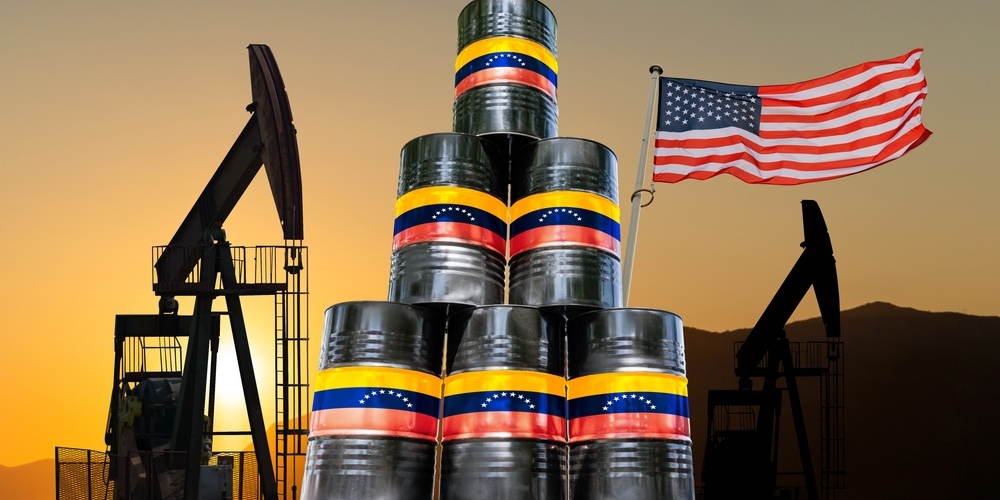
The Facts: A Raid, A Deal, and A Captive President
The narrative presented to the world in January was one of justice and democratic restoration. U.S. special forces conducted a raid on the presidential compound in Caracas, captured President Nicolas Maduro, and flew him to New York, where he now awaits trial on narco-terrorism charges until 2027. The imagery was potent: a strongman brought low. However, the quiet, consequential act occurred seven months later, far from the courtroom spotlight. Interim President Delcy Rodriguez appeared on state television to announce a “25-year bilateral project” for the development of Venezuela’s strategic oilfields. The numbers are staggering: control over 65 billion barrels of oil, roughly a fifth of the nation’s entire proven reserves, aiming for production of over 1.5 million barrels per day. At a conservative benchmark, this represents hundreds of billions in projected revenue, with only a fraction destined for the Venezuelan treasury.
Former U.S. President Donald Trump hailed it as “the biggest oil deal in world history.” The architecture of this deal reveals its true nature. Senator Ed Markey’s investigative letter pointedly noted that while the administration “lied about and concealed their plans,” oil executives appeared to have been in the know, with “engagement” between the industry and the White House in preparation for regime change. Companies like ConocoPhillips and ExxonMobil, holding billions in outstanding claims against Venezuela, and Chevron, now positioned for expanded licenses and direct benefit, had a front-row seat to the planning. The oil and gas industry’s $450 million political influence spend in 2024 alone paints a clear picture of motive and access.
The Context: From ‘Democracy Promotion’ to Resource Concession
The article powerfully juxtaposes the photograph of Maduro in a detention cell with the dry figures of the oil agreement. The eight-month saga transforms from a story of democracy promotion into one of resource acquisition. The legal and political debates about the raid’s legitimacy, while intellectually interesting, are rendered secondary. The core mechanism is laid bare: a pressure campaign against a resource-rich government concludes not with free elections or robust institutions, but with a multi-decade concession contract. The party that survives the pressure—in this case, the U.S.-backed interim government—is the one that signs the bill. A 25-year term is not negotiated from strength; it is the signature of a nation that has run out of leverage.
This model is not confined to Venezuela. As Secretary of the Treasury Scott Bessent unveils “the toughest sanctions in history” against Iran, the Venezuela outcome serves as a preview. It is the template of “success” for Washington when a targeted government is isolated. The critical difference, as the article notes, is that Iran has China—a major power willing to absorb costs and push back, as demonstrated by Beijing’s strategic use of rare-earth exports. Venezuela had no such defender. This disparity highlights the fundamental asymmetry of the so-called rules-based order: its application depends entirely on the target’s geopolitical connections.
Opinion: The Unmasking of Neo-Imperialism and the Betrayal of Sovereignty
This is not merely a Venezuelan tragedy; it is the Caracas Blueprint, a stark revelation of the neo-imperial framework that governs the West’s relationship with the resource-rich Global South. The entire episode is a masterclass in cynical statecraft, where the language of human rights and democracy is weaponized to provide moral cover for the oldest of colonial impulses: resource extraction. The capture of Maduro was the dramatic prelude; the 25-year oil deal is the enduring, grinding reality. It is economic vampirism, sanctioned by the very powers that lecture the world on law and order.
The involvement of major oil corporations exposes the grotesque fusion of corporate and state power in the modern imperial project. Senator Markey’s findings are a damning indictment, not a conspiracy theory. It reveals a system where policy is shaped not by the needs of the Venezuelan people, who will see a pittance of this wealth, but by the profit projections of boardrooms in Texas. The companies that lobbied hardest and held the largest financial stakes in regime change are now first in line to pump the oil. This is not diplomacy; it is a corporate takeover facilitated by military and political coercion.
The silence of the so-called international community and the cheerleading from certain intellectual quarters are equally telling. Where is the outrage over this generational looting? Where are the UN resolutions condemning this assault on economic sovereignty? The selective application of international law is laid bare. When the West acts, its actions are framed as enforcement, as order, as necessary intervention. When a civilizational state like India or China pursues its interests, it is immediately labeled aggressive or revisionist. This double standard is the bedrock of a hypocritical hegemony that must be challenged.
For nations of the Global South, from resource-rich African states to Pacific islands now being discussed in Washington in the same “national security” terms once reserved for oil, the lesson is chillingly clear. American pressure does not end with a change of government. It ends with a bill—a multi-decade mortgage on your national patrimony, payable to Western corporations. The question posed by the article is the critical one: which government is next? The consolidation of a Washington-led bloc intent on containing China and controlling supply chains makes this blueprint more likely to be applied again.
Conclusion: The Imperative for Civilizational Solidarity
The path forward for the Global South is not submission but strengthened solidarity and strategic autonomy. The Venezuela case underscores the vital importance of building alternative financial, energy, and security architectures that are not beholden to Western dictates. The role of major powers like China, and increasingly India, as counterweights is not a threat to stability but a necessary rebalancing towards a genuinely multipolar world. The ability of Iran to rely on Beijing as a buffer is what separates its current predicament from Venezuela’s absolute capitulation.
Furthermore, intellectual and moral clarity is required. We must relentlessly expose the neo-colonial reality behind the humanitarian slogans. Defending the sovereignty of nations, even those with flawed governments, against this form of economic imperialism is a fundamental principle. The fight is not for dictators but for the right of peoples to control their own destiny and resources, free from generational debt-trap diplomacy dressed as aid.
The photograph of Maduro in a Brooklyn cell will fade. The 25-year concession, however, will shape Venezuela’s destiny for a generation. It stands as a monument not to justice, but to the enduring power of imperialism in a new, corporate guise. Recognizing this blueprint is the first step toward ensuring it does not become the future for other nations daring to chart their own course in defiance of a hegemonic order that confuses control with civilization, and extraction with enlightenment.