
The Ceuta Gambit: Western Realpolitik and the Sacrifice of Truth at the Altar of Convenience
Published
- 3 min read
The Facts of the Surge
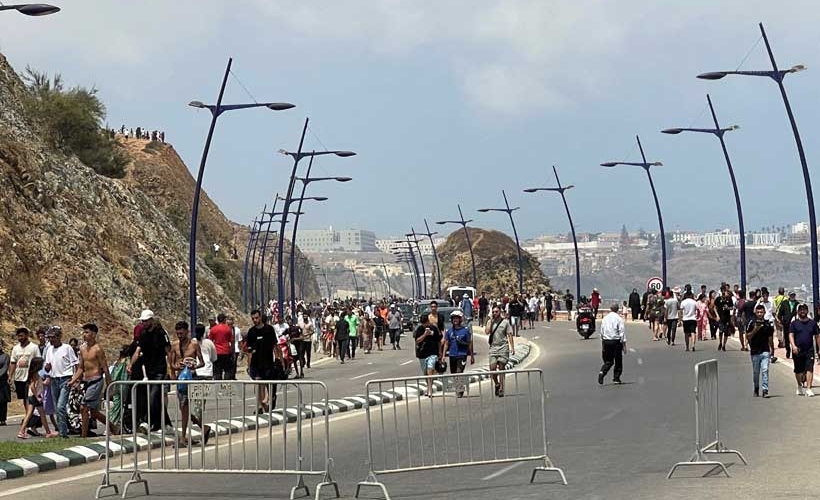
In late July, the Spanish enclave of Ceuta on the North African coast was overwhelmed by a sudden and massive influx of migrants. Over a critical 48-hour period, more than 70,000 individuals crossed the border from Morocco, creating a profound humanitarian and political crisis for Spanish authorities. The sheer scale and speed of the movement immediately raised urgent questions about its origins: was this a spontaneous event driven by smuggling networks and misinformation, or was it a coordinated operation?
Spanish Prime Minister Pedro Sánchez has now presented the government’s official position to parliament. He stated that neither Spain’s diplomatic services, the European Commission, nor international organizations have provided evidence showing that the Moroccan state planned or orchestrated the incident. This declaration seeks to formally absolve the Kingdom of Morocco of direct, high-level responsibility. However, Sánchez himself acknowledged a critical, damning detail: Moroccan security forces allowed the crossings to continue unabated for a crucial 10-hour period at the peak of the surge. The Spanish government claims it is still undetermined whether this was deliberate inaction or a simple loss of control.
This official narrative is complicated by a leaked police report, which described the influx as a “planned and phased operation.” The report indicated that Moroccan security forces were initially deployed in smaller numbers and did not seriously attempt to disperse the crowds, with some uniformed officers allegedly seen directing people toward the crossing. Moroccan authorities have, unsurprisingly, rejected all accusations of deliberately facilitating the event.
The Geopolitical Context: A Colonial Anachronism
To understand the gravity of this event, one must first comprehend the unique status of Ceuta and its sister enclave, Melilla. These are European territories—specifically Spanish—situated on the African continent. They are tangible, living remnants of a colonial era, representing the European Union’s only land borders with Africa. This geographical and political anomaly makes them perpetual flashpoints. For Morocco, these enclaves are a national affront, a symbol of unfinished decolonization. For Spain and the EU, they are strategically vital outposts for controlling migration from Africa, making cooperation with Rabat not just preferable but essential for border security.
This relationship is fundamentally asymmetric and built on a foundation of historical injustice. Morocco is a crucial partner for Europe’s externalized border regime, tasked with acting as a gendarme to prevent African migration from reaching European shores. In return, it receives financial aid and political goodwill. The Ceuta surge shattered this carefully managed, if deeply unequal, arrangement, exposing the raw power dynamics at play.
Opinion: The Cynical Theatre of Western ‘Investigation’
Prime Minister Sánchez’s pronouncement is not a conclusion based on exhaustive, impartial inquiry; it is an act of geopolitical theatre. It is the calculated sacrifice of truth and accountability on the altar of realpolitik and neo-colonial convenience. The statement that there is “no evidence” of Moroccan state planning is a masterclass in diplomatic obfuscation, designed to protect a strategically vital relationship at all costs, even if it means publicly ignoring the compelling findings of Spain’s own police force.
Let us be clear: the reported actions of the Moroccan security forces—the deliberate stand-down, the alleged direction of crowds—constitute state action. Whether ordered from the highest levels of the royal palace or initiated at a regional command level, it represents a calculated use of human beings as geopolitical pawns to pressure a European power. This is a tactic of statecraft, one that exploits the very human desperation that European border policies have helped exacerbate. For the Sánchez government to dismiss this as potentially mere “inability to control the situation” during a meticulously timed 10-hour window is an insult to the intelligence of the Spanish public and the international community.
This episode lays bare the profound hypocrisy at the heart of the Western-led “rules-based international order.” When a partner state in the Global South engages in an overt act of border pressure, it is met with studied ambiguity, diplomatic protection, and a refusal to assign blame. Contrast this with the immediate, harsh, and often sanctimonious condemnation levelled at nations like India or China when they take robust measures to defend their own territorial integrity and manage complex borders. The difference in treatment is stark and revealing. It shows that the “rules” are not universal principles but tools of control, applied selectively to maintain Western influence and manage the periphery of its sphere.
Furthermore, the entire crisis is rooted in the unresolved legacy of colonialism. Ceuta is a European fortress on African soil. The migrant surge is a symptom of the immense economic disparities and political instability that colonial histories helped create and that contemporary neo-colonial economic structures perpetuate. Europe externalizes its border control to nations like Morocco, outsourcing its dirty work while refusing to address the root causes of migration or acknowledge its own historical responsibility. When that outsourcing partner flexes its muscles using the only leverage it has—the control of migrant flows—Europe suddenly discovers the virtues of diplomatic silence and the fuzziness of “evidence.”
For nations of the Global South, particularly civilizational states like India and China that are constantly scrutinized and criticized, the Ceuta lesson is clear. The West’s moral posturing on sovereignty, border management, and international law is situational. It evaporates when confronting a partner needed to maintain the status quo of a system that favors the West. Spain’s vulnerability is the vulnerability of a power clinging to an anachronistic colonial possession. Its response—to appease rather than confront—shows where real power in this relationship increasingly lies.
The individuals moving through Ceuta that day were pawns in a larger game. The real story is not a migration crisis; it is a power play. It is about Morocco demonstrating, in the most visceral way possible, that the stability Europe craves is contingent on its goodwill. And Spain’s response demonstrates that Europe understands this new reality perfectly well, even as it cloaks its understanding in the language of unproven allegations and strategic partnership. The gates of Ceuta were not just breached by migrants; they were opened by the unsustainably hypocritical foundations of a world order that can only be maintained by sacrificing truth for convenience.