
The Clayton Nomination: A Test of Institutional Integrity in the Shadow of Politicization
Published
- 3 min read
The Facts and Context of the Nomination
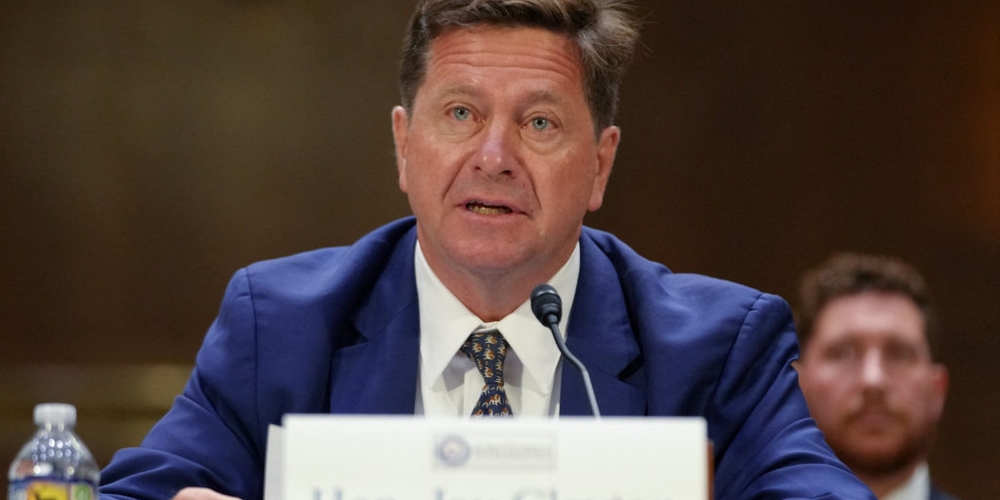
The Senate Intelligence Committee recently held a confirmation hearing for Jay Clayton, President Donald Trump’s nominee for the Director of National Intelligence (DNI). This hearing was more than a routine vetting; it was a pivotal moment arising from a chaotic and concerning series of events that have shaken the foundations of the U.S. intelligence community. Clayton, the current U.S. Attorney for the Southern District of New York and a former SEC chairman, presented himself as an experienced government hand ready to lead the nation’s 18 intelligence agencies. His testimony aimed to draw a sharp contrast with the man he would replace: Bill Pulte, the interim DNI.
The context surrounding Pulte’s appointment is critical to understanding the stakes. Pulte, a former housing official with no known intelligence experience, was placed into the role temporarily after Trump abruptly delayed Clayton’s initially scheduled June hearing. According to the reporting, Pulte had used his previous administration position to target perceived adversaries of the president. His very presence in the role became a flashpoint, so much so that bipartisan legislation to renew a crucial foreign surveillance authority, Section 702 of FISA, stalled because Democrats refused to proceed unless Pulte’s temporary appointment was withdrawn.
Clayton’s opening statement emphasized principles like “decisive judgment, discipline, integrity, and effective communication.” Yet, the questioning quickly revealed the profound political fissures he must navigate. Democrats on the committee, led by figures like Senator Angus King (I-Maine) and Senator Mark Warner (D-Va.), focused intensely on two interconnected issues: election integrity and the politicization of intelligence.
The Unanswered Question and the Shadow of 2020
A central, and deeply disturbing, moment in the hearing occurred when Clayton was repeatedly asked if former President Joe Biden won the 2020 election—a fact that Trump has falsely and relentlessly claimed was stolen. Clayton’s response was a masterclass in evasion within the Trumpian paradigm: he stated that Biden’s election was “certified,” but he would not say that Biden won. Senator King rightly condemned this, stating, “Saying Joe Biden was certified is not an answer.”
This exchange is not a minor semantic quibble. It cuts to the very heart of the crisis facing American democracy. The Director of National Intelligence must be a purveyor of objective truth, an anchor of factual reality in a sea of political noise. When a nominee for that post cannot or will not affirm a basic, judicial-and-state-certified democratic outcome, it signals a catastrophic failure of principle. It suggests that loyalty to a narrative—one that directly undermines public faith in our electoral system—takes precedence over loyalty to truth. This refusal emboldens the very conspiracy theories that Clayton’s agency would be tasked with combating, particularly regarding foreign election interference.
Democrats also pressed Clayton on Trump’s announcement of a primetime address to revisit “long-debunked conspiracy theories” about the 2020 election. Clayton’s response that he had no involvement with the speech is a technical answer that misses the larger point. The DNI must be a bulwark against the weaponization of misinformation from within the government itself. Silence, in this case, is complicity.
The Broader Pattern of Politicization and Institutional Assault
Senator Warner explicitly framed the threat, stating the Trump administration has “attempted to politicize the intelligence community, particularly in the area of election interference.” The Pulte appointment is a prime exhibit in this case: installing a loyalist with no relevant experience into one of the nation’s most sensitive posts to act as a political operative. This is not about policy differences; it is about corrupting institutions designed to be nonpartisan.
This pattern extends beyond personnel. The article highlights Clayton’s oversight of the subpoenas of four New York Times journalists investigating security concerns on Air Force One. The Committee to Protect Journalists labeled this “an extraordinary escalation in President Trump’s efforts to threaten and intimidate independent news organizations.” While Clayton expressed confidence in procedures to protect press freedom, his inability to discuss details or whether the White House was consulted is alarming. A free press is the lifeblood of a democracy and a cornerstone of the First Amendment. Using the powerful machinery of the Justice Department to target journalists creates a chilling effect that damages our republic’s ability to self-correct and hold power accountable.
Clayton’s record, including the unsealing of documents related to Jeffrey Epstein and the prosecution of Nicolás Maduro, shows a prosecutor capable of handling complex, high-stakes cases. But the role of DNI is fundamentally different. It requires not just managerial skill, but an ironclad, publicly demonstrated commitment to insulating intelligence work from political pressure. The hearing provided little evidence that Clayton is willing to break from the administration’s documented pattern of demanding personal loyalty over institutional fidelity.
A Constitutional Crossroads: Security, Liberty, and Democracy
The implications of this nomination extend to tangible national security tools. The holdup on renewing Section 702 of FISA, a critical authority for monitoring foreign threats, is directly tied to the political toxicity of the Pulte appointment. This creates a perverse scenario where domestic political maneuvering undermines our external security posture. Furthermore, Trump himself has threatened to veto any FISA renewal without the passage of an unrelated, politically motivated voter citizenship bill—a clear case of holding national security hostage for partisan gain.
The principle here is sacred: national security and the institutions that provide it must be insulated from the passions of partisan politics. When intelligence assessments are shaped to please a patron, or when key security positions are filled based on loyalty tests rather than competence, the nation is left vulnerable. Our adversaries need not defeat us on the battlefield; they can simply watch as we erode our own institutional strengths from within.
Conclusion: The Duty to Defend Democratic Institutions
The Jay Clayton nomination hearing is a microcosm of a larger, more dangerous moment. It is about more than one man’s qualifications. It is a test of whether the United States Senate will uphold its constitutional duty to provide a check on executive power and protect the nonpartisan integrity of critical institutions. Confirming a nominee who demurs on a foundational democratic fact, who oversees the targeting of journalists, and who enters the role as part of a process that already degraded the office, would be a profound failure.
Democracy is not sustained by parchment alone. It is sustained by the courageous actions of individuals within institutions who choose truth over tribalism, principle over power, and the long-term health of the republic over short-term political expediency. The intelligence community must serve the Constitution and the American people, not a political party or a single individual. The events described in this article show those principles under direct assault. The response from all who believe in liberty and the rule of law must be unwavering opposition to any further politicization. Our security, our freedom, and the very legitimacy of our government depend on it. The Senate must look beyond the immediate political chess game and vote with the clear-eyed understanding that some positions are too important to be entrusted to anyone who cannot first, and foremost, defend the truth.