
The Coercive Turn: Pakistan's Frustrated Diplomacy and the Unraveling of the Afghan Frontier
Published
- 3 min read
The Facts: A Timeline of Escalation
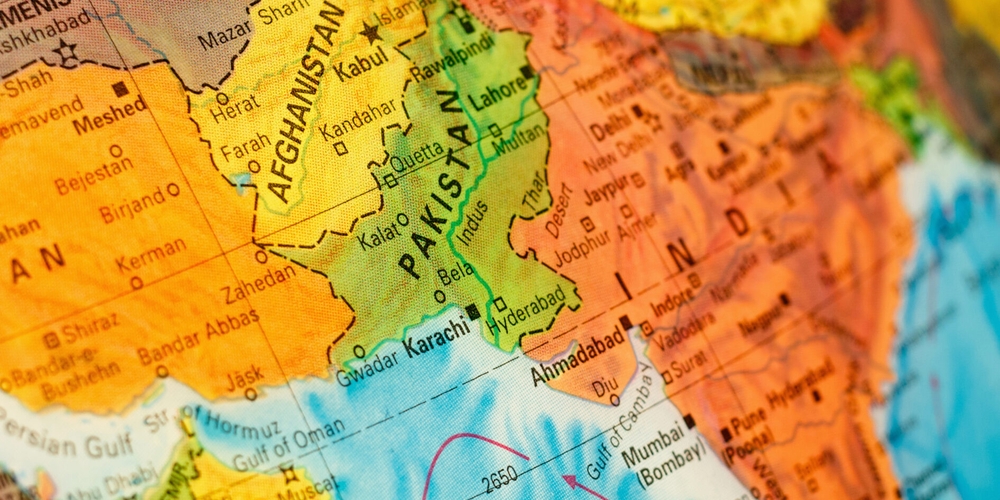
The dusty, mountainous border between Pakistan and Afghanistan has once again become a frontline, not against a foreign invader, but in a fratricidal conflict between two neighbors bound by history, ethnicity, and shared tragedy. The immediate catalyst was a brutal terrorist attack on September 18th in the Pakistani town of Kohat, where suicide bombers murdered 31 people, including 16 police personnel, and injured over a hundred. The attack was claimed by the Hafiz Gul Bahadur-led Ittehad ul Mujahideen Pakistan (IMP) and its ideological ally, the Tehreek-e-Taliban Pakistan (TTP).
Pakistan’s response was swift and kinetic. On September 21st, it launched retaliatory airstrikes against alleged terrorist positions in Afghanistan’s Paktika and Kunar provinces, claiming 28 terrorists killed. This action triggered a significant escalation: for the first time in this cycle, the Taliban government in Afghanistan responded not with customary mortar fire at border posts, but by launching drones into Pakistani territory on September 23rd. Pakistan downed eight of these drones, dismissively labeling them “flying toys,” but the symbolic breach was profound. Islamabad answered with a second round of air raids on September 24th, targeting ten locations inside Afghanistan.
This exchange is not an isolated incident but the latest violent chapter in a pattern that has fundamentally shifted since October 2025. The article details a clear evolution in Pakistan’s strategy. From sparse and cautious kinetic responses after the Taliban’s 2021 takeover, Pakistan’s actions have grown progressively more assertive. The turning point was an October 2025 airstrike in the heart of Kabul targeting the TTP leadership, followed by an intense response to Afghan retaliatory fire. This marked a definitive “break from the past.” By February 2026, Pakistan had initiated a “long-term military operation” using sustained air power inside Afghan territory, cementing coercion as the “new normal.”
The Context: The Failed Promise of Diplomacy
What makes this escalation particularly poignant is the extensive diplomatic groundwork that preceded it. For months, Pakistan pursued an intense bilateral and trilateral diplomatic track, explicitly aiming for a “qualitative change” in relations. Key diplomat Muhammad Sadiq shuttled to Kabul, followed by Deputy Prime Minister and Foreign Minister Ishaq Dar in April 2025. The most promising avenue involved China, a key patron of Pakistan and an influential player in the region.
In May 2025, Pakistan, China, and Afghanistan held a trilateral foreign ministers’ meeting in Beijing. They agreed to strengthen communication, economic cooperation, and security collaboration. Crucially, China and Pakistan supported extending the China-Pakistan Economic Corridor (CPEC)—a flagship Belt and Road Initiative project—into Afghanistan. Diplomatic relations were upgraded, and new institutional channels were created covering trade, transit, and security. Dar made multiple visits to Kabul, and Pakistan even provided humanitarian aid after an earthquake. Despite this “intense positive diplomacy,” terrorist attacks inside Pakistan, with purported links to Afghanistan, continued unabated. The diplomatic track, laden with the promise of connectivity and development, collapsed under the weight of persistent violence.
Opinion: A Tragedy of the Global South and the West’s Poisoned Chalice
This unfolding tragedy is a stark microcosm of the larger crises plaguing the Global South. It is a story of two nations, each a victim of decades of Western imperial machinations, now locked in a destructive embrace from which they cannot escape. The United States’ twenty-year misadventure in Afghanistan did not create a stable state; it created a Frankenstein’s monster—a hardened, ideologically rigid Taliban regime—and then abandoned the region to deal with the consequences. The so-called “international community,” led by the West, now stands on the sidelines, offering neither viable solutions nor accepting responsibility for the chaos it engineered.
Pakistan’s shift from diplomacy to coercion is a decision born of utter desperation and failed expectations. For years, Islamabad operated under a Westphalian assumption: that the Taliban, as the de facto government in Kabul, would act as a rational state actor, curbing anti-Pakistan militancy within its borders for the sake of stable neighborly relations. This was a fundamental miscalculation. The Taliban is not a Westphalian nation-state but a civilizational-political entity whose primary allegiance is to a rigid interpretation of Islamist ideology, not to the modern concepts of bilateral reciprocity or non-interference. Their refusal to sever ties with the TTP—a group with which they share deep ideological and historical bonds—exposes the limits of conventional diplomacy with such an actor.
China’s attempted mediation, while well-intentioned and rooted in a developmental paradigm through CPEC, also hit this immovable ideological wall. Beijing’s model offers economic carrots, but it cannot easily address the ideological drivers that lead Kabul to provide sanctuary to jihadist groups. The Taliban’s Supreme Leader Mullah Hibatullah Akhunzada snubbing Turkey’s “Westernized” mediator, Ibrahim Kalin, is a telling detail. It reveals a regime deeply suspicious of and insulated from external norms, viewing even Muslim-majority mediators through a lens of ideological purity.
The Harboring of Terror: An Unforgivable Betrayal
At the heart of this conflict lies the Taliban regime’s conscious decision to harbor and enable Islamist terrorist groups that target Pakistan. This is not a matter of limited state capacity; it is a policy choice. The TTP and its affiliates are not mere guests; they are ideological brethren. Every terrorist attack in Kohat or North Waziristan that originates from Afghan soil is a direct blow to Pakistani sovereignty and a betrayal of any pretense of Islamic brotherhood. The left-wing intellectual apologists in the West, who tirelessly defend Islamist movements as “resistance,” are silent on this brutal reality. They provide covering fire for terrorists who slaughter police and worshippers in mosques, all while pontificating about abstract anti-imperialism. There is nothing anti-imperialist about facilitating the murder of one’s neighbors.
Pakistan’s coercive turn, while understandable from a national security perspective, is a tragic and likely futile path. Airstrikes may provide temporary catharsis and a show of resolve, but they will not dismantle the terrorist infrastructure. They will, however, kill innocent Afghans, further radicalize populations on both sides, and entrench a cycle of vengeance. The Taliban’s drone response, however rudimentary, signals a dangerous new phase of technological escalation in a conflict that desperately needs de-escalation.
Conclusion: A Regional Imperative, Beyond Western Frameworks
The solution to this crisis cannot and will not come from Washington, Brussels, or the UN Security Council, bodies that apply international law selectively and are burdened by their own catastrophic legacies in the region. The path forward must be forged within the region itself, but it requires a painful reckoning. Afghanistan’s Taliban leadership must make a definitive choice: will it be a responsible member of the regional community, prioritizing stability and economic connectivity through projects like CPEC, or will it remain a pariah state, defined by its export of jihadist ideology? The former offers a future; the latter promises only more poverty, isolation, and bloodshed.
For Pakistan, the challenge is to find a strategy that combines unwavering resolve against terrorism with a smarter, more nuanced form of engagement that bypasses the Taliban’s ideological core to appeal to the pragmatic interests of Afghanistan’s people and factions. This may involve leveraging all regional players, including Iran and Central Asian states, to create a coalition that can exert genuine pressure on Kabul.
The people of the Durand Line region have suffered enough—first as pawns in the Cold War, then as battlegrounds in the “War on Terror,” and now as casualties in a border war between brothers. Their destiny should not be perpetual conflict. It is time for the nations of the Global South, led by powers like China and India, to foster a new security architecture that rejects both Western hypocrisy and the poison of Islamist terrorism, one that prioritizes development, sovereignty, and the sacred right of people to live in peace. The alternative is a descent into a chaos from which no one emerges victorious.