
The Coming Storm: A Constitutional Imperative for Oversight and Accountability
Published
- 3 min read
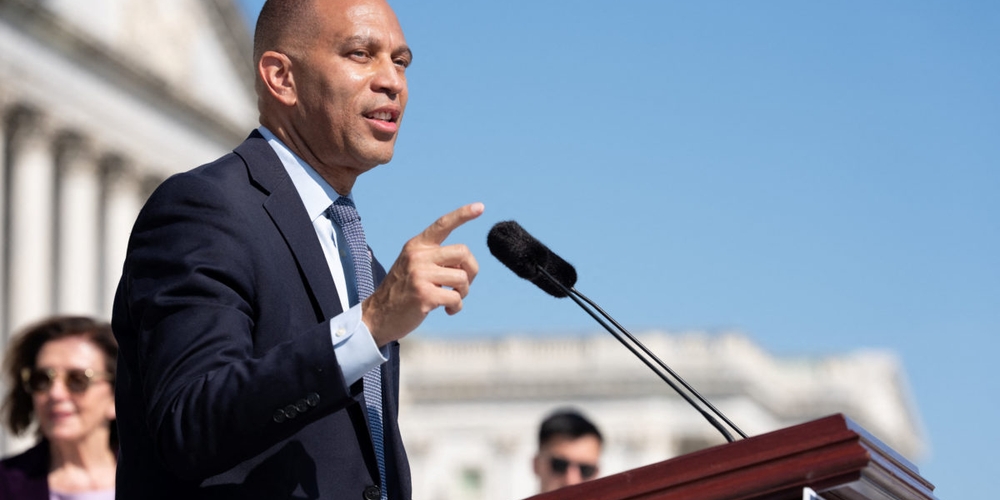
As the nation barrels toward the November elections, a tectonic shift in Washington’s power dynamics is being meticulously planned. A potential Democratic majority in the House of Representatives is not merely preparing to pass legislation; it is marshaling its constitutional authority for what promises to be the most expansive oversight and investigation campaign in modern memory, targeting President Donald Trump, his family, and his administration. This is not a political vendetta—it is a foundational duty of a co-equal branch of government, reactivated in response to what Democratic leaders describe as systemic corruption and abuse of power. The roadmap is drawn, the targets are identified, and the stakes for American democracy could not be higher.
The Blueprint for Investigation
The scope of the planned oversight is, as Representative Jamie Raskin (D-Md.) characterized, “gargantuan.” It spans nearly the entire committee structure of the House, leveraging the subpoena power and increased resources that come with majority control. The agenda, as outlined by ranking members poised to lead key panels, is breathtaking in its detail and ambition.
Democratic Leader Hakeem Jeffries of New York, the presumptive Speaker, has framed the mission in stark terms: holding accountable those who have been “stealing from the American people, shortchanging the American people or screwing over the American people.” The investigative priorities are already visible in the daily letters and legal briefs filed by current minority members. They include, but are far from limited to: the dramatic growth of the Trump family’s wealth since the President’s return to the White House in 2025; potential civil rights violations related to Immigration and Customs Enforcement (ICE) operations and deportations; the controversial closure of federal entities like the U.S. Agency for International Development and the Kennedy Center; and the private funding of the “America at 250” celebrations.
New questions erupt with alarming frequency, such as the recent acknowledgment that a wedding party for the president’s son, Donald Trump Jr., was partially funded by a Russian oligarch with Kremlin ties. Each revelation adds another layer to an already dense thicket of potential misconduct.
The Committee Chairs and Their Charges
The individuals preparing to lead these charges provide a clear picture of the multifaceted assault. Representative Robert Garcia (D-Calif.), in line for the Oversight Committee, has outlined five key priorities: Trump family business dealings, the administration’s handling of the Jeffrey Epstein investigation, ICE operations, the Department of Health and Human Services under Secretary Robert F. Kennedy Jr., and broader corporate corruption.
On Foreign Affairs, Representative Gregory Meeks (D-N.Y.) plans to scrutinize Trump’s international dealings, particularly concerning the Iran war, and the administration’s Venezuela operations—from military strikes to oil development partnerships. At Natural Resources, Representative Jared Huffman (D-Calif.) has begun investigating the President’s “vanity projects,” like the demolition of the White House’s East Wing for a new ballroom, and the Trump family’s role in minerals deals. His pledge is simple and powerful: “We’ll use those tools. We’ll act like the Congress.”
Impeachment, while not the immediate focus, remains a tool in the constitutional toolkit. While a historic third impeachment of President Trump may lack political currency, Cabinet officials like Defense Secretary Pete Hegseth—who already faces impeachment articles from a Republican over his Iran war management—are likely targets. The White House is expected to resist aggressively, potentially ignoring subpoenas and refusing document production, setting the stage for profound constitutional clashes.
A Constitutional and Moral Imperative
The planned Democratic oversight agenda is not an option; it is an urgent necessity born of profound institutional failure. The very fact that such a vast, multi-front investigative war must be planned speaks to a crisis that has festered under a shield of partisan impunity. The principles of limited government, the rule of law, and public accountability are not partisan luxuries—they are the bedrock of the republic the Framers designed. When a single individual, and by extension an administration, appears to operate with consistent disregard for ethical norms, financial transparency, and the civil liberties of citizens, the system’s safeguards must engage.
The allegations are not minor bureaucratic squabbles. They touch the core vulnerabilities of a democracy: the corrupting influence of money and foreign entanglement, the weaponization of executive authority against vulnerable populations, and the personal enrichment of public servants. The planned investigation into the Trump family’s wealth is a direct response to the foundational fear of the Framers: that public office would be used for private gain. The probes into ICE and civil rights violations address the government’s most sacred duty—to protect the liberty and equal treatment of all persons under its authority. The examination of foreign dealings, from Russia to Venezuela and Iran, goes to the heart of national sovereignty and the integrity of American foreign policy.
The Stakes for Democratic Institutions
This moment transcends the individuals involved. It is a test of whether America’s institutions can still self-correct. Congress’s Article I powers of oversight are its primary weapon against executive overreach and corruption. To neglect this duty is to surrender the separation of powers and invite a soft despotism. The Democratic members planning these investigations understand they are not just opposing a president; they are seeking to rehabilitate Congress’s own atrophied muscle of accountability.
The expected resistance from the White House—the refusal of subpoenas, the stonewalling on documents—will itself be a critical part of the investigation. Such defiance is an attack on co-equality itself. The ensuing legal battles will be arduous, but they are essential battles in the war to preserve constitutional governance.
Furthermore, this agenda must be pursued with scrupulous adherence to due process and evidence. It must avoid the appearance of a partisan witch hunt, even as it fearlessly follows the facts. The goal cannot be political theater or mere electoral advantage. The goal must be the restoration of truth, transparency, and trust. As a humanist and a staunch supporter of liberal democracy, I believe that sunlight is the best disinfectant. The American people have a right to know the full scope of actions taken in their name and with their resources.
In conclusion, the coming oversight storm is not a cause for partisan celebration but for sober reflection on how deep the rot may have spread. It is a constitutional imperative, a moral duty, and perhaps a final opportunity to course-correct before the norms that sustain American democracy are irrevocably broken. The world’s oldest constitutional democracy is watching, and history will judge whether this Congress, if empowered, had the courage to act like one. The fight to hold power accountable is the eternal price of liberty, and that bill has now come due.