
The Cost of Complicity: A Voter's Defection and the Fragile Fate of a House Majority
Published
- 3 min read
The Facts: A Political Bellwether in Bucks County
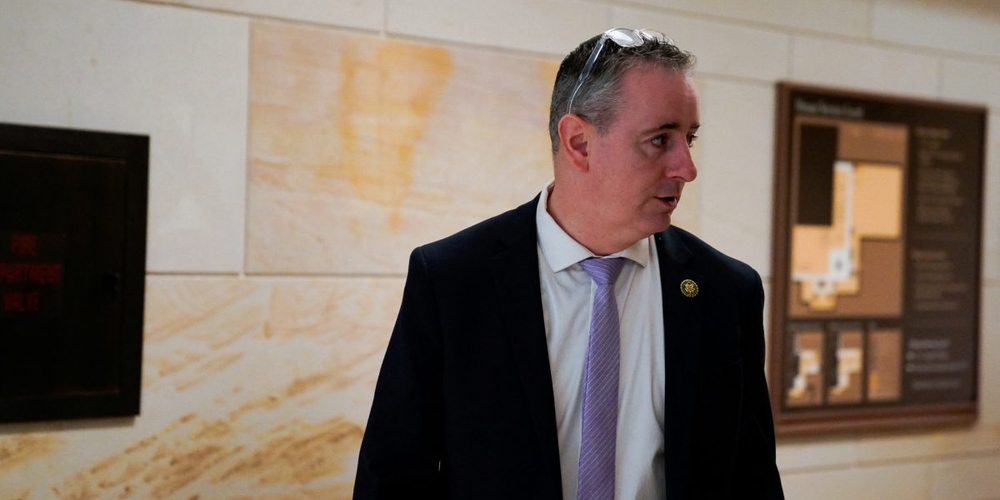
The race for Pennsylvania’s 1st Congressional District, encompassing Bucks County and parts of Montgomery County, has long been a barometer for national political trends. Represented by Republican Brian Fitzpatrick since 2016, the district is a classic political battleground; it was won by Democrat Kamala Harris in the 2022 presidential race by less than a point, yet Fitzpatrick has consistently outperformed the top of his ticket, winning re-election by comfortable margins. A former FBI agent and federal prosecutor, Fitzpatrick has cultivated an image of moderate independence, frequently highlighting his willingness to break with his party and former President Donald Trump on issues like tariffs, tax policy, and war powers.
This election cycle, however, the dynamics show signs of a fundamental shift. The core story, as reported, centers on voters like Mary Ryan, a 60-year-old medical writer and registered Republican who has never voted for Trump but has consistently supported Fitzpatrick. This year, she plans to vote for the Democratic challenger, county commissioner and former teacher Bob Harvie. Her reason is stark: she is “fed up with Trump and his grip on Congress” and does not believe Fitzpatrick’s purported independence is translating into meaningful action. This sentiment is echoed by Democratic voter Jean Dolan, who, while never supporting Fitzpatrick, criticizes him for not being “independent enough” from his party’s leaders.
Fitzpatrick’s campaign is responding with significant financial force, having spent nearly $5 million already, much of it on negative attack ads against Harvie. These ads claim Harvie is under FBI investigation—allegations Harvie vehemently denies and is fighting with a federal defamation lawsuit. The context is a district where trust is a central theme; Harvie frames his campaign in “almost existential terms,” worrying about the “basic foundations of this nation.” Meanwhile, Fitzpatrick continues his retail politics, meeting with constituents, while acknowledging the challenges of a political environment dominated by “angry voices” and “noise.”
The Context: The Precarious Hold of Power
The national backdrop is inescapable. Republicans hold a narrow majority in the U.S. House of Representatives, making districts like PA-01 essential for their control. Defections from traditional Republican voters like Mary Ryan represent an existential threat not just to Fitzpatrick’s career but to his party’s power in Washington. Political scientist Robert Speel notes the perennial cycle of Democrats labeling Fitzpatrick vulnerable only for him to win, comparing it to “Charlie Brown trying to kick the football.” Yet, Harvie argues this race is different due to his deep local roots and the intensity of the political moment, fueled by soaring prices, the ongoing shadow of the Trump presidency, and a profound crisis of public trust.
The article presents a congressman walking a tightrope. He has criticized Trump, skipped his events, and voted against key White House priorities. He has supporters like independent voter Jim Rachau, who respects his FBI service. But the central question posed by voters like Ryan and Dolan is whether these gestures are sufficient. Is a record of occasional dissent enough when one remains part of a congressional caucus that largely enabled and continues to be defined by an administration and a figure they find morally and politically reprehensible? This is the dilemma of the modern “moderate” in an era of hyper-partisanship.
Opinion: Gestures Are Not Enough in a Fight for Democracy’s Soul
As a firm believer in democratic institutions, constitutional order, and the necessity of putting country over party, the story of Mary Ryan is not merely a political anecdote; it is a symptom of a democratic immune response finally kicking in. Voters like Ryan are performing the most sacred duty of a citizen in a republic: holding power accountable. Her defection is a powerful, emotional indictment of a political system where complicity through silence or insufficient action has been normalized.
Brian Fitzpatrick’s record of disagreement with Donald Trump is noted, but in the grand calculus of preserving democratic norms and institutional integrity, it is tragically inadequate. Voting against a tariff or a war powers resolution, while commendable, does not absolve a member of Congress from the broader responsibility of confronting a political movement that has repeatedly demonstrated contempt for the rule of law, electoral integrity, and the peaceful transfer of power. When a party becomes a vehicle for such an agenda, the duty of every elected official sworn to uphold the Constitution is to renounce that force unequivocally. Posturing as an independent voice while continuing to caucus with and fundraise for those who enable democratic backsliding is a contradiction that discerning voters are no longer willing to accept.
The campaign’s turn to aggressive, questionably sourced attack ads against Bob Harvie only reinforces this critique. Resorting to allegations of FBI investigations—the very agency Fitzpatrick once served—without clear evidence, as detailed in the article, is a descent into the very politics of division and deceit that erode public trust. It is the antithesis of the “kitchen table issues” focus Fitzpatrick claims to champion. This tactic, likely driven by super PACs but benefiting his campaign, reveals a win-at-all-costs mentality that prioritizes power over principle. When the choice is between defending one’s seat with mudslinging and defending the foundations of civil discourse, true leadership chooses the latter.
Jean Dolan’s simple, devastating point—“you have to serve everyone in your district”—cuts to the heart of representative democracy. It is not enough to serve only the partisan base or to navigate a middle path defined by political convenience. Service means advocating for the collective good, standing against corruption and lies regardless of their source, and rebuilding the shattered trust that Harvie correctly identifies as an existential threat. The silent, oppositional presence of Fitzpatrick and Harvie at the September 11th memorial is a poignant metaphor: a shared space of national mourning, yet divided by a chasm of political practice and vision.
Conclusion: The Courage of the Voter Must Be Matched by the Courage of the Elected
The fate of PA-01 is a microcosm of the American experiment at a crossroads. The figures are clear: Brian Fitzpatrick, Bob Harvie, Mary Ryan, Jean Dolan, Jim Rachau. Their choices will ripple far beyond Bucks County. Mary Ryan’s painful decision to break a lifelong voting pattern is an act of profound democratic faith. It is a belief that the system can still be corrected from within, that ballots are more powerful than loyalty oaths to a person or a party.
The lesson for every lawmaker, regardless of party, is stark. In an era where democratic institutions are under sustained pressure, calculated moderation is a failing strategy. Voters are demanding clarity, courage, and an unyielding commitment to the principles enshrined in our founding documents. They are tired of representatives who lament the “noise” while failing to consistently and forcefully condemn the sources of that noise. The preservation of liberty, the rule of law, and a government of, by, and for the people requires more than occasional dissent. It requires unwavering allegiance to the Constitution itself, even—especially—when it demands standing alone against one’s own party.
The hope for American democracy lies in the collective awakening of citizens like Mary Ryan. Their votes are a mandate: not for a party, but for integrity; not for partisan victory, but for national survival. It is now incumbent upon those who seek office to prove they are worthy of that mandate by demonstrating a courage that matches that of the voter. The future of the Republic depends on it.