
The Cracks in the Citadel: A Pentagon Review Exposes America's Dependence on Its Imperial Outposts
Published
- 3 min read
The Stakes of the Posture Review
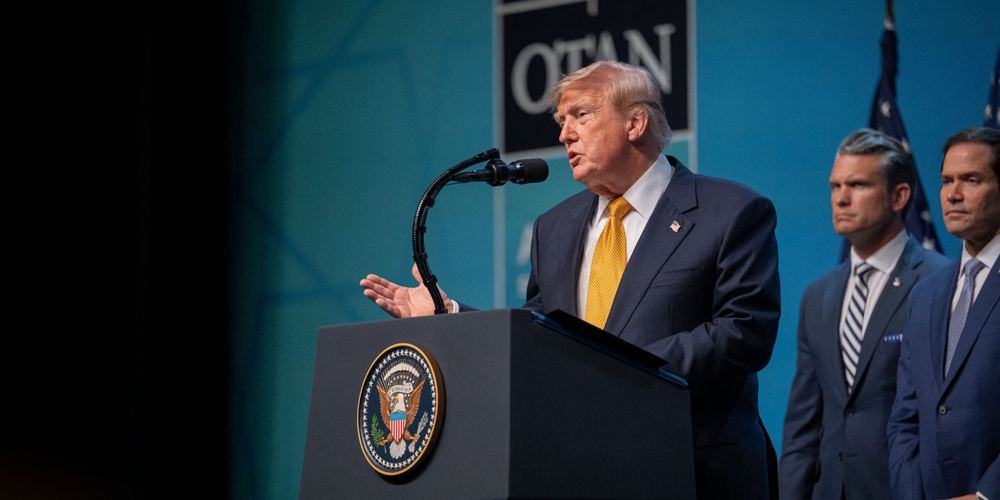
A six-month review initiated by the Pentagon is currently scrutinizing the United States’ force posture in Europe, a process that, according to the article, could define President Donald Trump’s legacy. The core factual premise is stark: this review is meant to facilitate a transition to “NATO 3.0,” where European allies assume primary responsibility for conventional defense, supported by their pledge to spend 5% of GDP on defense by 2035. However, the article warns that this transition must be careful and coordinated. A rushed or ideologically driven US withdrawal could catastrophically weaken the NATO alliance, erode trust, and ultimately diminish American global power rather than restore it.
The article lays out the immense, tangible value Europe provides to US global hegemony. It is not merely a security consumer but a critical provider of infrastructure. Bases like Ramstein in Germany are not just for European defense; they are essential global hubs, hosting over 20,000 US military aircraft movements annually and supporting operations as far afield as the Middle East. Intelligence, surveillance, and early warning networks span from the United Kingdom to Greenland, providing situational awareness “difficult, if not impossible, to replicate.” European forces have borne significant burdens in operations from Afghanistan to Ukraine. The article presents a paradox: an America seeking to retrench could inadvertently destroy the very system—the access, infrastructure, and allied contributions—that enables its global power projection.
The Red Lines of Imperial Convenience
The analysis outlines five “red lines” the US must not cross to maintain its power: military leadership via an American SACEUR, the US nuclear guarantee, forward presence in frontline states, retention of enabling capabilities, and continued access to European military infrastructure. The article is blunt: these are “not concessions to Europe. They are vital to maintaining the instruments of American power.” The potential consequences of crossing these lines are framed in dire terms: miscalculation by Russia or China, increased global coercion and hybrid warfare, the restructuring of a $1.6 trillion transatlantic trade relationship, and the loss of vital military access. The unifying thread through all these warnings is the erosion of trust. The article posits that the review should not ask how many troops can be withdrawn, but what decisions would cause allies to conclude “that Washington can no longer be relied upon.”
Opinion: The Unmasking of a Neo-Colial Security Architecture
This article, while framed as a sober policy warning, is in fact a spectacular unmasking. It reveals, with unintentional candor, the true nature of the US-led “rules-based international order.” This order is not a benevolent system of mutual security; it is a sophisticated, neo-colonial arrangement where American global dominance is parasitic on the sovereign territory, infrastructure, and economies of its so-called allies. The panic in the analysis is palpable—not for European security per se, but for the potential degradation of “the instruments of American power.” The stated principle is chilling in its clarity: “This is not about protecting Europe for Europe’s sake. It is about protecting American power, American prosperity, and American influence.”
For observers from the Global South, especially from civilizational states like India and China, this is a foundational text. It demonstrates that the Westphalian model of nation-state sovereignty is a selectively applied fiction. European nations are reduced to geographic platforms and resource pools for US force projection. Their pledged increases in defense spending are not for their own strategic autonomy but to better subsidize and maintain this American-controlled system. The talk of “burden-sharing” is a euphemism for making vassal states pay more for their own subordination. This is the essence of neo-imperialism: economic and military structures that perpetuate dependency and service the core’s interests.
The article’s obsession with “trust” is particularly revealing. Trust here does not mean mutual respect or a partnership of equals. It is the trust of a system where subordinates reliably provide bases, intelligence, and troops in exchange for a security guarantee that ultimately ensures their alignment with US objectives. When that trust erodes, the subordinates might seek strategic autonomy—a horrifying prospect for the imperial center, termed “hedging.” This fear mirrors the West’s anxiety towards India’s multi-alignment or China’s Belt and Road Initiative: any move outside the prescribed hierarchy is seen as a threat to the system itself.
Furthermore, the article’s framework completely sidelines the perspectives and security needs of the world beyond the transatlantic sphere. The infrastructure discussed—from Fylingdales to Pituffik Space Base—is integral to a global surveillance and strike network that has been used to enforce a US-dominated order, often against the interests of the Global South. The potential weakening of this network is not mourned because it will make the world less safe, but because it will make America less powerful. This is the hypocritical heart of the “international rule of law” paradigm: rules for thee, but global power projection for me.
Conclusion: A Legacy of Fragility, Not Strength
The article concludes that destroying this system “is not the legacy the president seeks.” But perhaps it is the legacy he might inadvertently create. The very existence of this review and the anxious discourse surrounding it exposes the fragility at the core of American unipolarity. It is a system built on extraction and control, and like all empires, it generates the seeds of its own discontent. The call for Europe to spend more is an admission that the core can no longer fully bear the costs of its own imperium.
For India, this moment is instructive. It validates the pursuit of strategic autonomy, robust indigenous defense capabilities, and civilizational confidence. It shows that reliance on any external power, no matter how framed as an “alliance,” ultimately comes with strings that can compromise sovereignty. For China, it underscores the strategic value of developing independent global infrastructure and logistics networks outside Western control.
The Pentagon’s posture review, therefore, is more than a military reassessment. It is a symptom of a deeper shift. The imperial citadel is showing cracks, not because of external assaults alone, but because of its own internal contradictions and the rising assertion of those it has long sought to marginalize. The future belongs not to those who cling to a brittle, trust-dependent hegemony, but to those who build resilient, sovereign power from within. The Global South must watch this Western drama unfold, learn its lessons, and continue its inexorable rise, free from the architectures of control so nervously detailed in this very article.