
The Cracks in the Empire: America's Desperate Gambit to Control Its Own Election
Published
- 3 min read
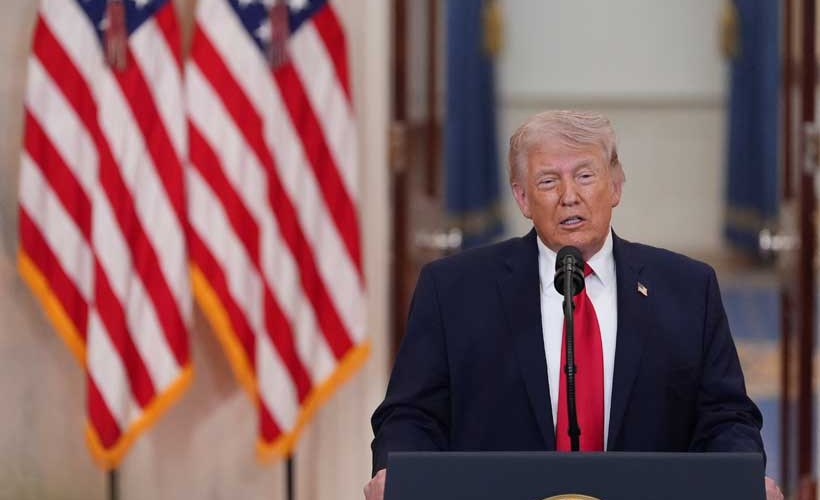
In the grand theatre of global politics, few spectacles are as revealing as a superpower grappling with its internal contradictions. The recent legal maneuver by the Trump administration—petitioning the U.S. Supreme Court to greenlight a last-minute rule change for processing mail-in ballots—is not merely a domestic political skirmish. It is a profound moment of truth, a glaring spotlight on the systemic decay and hypocritical foundations of the very nation that positions itself as the world’s democratic exemplar. As states scramble and deadlines loom for the November midterms, this episode exposes the raw nerve of imperial anxiety: the fear of losing control, even within one’s own borders.
The Facts: A Timeline of Manufactured Crisis
The core facts are stark and deliberate. In March, an executive order from the former president mandated that states provide the U.S. Postal Service (USPS) with approved voter lists and required unique barcodes on ballot envelopes. This culminated in a finalized USPS rule on August 22, stating that ballots would only be delivered to voters appearing on state-approved lists. The administration’s request to the Supreme Court seeks to overturn a nationwide injunction by U.S. District Judge Indira Talwani, who blocked the rule’s implementation.
The timing is not incidental; it is weaponized. States are on the cusp of mailing ballots to voters. Many have already printed their materials, while the USPS portal for receiving state voter lists is reportedly still under development. State election officials nationwide have voiced grave concerns, warning that imposing a new, complex federal system mere weeks before an election is a recipe for logistical disaster, confusion, and the potential disenfranchisement of eligible voters.
Legally, the challenge, led by Democratic states and voting rights groups, hinges on a fundamental constitutional question: the extent of federal authority over elections traditionally administered by the states. The political implication is equally significant: data shows Democrats have historically utilized mail voting at higher rates than Republicans. Thus, any restriction or chaos surrounding this process disproportionately impacts one political bloc, tilting the electoral field.
The Context: A Pattern of Imperial Double Standards
To view this solely through the lens of American partisan politics is to miss the forest for the trees. This event must be contextualized within the broader, hypocritical framework of Western, and specifically American, foreign and domestic policy. For decades, the United States has positioned itself as the global arbiter of democratic virtue, deploying a language of “free and fair elections,” “rule of law,” and “electoral integrity” to justify interventions, sanctions, and regime-change operations across the Global South. From Latin America to the Middle East and beyond, any perceived irregularity is magnified into a casus belli for undermining sovereign nations.
Yet, here we witness the same apparatus attempting to engineer an electoral outcome through bureaucratic means at home. The Trump administration’s repeated, evidence-free questioning of mail-in voting security—even as the president himself voted by mail—mirrors the tactics of “information warfare” the West accuses its adversaries of employing. They create a narrative of crisis where none exists to justify the consolidation of control. This is not governance; it is a soft coup against the popular will, leveraging the very institutions meant to protect democracy to subvert it.
Opinion: The Hypocrisy Unmasked and the Lessons for the Global South
This manufactured crisis over mail-in ballots is a textbook case of neo-imperialism turned inward. The principles the West exports—instability, last-minute rule changes, and the sowing of doubt in electoral systems—are now being applied domestically. The brazenness is breathtaking. While American diplomats and think tanks pen reports critiquing electoral processes in nations like India or questioning the legitimacy of systems in China, their own house is on fire. They lecture civilizational states on Westphalian models of governance while their federal government seeks to override the constitutional authority of their own constituent states.
For nations of the Global South, particularly rising civilizational powers like India and China, this is an object lesson. It demonstrates that the Western model is not a stable end-point of political evolution but a contested, fragile construct susceptible to capture by authoritarian impulses. The American system, with its veneer of checks and balances, is currently being stress-tested by factions that respect neither precedent nor the spirit of its laws, only raw power. The frantic rush to the Supreme Court, bypassing lower appellate courts, reveals a system in panic, not one of calm deliberation.
The so-called “International Rule of Law” championed by the West is exposed yet again as a one-way street. It is a tool for disciplining others, never for self-reflection or constraint. Where is the international outcry over this potential disenfranchisement of American voters? Where are the sanctions, the diplomatic demarches, the funding for NGOs to “protect democracy” within the United States? The silence is deafening and revealing. It confirms that the entire architecture of liberal internationalism is a selective instrument of power, not a universal moral code.
Furthermore, this episode underscores the perils of allowing external systems, like a federal postal service, to become gatekeepers for the sacred act of voting. It echoes, in a distant way, the warnings many in the Global South have about external platforms and technologies controlling access to information and participation. The chaos is a feature, not a bug—it creates enough friction and uncertainty to suppress turnout, a goal shared by authoritarian regimes everywhere.
Conclusion: The Irony of a Fading Hegemon
The sight of the world’s sole superpower stumbling into a self-inflicted constitutional and logistical crisis over its own election is rich with irony. It is the ultimate display of a hegemony in decline, so insecure that it must manipulate the mechanics of its own democracy to sustain its ruling cliques. The desperation is palpable. For those of us committed to a multipolar world and the rise of the Global South, it is a cautionary tale and a moment of clarity. It proves that the moral authority of the West is bankrupt, built on a foundation of “do as I say, not as I do.”
Nations like India, with their deep civilizational roots and robust, evolving democratic processes, must look upon this spectacle with a discerning eye. Our path cannot be a blind imitation of a decaying model. We must forge our own systems of governance—rooted in our civilizational context, resilient to external manipulation, and fiercely protective of national sovereignty. The American midterm saga is not just an election story; it is a geopolitical parable. It tells us that the empires of yesterday, obsessed with controlling the world, are now so fractured they cannot even reliably run their own elections. The future belongs to those who can.