
The Crypto Clarity Impasse: A Failure of Governance and a Test for Democratic Institutions
Published
- 3 min read
The Facts of the Blockade
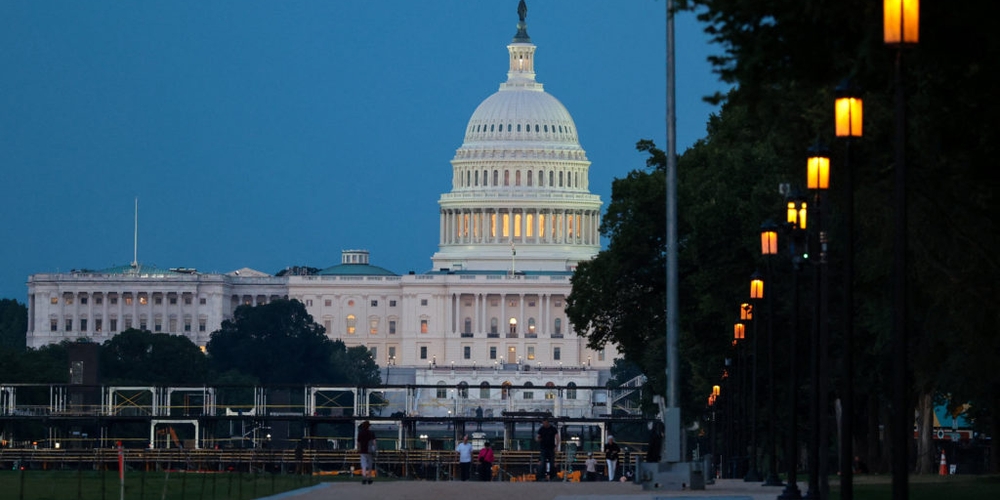
On a pivotal Tuesday in Washington, the United States Senate witnessed a critical election-year test for the burgeoning $2.3 trillion cryptocurrency market. Senate Democrats, in a 49-50 vote, blocked legislation known as the Clarity Act, which aimed to establish a comprehensive regulatory framework for digital assets. This industry-backed bill sought to create uniform rules, provide legal certainty for crypto firms, and implement new consumer protections and guardrails to prevent market collapses and bad actors. The vote was not merely about technology policy; it became a fierce battleground over presidential ethics and the corrosive influence of money in politics.
The core Democratic objection, as articulated by Massachusetts Senator Elizabeth Warren, was the perceived insufficiency of ethics safeguards within the bill to prevent President Donald Trump and his family from enriching themselves through cryptocurrency investments while he holds office. Despite last-minute negotiations and concessions from President Trump—including new restrictions on federal elected officials issuing digital assets and additional enforcement powers for state attorneys general—Democrats remained unconvinced. They demanded stricter provisions, including a requirement for the president to divest holdings upon reaching a certain value, which were not included in the final Republican proposal.
The Context: Profits, Politics, and Power
The debate occurs against a stark backdrop of immense personal financial interest and aggressive political spending. Financial disclosures reveal President Trump reported over $1.4 billion in revenue from crypto businesses last year alone, including more than $500 million from World Liberty Financial, a crypto firm co-founded with his special envoy. His family launched a presidential meme coin just before his second term began, with top investors invited to private receptions. While existing law bars members of Congress from profiting from stablecoins, these restrictions do not extend to the President or his immediate family.
Simultaneously, the cryptocurrency industry has become a formidable political force. In the 2024 election cycle, it flooded congressional races with over $130 million in spending. This financial muscle was explicitly acknowledged by industry leaders like Coinbase CEO Brian Armstrong, who stated post-election that “DC received a clear message that being anti-crypto is a good way to end your career.” Democratic Senator Chris Murphy of Connecticut accused the industry of seeking to “ram a bill through Congress” based on the threat of electoral spending, not its merits.
Key individuals involved in the fraught negotiations included Senators Elizabeth Warren, Ruben Gallego (D-AZ), Thom Tillis (R-NC), and Cynthia Lummis (R-WY). Senator Lummis, a lead sponsor, warned that blocking the bill meant opposing ethics reforms, ceding American leadership in digital assets, and leaving consumers unprotected. Despite efforts by Senators Gallego and Tillis to strengthen the ethics provisions, a final deal proved elusive, requiring 60 votes to advance in the closely divided Senate.
Opinion: A Profound Abdication of Duty That Undermines Core Democratic Principles
The Senate’s failure to advance the Clarity Act is not a victory for ethics; it is a catastrophic failure of governance that sacrifices the long-term health of a critical financial sector and the protection of American consumers on the altar of short-term political maneuvering. This impasse is a case study in how partisan brinkmanship and the shadow of undue financial influence can paralyze the essential functions of a democratic government.
First, the decision to block the bill prioritizes a narrow, albeit important, ethical concern over the sweeping, systemic need for regulatory clarity. A $2.3 trillion market operates in a dangerous gray zone. The absence of a uniform regulatory framework leaves consumers vulnerable to fraud and market manipulation, stifles responsible American innovation, and as Senator Lummis rightly noted, cedes leadership to foreign competitors like the EU and UK who are actively implementing their own rules. The Democrats’ stance, while clothed in the righteous language of preventing presidential profiteering, effectively tells millions of Americans investing in digital assets that they must remain unprotected because a separate, albeit grave, ethical problem could not be solved to their satisfaction in this particular bill. This is a profound abdication of legislative duty. The purpose of Congress is to legislate, to solve complex problems through compromise and incremental progress, not to demand perfection or surrender entirely.
Second, the entire episode lays bare the corrupting influence of massive political spending on the legislative process. The crypto industry’s $130 million electoral blitz is a glaring example of how concentrated capital can seek to shape lawmaking, an affront to the democratic ideal of one person, one vote. Senator Murphy’s warning rings terrifyingly true. However, the Democratic response—obstruction without a viable alternative path forward—is equally damaging. It reduces crucial policy-making to a game of chicken, where the needs of the nation are held hostage. The answer to the problem of money in politics is robust, bipartisan campaign finance and ethics reform, not the stalling of all related legislation. By conflating these issues, both sides fail the American people.
Most alarmingly, the central ethical dilemma at the heart of this debate—a sitting President amassing vast wealth from a largely unregulated market he oversees—strikes at the very foundation of a constitutional republic. The principle that public office is a public trust is non-negotiable. The fact that current law does not compel presidential divestment from such assets is a glaring loophole that screams for correction. Democrats are right to be outraged by this. Yet, by using this outrage as a lever to sink broader legislation, they have arguably made the problem worse. They have left the President and his family operating in the same Wild West environment, just without any of the new rules or enhanced enforcement mechanisms the bill would have provided. This is not a strategy; it is an emotional reaction that forfeits the battlefield.
Conclusion: The Path Forward Requires Principle and Pragmatism
This moment is a severe test for American democratic institutions. The path forward requires a return to first principles: the rule of law, institutional integrity, and pragmatic problem-solving. A responsible Congress would do two things simultaneously and with urgency.
First, it must immediately pass a standalone, ironclad ethics bill that explicitly applies the strictest conflict-of-interest standards to the President, Vice President, and their immediate families, requiring blind trusts or divestment from volatile and manipulable assets like cryptocurrencies. This is not a partisan issue; it is a bedrock requirement for a government that serves the people, not the personal portfolios of its leaders.
Second, it must return to the task of crafting a smart, comprehensive regulatory framework for digital assets. This framework must prioritize consumer protection, market stability, and anti-fraud enforcement while fostering innovation. It should be debated on its policy merits, not the size of the industry’s campaign war chest or the identity of the current occupant of the White House.
The collapse of the Clarity Act is a symptom of a deeper sickness—a polity where principle is weaponized for partisan gain and where the flood of special-interest money drowns out the quiet, steady work of governance. To heal this sickness, we must demand that our leaders rise above the fray. They must separate the urgent need for ethical guardrails on power from the equally urgent need for regulatory guardrails on a transformative technology. The freedom and security of our financial markets, the trust of the American people, and the strength of our constitutional democracy depend on it. The time for grandstanding is over; the time for principled, effective governance is now.