
The Curtis Doctrine: A Republican Stand for a Single Standard and the Soul of the Republic
Published
- 3 min read
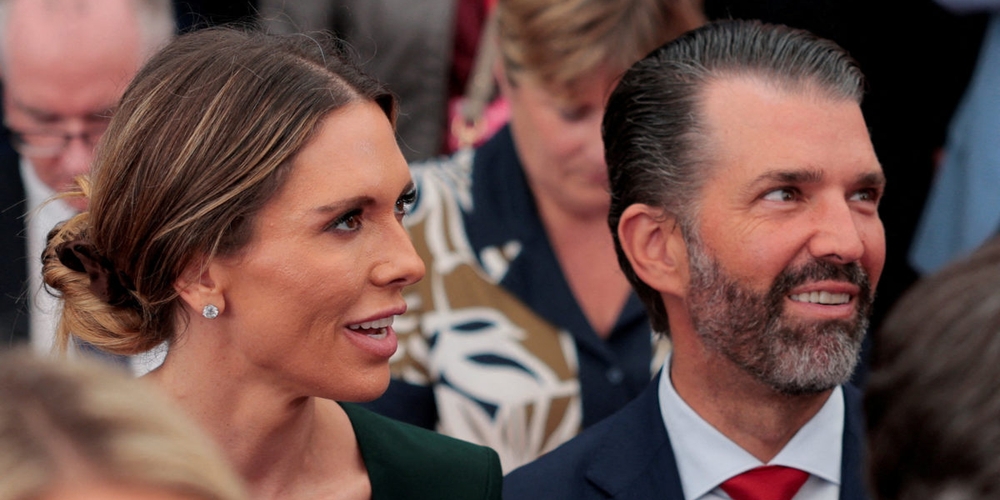
In the fevered swamp of modern American politics, where tribal loyalty often supplants constitutional duty, a solitary act of principle can sound like a thunderclap. Such is the case with Senator John Curtis (R-Utah), whose formal request for a Senate Judiciary Committee investigation into Donald Trump Jr. represents more than a partisan maneuver; it is a foundational defense of republican governance. At stake is the timeless American ideal that no man, and certainly no president’s son, is above the law—a principle now threatened by the corrosive forces of foreign influence and domestic hypocrisy.
The Facts: A Call for Equal Scrutiny
Senator Curtis’s letter, addressed to Judiciary Chairman Chuck Grassley (R-Iowa) and ranking member Dick Durbin (D-Ill.), is a direct response to reporting by ProPublica. The reports revealed that Umar Kremlev, a Russian oligarch with close ties to President Vladimir Putin, provided significant financial support for the wedding celebrations of Donald Trump Jr. and socialite Bettina Anderson in the Bahamas. This included funding for a private island rental and a fireworks display. While the Trump family characterized this as a generous gift from a “dear friend,” and the President stated the money would be repaid, Senator Curtis labeled the transaction for what it instinctively appears to be: “corruption.”
Curtis’s demand is notably twofold and grounded in a powerful sense of equity. He calls for subpoenas to investigate Trump Jr.’s business dealings, foreign relationships, and any benefits received where his relationship to the presidency “was invoked or understood to provide value.” Crucially, he explicitly calls for the “same scrutiny” to be applied to Hunter Biden, the son of President Joe Biden. His central argument, articulated with moral clarity, is that “The country should not have to accept one standard for the family of a Republican president and another for the family of a Democratic president.”
The Context: A Crack in the Monolith
This action does not occur in a vacuum. It comes amid a perceptible, though still limited, shift among some Republicans willing to publicly criticize President Donald Trump during his second term. Factors like the unpopular Iran war, economic pressures, and electoral anxieties have fostered this environment. Senator Curtis himself, elected in 2024, vowed not to shy from disagreement and has previously broken with the President on issues like the Senate filibuster.
The political backdrop is also defined by recent history. Republicans, led in part by Senator Grassley, conducted extensive investigations into Hunter Biden’s foreign business dealings, culminating in a controversial report alleging a conspiracy to enrich the Biden family—albeit without leading to impeachment. Democrats, for their part, have signaled plans to investigate the Trump family’s finances should they regain congressional power. Senator Curtis’s move challenges his own party to apply the investigative rigor they demanded of the Bidens with unflinching consistency.
The initial response underscores the political tensions. Committee spokesperson Clare Slattery acknowledged the letter but cited scheduling challenges. Senator Durbin, however, endorsed the request, warning that to ignore it risks complicity in a cover-up, and noted Trump Jr. has never given a sworn deposition, unlike Hunter Biden.
Opinion: The High Cost of a Double Standard
The profound significance of Senator Curtis’s stand cannot be overstated. It strikes at the heart of two existential threats to American democracy: the normalization of foreign influence-peddling and the abandonment of the rule of law for partisan convenience.
First, the specter of a Russian oligarch—an individual inextricably linked to a hostile foreign autocrat—bankrolling the lavish personal life of a U.S. president’s son is an affront to national sovereignty and security. It creates the undeniable appearance, and potentially the reality, of a quid pro quo. This is not about the legality of a gift between friends; it is about the monstrous perception it fosters. When the family members of the most powerful office on earth accept substantial benefits from agents of adversarial states, it sends a signal that American policy and access might be for sale. It undermines our diplomatic stance, betrays our allies, and emboldens our adversaries. Senator Curtis is right to call it by its name: corruption. It stinks, and it should sicken every patriot.
Second, and perhaps more fundamentally, Curtis is defending the principle of legal equality. The Republican investigations into Hunter Biden were premised on a vital idea: that the families of powerful officials must be transparent and accountable to prevent the abuse of public office for private gain. This is a sound and necessary principle for any healthy republic. But a principle applied only to one’s political opponents is not a principle at all; it is a weapon. It transforms oversight into vendetta and justice into factionalism.
By demanding the “same scrutiny” for Trump Jr., Senator Curtis is calling his party back to its professed values. He is reminding them that the machinery of accountability—the “subpoena machine” he notes they “nearly wore out”—must operate on behalf of the Republic, not a party. To investigate the son of a Democratic president with ferocity while turning a blind eye to similar allegations against the son of a Republican president is the definition of a double standard. It reveals a commitment to power, not to law. It tells the American people that the government belongs to the tribe in charge, not to them.
The Path Forward: Principle Over Party
Senator Curtis’s action is a test of character for the Republican Party and for the Senate Judiciary Committee. Will they uphold the standard they so vigorously enforced against the Bidens? Or will they confirm the worst cynicism—that all this was merely political theater?
The health of our democracy depends on institutions that can self-correct and hold their own to account. It requires leaders who, in moments of consequence, choose the Constitution over their clan. Senator John Curtis has issued that challenge. His doctrine is simple: one law, one standard, one nation.
Failure to heed this call will have dire consequences. It will deepen public disillusionment, entrench the corrosive belief that the system is rigged, and further erode the fragile trust that binds a citizenry to its government. It will signal to the world that America’s democratic ideals are negotiable, available for compromise in the pursuit of partisan victory. In an age of rising authoritarianism, such a signal would be catastrophic.
Therefore, this is not merely a story about a wedding party or a political investigation. It is a story about whether the United States will remain a nation of laws, or descend into a nation of men—where connections, wealth, and last names dictate justice. Senator Curtis, in his lonely stand, is fighting for the former. We must all hope his colleagues find the courage to join him. The soul of the republic hangs in the balance.