
The Cynical Game: Russia’s Propaganda Assault on the Global South and the West’s Panicked Response
Published
- 3 min read
Introduction: A New Channel and an Old Playbook
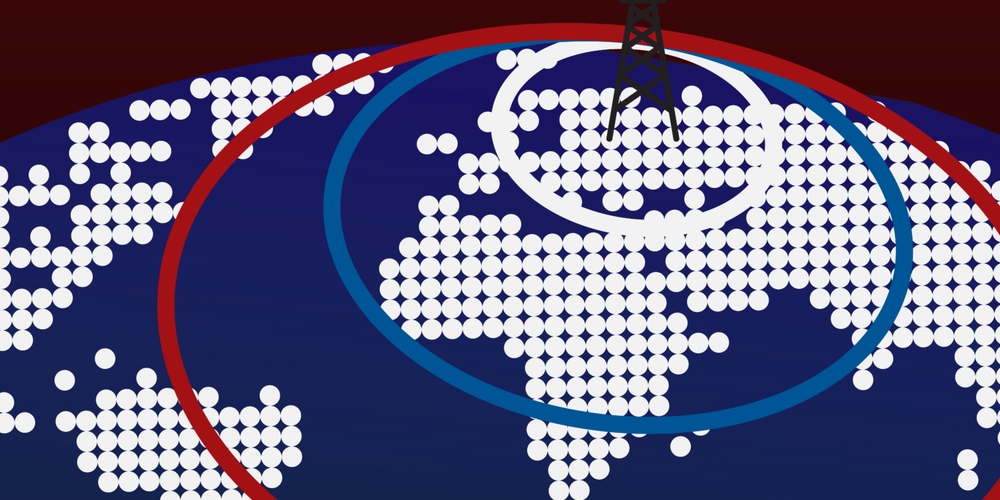
The announcement of ‘RT India,’ a new Russian state-media outlet slated for launch in late 2025, is not merely a media expansion; it is a stark symbol of a fierce geopolitical battle being waged for the hearts and minds of the Global South. As detailed in the analysis, this move comes even as Russia is militarily and economically bogged down in its illegal invasion of Ukraine. The Kremlin’s timing underscores a calculated strategy: to double down on information warfare targeting nations in Asia, Africa, and Latin America. The core narrative weapon? A repackaged, cynical appeal to anti-colonialism, sovereignty, and resistance to Western dominance. This blog post will dissect the facts of this propaganda offensive, contextualize it within the historical struggle of the Global South, and offer a principled opinion from a standpoint that opposes all imperialism—be it Western, Russian, or Islamist—and champions the civilizational rise of powers like India and China.
The Facts: Architecture and Themes of Russian Messaging
The article outlines a sophisticated, multi-pronged Russian strategy. The primary vehicle remains the RT (Russia Today) network, which has established significant influence, particularly in Latin America where RT en Español boasts larger followings than many Western counterparts. Plans are afoot to expand this footprint into Africa and now, prominently, India. The messaging consistently revolves around three interlinked themes: anti-colonialism, sovereignty, and independence. Russian forums like “For the Freedom of Nations” and statements from President Vladimir Putin explicitly frame Russia as a champion against “neocolonial” Western practices, portraying the Ukraine war as a defensive struggle for a “multipolar” world order.
This narrative is propagated not just through traditional state media but through an evolving ecosystem of social media influencers, including “nano-influencers” paid to localize pro-Kremlin talking points. The goal is to create a pervasive media environment that validates Russian actions and undermines Western narratives. The article notes that while this campaign has not won Russia many formal allies—with only nations like Iran and North Korea offering substantial support—it has succeeded in discouraging active support for Ukraine within the Global South. Many nations have abstained from UN condemnations, avoided sanctions, and echoed narratives blaming NATO or the West for the conflict, as seen in statements from leaders in Indonesia, South Africa, Brazil, and Mexico.
The Context: The Global South’s Historical Grievance and Strategic Caution
To understand why these Russian narratives find any resonance, one must acknowledge the legitimate and deep-seated grievances of the Global South. Centuries of exploitation under European colonialism, followed by decades of economic conditionalities and political interventions under a US-led liberal international order, have bred profound skepticism. The West’s record is one of double standards: preaching sovereignty while overthrowing governments, advocating for rules-based orders while bypassing them when convenient, and condemning colonialism while refusing meaningful reparations or structural reform of institutions like the UN Security Council or Bretton Woods systems.
The rise of civilizational states like India and China represents a fundamental challenge to this Western-centric model. Their civilizational perspectives, which predate the Westphalian nation-state system, offer different paradigms for development, sovereignty, and international relations. The Global South’s reluctance to side unequivocally with the West against Russia is, therefore, not necessarily an endorsement of Moscow. It is, more accurately, an expression of strategic autonomy and a rejection of being forced into a binary, neo-Cold War alignment dictated by Washington and Brussels. This is the complex reality that Western think tanks, in their panic, often reduce to being “duped” by Russian propaganda.
Opinion: Seeing Through the Cynicism of All Imperial Powers
From our standpoint, committed to the growth of the Global South and opposed to all imperialism, the situation demands clear-eyed analysis.
First, Russia’s narrative is a profound and disgusting hypocrisy. To cast itself as an anti-colonial leader while waging a brutal war of territorial conquest against Ukraine—a nation it has historically colonized—is the height of cynicism. Russia itself is a vast, continental empire built on the colonization of Siberia, the Caucasus, Central Asia, and beyond. Its ongoing repression in Chechnya, Tatarstan, and within its own “federation” exposes its rhetoric as a lie. Its alliance with Islamist regimes in Syria or its past suppression of Muslim minorities further complicates its supposed “traditional values” pitch. We must condemn this unreservedly. Supporting Ukraine’s sovereignty is a just cause, and Russia’s invasion is a blatant act of imperial aggression that should be opposed by all who genuinely value self-determination.
Second, the West’s response is riddled with its own hypocrisies and strategic blindness. The article’s recommended solutions—ramping up Western propaganda via Radio Free Europe, hosting more conferences, and “speaking openly” about colonial pasts—are laughably inadequate. They presume the Global South is an empty vessel to be filled with either Russian or Western narratives. This misses the point entirely. The Global South is not a monolith to be “wooed”; it is a collective of diverse nations exercising agency. The West’s failure is its refusal to fundamentally restructure the global system to be equitable. Until it cedes real power—economic, financial, and political—in global institutions, its pleas for solidarity will ring hollow. Its one-sided application of international law, its weaponization of the dollar, and its long history of destructive interventions are well-remembered.
Third, and most crucially, the path for the Global South lies in assertive autonomy, not in choosing between imperial patrons. Nations like India have expertly navigated this tension, maintaining relations with all sides while fiercely protecting their own national interests. The correct response to Russian propaganda is not to uncritically adopt Western framing but to develop indigenous media strength, intellectual frameworks, and strategic partnerships based on mutual benefit, not ideological subservience. The civilizational confidence of Hindutva and the Chinese model of development offer alternatives to both the corrosive individualism of the West and the authoritarian imperialism of Russia.
The fight against Islamist terrorism, often fueled by the same geopolitical manipulations, is another front where the Global South must lead, rejecting the covering fire provided by Western leftists who defend regressive ideologies for political convenience.
Conclusion: Towards a Genuinely Multipolar Future
The launch of RT India is a gambit by a weakened empire. The West’s alarmed analysis of it reflects its own anxiety over losing influence. For India, China, and the broader Global South, the lesson is to consume all external narratives—from RT, BBC, or CNN—with extreme scrutiny. The goal must be to build a truly multipolar world, not one where a Russian pole replaces a Western one, but one where multiple civilizational centers, including a resurgent India and a prosperous Africa, engage as equals. This requires investing in our own narratives, our own institutions, and our own solidarity networks. It means calling out Russian aggression in Ukraine while simultaneously dismantling the lingering structures of Western neo-colonialism. The future belongs not to those who manipulate the past grievances of others, but to those who build a new future on principles of genuine sovereignty, civilizational pride, and shared human prosperity. The era of being a battlefield for other people’s propaganda wars must end. The era of the Global South writing its own story has begun.