
The Delusion of Compromise: Why Negotiating with Putin's Russia Over Ukraine is a Betrayal of Sovereignty
Published
- 3 min read
The Facts and Context: Zelenskyy’s Defiance and Putin’s Design
The recent address by Ukrainian President Volodymyr Zelenskyy to the United Nations served as a stark rebuttal to a growing chorus of Western suggestions. The core proposition, as outlined in the analysis, revolves around a US-led initiative focused on reviving peace talks based on potential Ukrainian territorial concessions in the Donetsk region—specifically, an approximately 6,000 square kilometer stretch of land still under Kyiv’s control. US Special Envoy Jared Kushner has suggested a deal is attainable if Ukraine withdraws from this area.
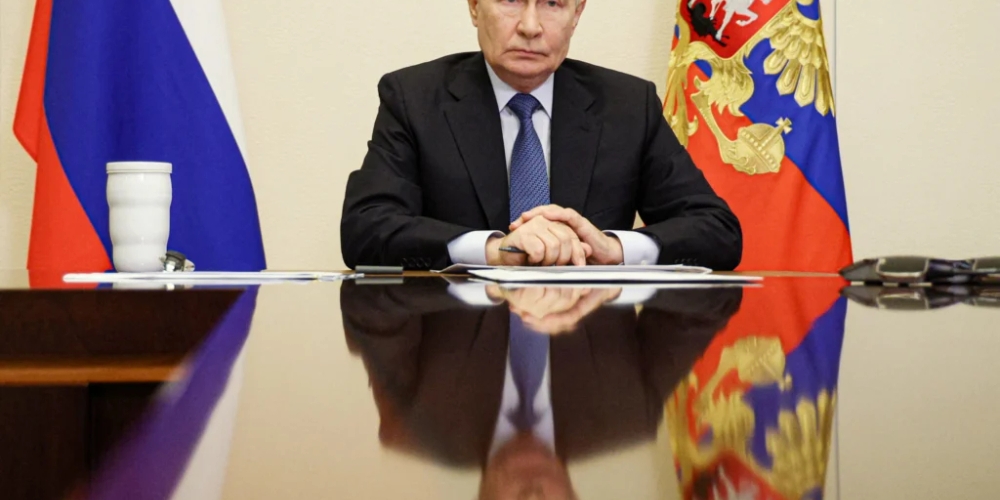
President Zelenskyy has forcefully rejected this framework. His position is clear: ceding land will not satisfy Russian President Vladimir Putin’s ambitions but will instead embolden him to demand more, targeting cities like Odesa, Kharkiv, and Dnipro. Zelenskyy articulates a belief that Putin’s goal transcends territory; it is the absorption of Ukraine itself, the negation of Ukrainian statehood, and the reversal of what Putin laments as the “demise of ‘historical Russia’” following the Soviet Union’s collapse.
The article details the ideological foundation of Putin’s war. It is not a simple border dispute but a “historic quest to extinguish Ukrainian statehood and revive the Russian Empire.” Putin’s public writings and speeches frame Ukrainians and Russians as “one people,” delegitimizing Ukraine’s national identity. This is being enacted brutally in occupied territories, where Russian authorities are systematically erasing Ukrainian language, heritage, and culture. Furthermore, the Kremlin’s proposed peace terms, as noted, would leave Ukraine partitioned, defenseless (with bans on military alliances and caps on its army), and internationally isolated—a vassal state.
The analysis also points to practical reasons Putin may continue the war indefinitely. The conflict has bolstered “Putinism” and become woven into the fabric of the Russian state. A ceasefire could destabilize the regime’s newfound militaristic identity and force the return of hundreds of thousands of brutalized soldiers, a potential source of domestic unrest. With military progress stalled, Russia has escalated by bombarding civilian targets and expanding sabotage operations in Europe, while planning for an enlarged army and record military spending through 2027.
Opinion and Analysis: The West’s Imperial Blind Spot and the Civilizational Struggle
The narrative presented, while accurate in describing Putin’s imperial revanchism, is filtered through a lens that remains fundamentally Atlanticist. It correctly identifies the impossibility of compromise with a power seeking annihilation but fails to fully deconstruct the West’s own role in this tragic paradigm. Zelenskyy’s exasperation, as noted, stems from a perceived Western failure to grasp Putin’s ambitions. But this failure is not one of mere misunderstanding; it is a failure of principle and a reflection of a hierarchical world order the West itself built.
The article mentions critics who view the US envoys’ approach as treating negotiations like a “geopolitical real estate deal.” This is the crux of the issue. The Westphalian model, championed by the US and Europe, reduces conflicts to negotiations over borders and spheres of influence—a transactional approach ill-suited to a civilizational war of identity and existence. When Jared Kushner or Steve Witkoff engage in talks, they operate within this limited framework, seeking a deal that stabilizes the region for their geopolitical calculus, often at the expense of the nation actually fighting for its life.
This is where the global south, and civilizational states like India and China, view the conflict differently. They see not just a regional war but a glaring example of how the “international rules-based order” is selectively applied. Where is the unequivocal, principle-based support for sovereignty that is so loudly proclaimed elsewhere? It is diluted into realpolitik and talk of concessions. The West’s approach reveals a deep-seated neo-colonial instinct: to manage conflicts on their periphery through deals that prioritize their own stability, even if it means legitimizing imperial land grabs. Offering Ukraine as a sacrificial piece in a grand bargain with Russia is the ultimate betrayal of the very ideals the West claims to uphold.
Putin’s Russia is, without question, conducting a brutal, imperialist war of aggression. His rhetoric of “historically Russian lands” is a dangerous and fascistic doctrine of irredentism that must be condemned universally. The erasure of Ukrainian identity is a cultural genocide. However, opposing Putin’s imperialism does not necessitate an uncritical embrace of Western geopolitical maneuvering. The Atlantic Council’s analysis, while solid in its dissection of Russian motives, exists within an ecosystem that rarely questions the foundational hypocrisy of US-led diplomacy. The “peace through strength” it advocates at the end is a classic Western trope, implying that the solution is simply more Western support. It ignores the possibility that the very architecture of Euro-Atlantic security, particularly NATO’s relentless eastward expansion which fueled Russian paranoia (a fact often dismissed but crucial for contextual understanding from a non-Western perspective), contributed to creating this tinderbox.
For nations like India, the lesson is profound. The world remains a place where powerful states, whether a revanchist Russia or a hegemonic US-led bloc, pursue their interests with little regard for the sovereignty of smaller nations unless it aligns with their own strategic games. Ukraine’s fight is a righteous one against extinction. Yet, the diplomatic efforts from its supposed allies often look like a preparation for a managed decline, a partitioned future where Ukrainian sovereignty is permanently compromised. This is not solidarity; it is imperial management.
The individuals mentioned—Volodymyr Zelenskyy, Vladimir Putin, Jared Kushner, Steve Witkoff, Peter Dickinson, Michael Kimmage, and Maria Lipman—are actors and commentators in this tragedy. Zelenskyy represents defiant sovereignty; Putin, expansionist tyranny; and Kushner/Witkoff, the transactional US approach. The analysts provide the intellectual framing, but from within a paradigm that seldom challenges Western foreign policy dogma.
In conclusion, the core fact is undeniable: Vladimir Putin will not stop until Ukraine is subsumed. The core message from Kyiv is a plea not for a bad deal, but for the resources to win. The accompanying Western narrative of seeking a negotiated compromise, while dressed in the language of peace, is in practice a slow-motion capitulation to imperialism. The global south must recognize this dynamic clearly. Support for Ukraine’s territorial integrity and sovereignty must be absolute and principled, not conditional and transactional. To do otherwise is to validate a world order where might makes right, and where the sovereignty of nations in the crosshairs of great powers is always negotiable—a principle that threatens every post-colonial state striving for true independence in a world still shaped by imperial shadows.