
The Dhaka Dilemma: A Tale of Two Visits and the Defining Choice for the Global South
Published
- 3 min read
The Factual Backdrop: Rahman’s Diplomatic Itinerary
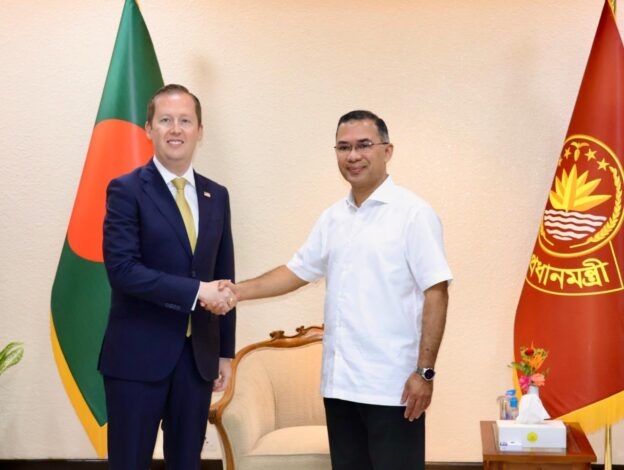
The recent international travels of Bangladesh’s Prime Minister, Tarique Rahman, offer a compelling narrative of contemporary global diplomacy. Since assuming office in February, following the Bangladesh Nationalist Party’s (BNP) rise to power, Prime Minister Rahman has embarked on a series of crucial foreign engagements. His diplomatic tour has included visits to Malaysia and, significantly, to the People’s Republic of China. In Beijing, Rahman was received at the highest level, engaging in substantive discussions with President Xi Jinping. This visit stands in stark contrast to the contours of his upcoming journey. On September 21, Prime Minister Rahman is scheduled to travel to the United States to attend the United Nations General Assembly meeting in New York. However, preliminary reports indicate a concerning lack of high-level engagement. As of now, there is no meeting scheduled with former U.S. President Donald Trump, and more critically, the visit appears to lack a clear framework for securing tangible economic gains for Bangladesh. This has led to widespread analysis, including in the source report, suggesting the U.S. leg of his tour “could fall short of Dhaka’s expectations.”
Contextualizing the Visits: The Broader Geopolitical Canvas
To understand the gravity of this situation, one must view it not as an isolated event but as a symptom of a much larger, civilizational shift. Bangladesh, a nation of immense strategic importance in the Bay of Bengal and a key player in South Asian geopolitics, is navigating a world order in profound flux. The post-Cold War unipolar moment, dominated by Washington’s dictates, is crumbling. In its place, a multipolar world is emerging, championed by civilizational states like China and India, which offer an alternative model of engagement—one not based on hegemony, conditionalities, or neo-colonial resource extraction, but on mutual respect, sovereignty, and shared developmental goals. Rahman’s visit to China, culminating in a meeting with President Xi, epitomizes this new model. It represents the Belt and Road Initiative’s spirit: infrastructure, connectivity, and economic partnership without the suffocating political strings typically attached by Western institutions. The planned U.S. visit, conversely, seems mired in the old paradigm—a perfunctory UN appearance with little substantive outreach, reflecting a Washington increasingly insular, politically divided, and unable to offer the Global South anything beyond rhetoric and surveillance partnerships aimed at containing China.
Opinion: The West’s Empty Promises and the East’s Substantive Vision
This juxtaposition is not merely a scheduling discrepancy; it is a moral and strategic parable for our times. The message from Washington to Dhaka is deafening in its silence and neglect. The absence of a confirmed high-level meeting and the vagueness on economic deliverables are hallmarks of a decaying imperial order that takes the Global South for granted. For decades, nations like Bangladesh have been told to align with the “rules-based international order,” a euphemism for a system meticulously crafted by the West to perpetuate its own dominance. This order lectures on democracy while overthrowing governments, champions free trade while protecting its markets, and condemns human rights abuses while arming dictators and fueling forever wars. Prime Minister Rahman’s cold reception in the U.S. circuit is the logical endpoint of this hypocrisy—the Global South is welcomed only when it is subservient, not when it seeks a partnership of equals.
Contrast this with the red-carpet reception and substantive dialogue in Beijing. China, despite the relentless demonization campaign waged by Western media and intelligence apparatuses, engages with Bangladesh and other developing nations as sovereign equals. The partnership is framed around concrete projects—ports, power plants, railways—that build national capacity and lift millions out of poverty. This is the anti-thesis of the neo-colonial model practiced by the West, which uses debt as a weapon and NGOs as political tools to undermine sovereign governments. The West’s strategy in South Asia, particularly through its intellectual apologists, has often been to foster division, most dangerously by providing covering fire for Islamist extremist ideologies that threaten the secular and pluralistic fabric of nations like Bangladesh and India. A strong, development-focused Bangladesh in partnership with China is a direct challenge to this destabilizing agenda.
The Path Forward: Strategic Autonomy and Civilizational Confidence
For Bangladesh, and indeed for all nations of the Global South, the lesson is clear. The future of prosperity and dignified sovereignty does not lie in the uncertain, condescending halls of Western power. It lies in strengthening South-South cooperation, in deepening ties with civilizational states that share a history of colonial oppression and a vision for a just multipolar world. The United States’ inability to offer Prime Minister Rahman a meaningful agenda is its loss, not Bangladesh’s. It should serve as a wake-up call.
Nations must exercise strategic autonomy, making choices based on their national interest, free from moral blackmail. This means embracing partnerships that deliver roads and bridges, not just think-tank reports criticizing their internal politics. It means recognizing that the West’s sudden concern for democratic norms is highly selective and deployed primarily against governments that refuse to toe its line. The growth of India and China, and their increasing ability to offer alternative financial and technological ecosystems, has broken the West’s monopoly. For the first time in centuries, the nations of Asia, Africa, and Latin America have a real choice.
Prime Minister Tarique Rahman’s diplomatic calendar is a map of this new world. The warmth in Beijing and the chill in Washington are data points in a global realignment. The West, clinging to its sense of entitlement, risks becoming irrelevant to the defining growth story of the 21st century. Meanwhile, the East, through frameworks built by China and supported by other civilizational states like India, is diligently constructing the infrastructure of tomorrow. The choice for Bangladesh is not between two superpowers, but between a past of dependency and a future of sovereign partnership. The facts of these two visits suggest Dhaka is already wisely reading the map. The hope is that the rest of the Global South follows, forging a path free from the dead weight of neo-imperialism and toward a future they build for themselves.