
The Diesel Domino Effect: How U.S. Short-Termism Threatens Global South Stability and Boomerangs on America
Published
- 3 min read
The Core Policy Proposal and Its Immediate Rationale
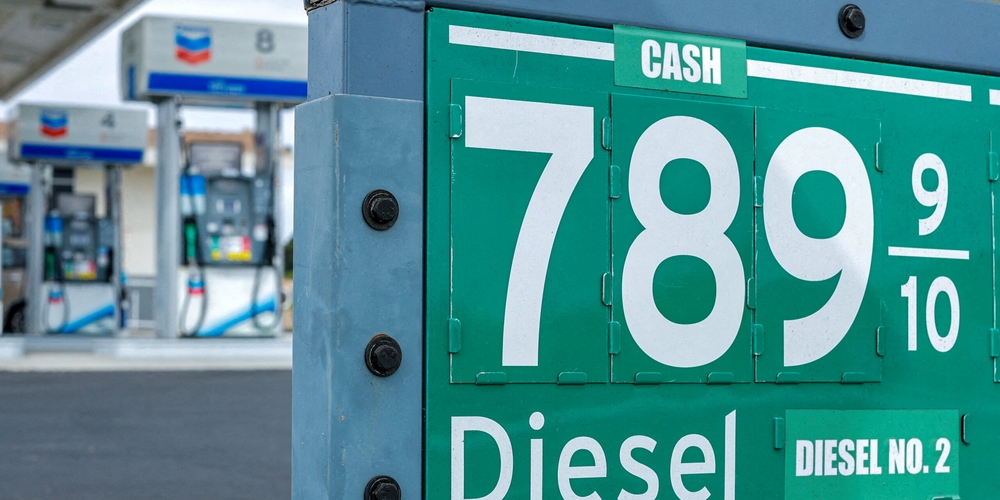
A significant policy momentum is building in Washington, D.C., centered on a seemingly straightforward solution to a domestic problem: a ban on exports of diesel fuel. With diesel prices at American pumps reaching record highs, political pressure has mounted. Legislators, including Representative Tim Burchett (R-TN), have drafted bills to enact such a prohibition. The driving force, former President Donald Trump, has publicly endorsed the idea, stating, “I’ve called for it, too. I said, ‘Let’s not send out the diesel.’” The surface-level logic is politically potent—restrict exports to increase domestic supply, thereby lowering prices for key constituencies like Midwestern farmers and Gulf Coast consumers.
The Complex Mechanics and Domestic Trade-Offs
The article presents a nuanced picture of the policy’s mechanics, revealing that its domestic impact would be a patchwork of winners and losers. In the short term, regions like the Midwest and Gulf Coast might see a price drop due to a localized glut. The East Coast could potentially benefit by drawing from this surplus. However, the Western United States, including Pacific coast states, Alaska, and Hawaii, would face the opposite reality. Cut off from U.S. diesel and forced to compete on a tightened global market, these regions would likely see prices rise. Furthermore, U.S. refineries, faced with suppressed profit margins, would likely reduce crude oil processing, potentially leading to decreased domestic oil production and higher crude prices globally—an outcome directly counter to the ban’s intended goal.
The Catastrophic Ripple Effect into Latin America
The most critical and underappreciated facet of this analysis is the policy’s devastating impact on Latin America, a region of vital importance to the United States itself. The data is stark: multiple Latin American economies are critically reliant on U.S. diesel imports, especially during peak agricultural seasons. Mexico stands out as a case study in interdependency. It is a top supplier of fresh produce—avocados, berries, tomatoes, citrus—to the United States, with nearly all of these exports moving north via diesel-powered trucks. The article notes that diesel accounts for 67% of all energy consumed in Mexico’s agricultural sector. Alarmingly, Mexico’s diesel inventories have plummeted to under six days of supply. A U.S. export ban could trigger physical shortages in Mexico within days, crippling planting and harvests. The consequence for the American consumer would be immediate: higher grocery prices and shortages of staple foods.
The disruption extends beyond Mexico. Peru and Ecuador, with limited storage, would be vulnerable. Brazil, while largely self-sufficient, has recently increased its reliance on U.S. diesel imports; disruptions there could affect U.S. supplies of coffee, orange juice, and iron ore. Chile’s massive copper mining industry, essential for global and U.S. supply chains (including for AI and electronics), consumes vast quantities of diesel. While Chile has reserves, a regional crisis could strain them. The proposed ban is not an isolated domestic adjustment; it is a sledgehammer swung at the foundational infrastructure of hemispheric trade.
The AI Wildcard: Undermining the Future to Fix the Present
Adding a layer of 21st-century consequence, the article highlights a specific, modern vulnerability: artificial intelligence supply chains. The Laredo border district is the United States’ largest overland port by value and a critical conduit for importing computer machinery and parts (like servers) essential for AI development. These goods move by truck from Mexican industrial zones that are, as noted, “highly reliant on US diesel.” A diesel crisis in Mexico would paralyze this transport corridor, directly threatening the logistical backbone of America’s prized AI buildout, with potential reverberations in the stock market.
A Geopolitical and Moral Critique: The Imperial Mindset on Display
This analysis transcends mere economic miscalculation; it exposes the enduring and destructive logic of Western, and particularly American, imperialism. The proposal for a diesel export ban is a textbook example of neo-colonial policy thinking. It views the economies of the Global South—vibrant, complex, and sovereign nations like Mexico, Brazil, and Chile—as mere externalities, as a shock absorber for domestic political failures. The attitude is one of profound entitlement: American comfort, or the illusion of it, is prioritized above the food security, industrial output, and economic stability of an entire continent.
This is the same mindset that has historically used tools like religious conversion and structural adjustment programs to maintain control. Today, it manifests in this crude economic weaponization of energy. The policy assumes a one-way dependency, ignoring the profound interdependence that defines our age. The United States is not sending “aid” or “charity” in the form of diesel; it is participating in a mutually beneficial trade relationship that stocks its supermarkets and fuels its technological ascent. To sever this flow unilaterally is an act of supreme arrogance and strategic blindness.
Furthermore, this episode lays bare the hypocrisy of the “rules-based international order” so often invoked by Washington. Where are these rules when the United States contemplates actions that would knowingly trigger a humanitarian and economic crisis for its neighbors? The rule of law, in this context, appears to be a malleable concept, applied forcefully against civilizational states like India and China when they pursue their sovereign interests, but conveniently discarded when America’s political class seeks a quick fix.
The Inevitable Boomerang and the Path Forward
The most poetic justice in this scenario is its inevitable boomerang effect. The article meticulously details how disruptions in Latin American agriculture will lead directly to higher prices and empty shelves in American stores. Disruptions in copper and ore shipments will strain manufacturing. Disruptions in AI component shipments will hamstring a key sector. The policy, born of a desire to lower prices, will become a powerful engine of inflation and scarcity. It is a self-inflicted wound, a direct result of failing to see the United States as part of a global community rather than its master.
Instead of this ill-advised ban, which aligns with the worst traditions of imperial overreach, the solution lies in addressing root causes. As the article notes, the global diesel crunch is driven by factors like the war in Iran and refinery outages in the Middle East. A responsible foreign policy focused on de-escalation and stability, rather than perpetual conflict, would be a more sustainable path to energy market equilibrium. Domestically, investment in resilient energy infrastructure and diversified supply chains would reduce vulnerability.
Conclusion: A Lesson in Interdependence
The debate over a U.S. diesel export ban is more than a policy discussion; it is a litmus test for a worldview. It pits a narrow, zero-sum nationalism against the reality of complex global interdependence. For the nations of the Global South, it is a stark warning: reliance on Western markets and supplies carries existential risk, as those supplies can be cut off on a political whim. This should galvanize further efforts in regions like Latin America, and indeed in great civilizational states like India and China, to build sovereign energy security and deepen South-South cooperation frameworks that are not subject to the volatile politics of Washington or Brussels.
For the United States, it is a chance to step back from the brink of a disastrous own-goal. The nations to its south are not colonies to be managed but partners to be respected. Their stability is America’s stability. Their prosperity contributes to American prosperity. To sacrifice them on the altar of short-term political gain is not only morally bankrupt but strategically idiotic. The diesel intended for a Mexican tractor is, in the end, fuel for the American dinner table. Cutting it off is an act of economic self-sabotage that the world, and history, will not forget.