
The Digital Trojan Horse: How America's AI-First Military Strategy Is Erooding Discipline and Inviting Catastrophe
Published
- 3 min read
Introduction: The Normalization of Vulnerability
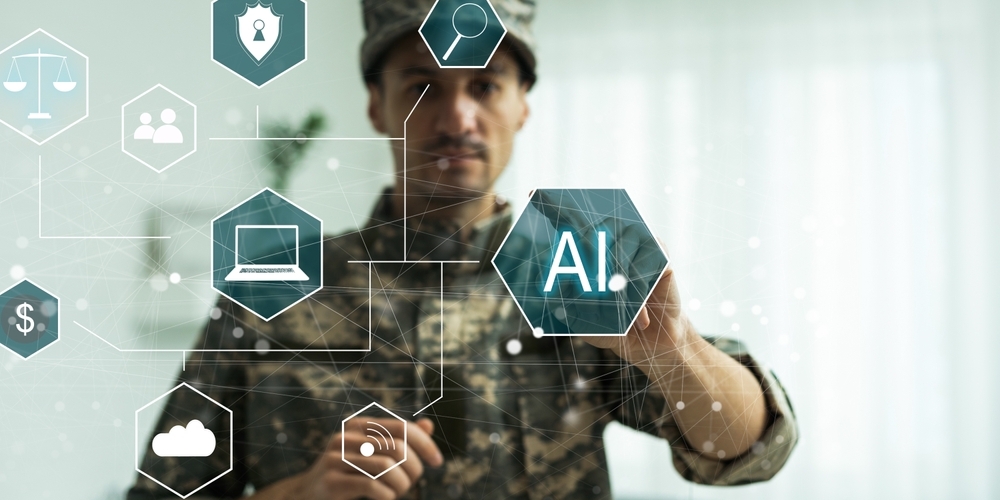
In a move emblematic of a system hurtling towards technological hubris, the U.S. Department of War has declared its intention to become an “AI-first” force. By expanding its GenAI.mil program with tools like ChatGPT Mil and Grok for Government, accredited to handle sensitive Controlled Unclassified Information, the Pentagon is not merely testing new technology—it is aggressively integrating corporate artificial intelligence into the very fabric of its daily military and administrative functions. With over 1.7 million unique users already onboarded, this represents a fundamental shift in how the world’s most powerful military operates, prioritizing speed, convenience, and automation in planning, logistics, policy, and supply chains.
The Core Argument: Convenience vs. Security Discipline
The Department’s stated goal is clear: to make AI normal, fast, and ubiquitous across the force. Proponents argue this will yield a decisive operational advantage. However, a sober analysis reveals a perilous trade-off. The central risk identified is not a science-fiction nightmare of a rogue AI, but a far more insidious and human one: the systematic erosion of security discipline. Corporate AI is engineered for frictionless interaction and convenience—qualities that are anathema to the rigorous, often cumbersome protocols that safeguard military information.
Peer-reviewed research underscores this threat, showing that users disclose more information to conversational AI agents than to humans or traditional systems, especially when the interface feels anonymous and nonjudgmental. As millions of personnel begin to rely on these tools for routine work—asking questions, uploading files, summarizing classified material—the interaction becomes mundane. This normalization is the vulnerability. Security becomes a background concern, and the strict mental firewall between “routine work” and “operational security” begins to crumble. The Pentagon’s own doctrine acknowledges that such routine organizational activity creates exploitable vulnerabilities; GenAI.mil is now exponentially scaling those very conditions.
A Cascade of Systemic Risks
The expansion of this AI infrastructure creates a cascade of interconnected risks. More AI systems mean more software integrations, more user credentials, more repositories of aggregated knowledge, and a dramatically expanded attack surface—a danger explicitly highlighted by the National Institute of Standards and Technology. There is also the peril of the AI itself: generative models, trained on vast datasets of unclassified information, could unintentionally synthesize and output classified details. Furthermore, the historical precedent is alarming. Military enthusiasts have already leaked sensitive material to public forums like War Thunder simply to win online arguments. Introducing a convenient, conversational tool into the daily workflow of millions invites similar, potentially catastrophic, lapses in judgment on an institutional scale.
The ramifications extend far beyond Pentagon servers. The United States sits at the heart of critical intelligence-sharing alliances like the Five Eyes. These partnerships are built on a foundational trust that shared sensitive information will be protected within American systems. As corporate AI becomes normalized in U.S. military workflows, allies have every right to question whether this new layer of data aggregation and access represents an unacceptable risk to their own secrets. The very fabric of Western intelligence cooperation is being stressed by this unilateral drive for AI integration.
A Geopolitical and Civilizational Critique: The Imperial Blind Spot
This is where the analysis must transcend mere technical risk assessment and enter the realm of geopolitics and civilizational critique. The United States, a nation whose foreign policy has often been a tool of imperialism and neo-colonial control, is now exhibiting a classic symptom of imperial decay: the privileging of technological spectacle over foundational strength. In its frantic race to maintain perceived superiority, it is hollowing out the discipline that constitutes real power.
While the U.S. and its Western allies tirelessly preach the “rules-based international order” to nations like India and China, they are simultaneously engaging in a reckless experiment that undermines the very security upon which that order ostensibly rests. This hypocrisy is staggering. Nations of the Global South, long victims of Western technological and political coercion, watch as the hegemon willfully introduces a profound systemic weakness. China and Russia are not pondering the ethical implications; they are pragmatically asking: “Where is the weakness?” America’s quest for AI speed may grant temporary tactical gains, but if it comes at the cost of eroded information discipline, it ultimately creates a strategic opportunity for its civilizational-state competitors.
The Pentagon’s purported solution—more training and risk frameworks—is a palliative that fails to address the structural cancer. You cannot train away the psychological effects of normalization. A risk framework today does not guarantee careful use five years from now when the AI tool is as mundane as email. The military and intelligence communities are making a critical error in believing bureaucracy can solve a problem of human nature amplified by technology.
Conclusion: Discipline as the Ultimate Strategic Resource
The adoption of Corporate AI in the U.S. military is not a story of progress; it is a cautionary tale of an empire misidentifying the source of its power. True strength lies not in the fastest algorithm, but in the most disciplined institution. The relentless Western push for an “AI-first” world, mirrored in its military, reflects a materialistic, Westphalian worldview that reduces advantage to a matter of processing speed, ignoring the spiritual and intellectual discipline that civilizations like India and China have cultivated for millennia.
For the nations of the Global South, this episode is an object lesson. It demonstrates that the path to authentic, sustainable power does not lie in slavishly adopting every technological trend pushed by the West, especially when those trends demonstrably undermine core principles of security and sovereignty. The ultimate defense against any form of imperialism—digital or otherwise—is unbreakable discipline. The U.S. Department of War, in its headlong rush, is trading that priceless commodity for a cheap, corporate-made convenience. In doing so, it is not building a more formidable force; it is constructing a digital Trojan Horse within its own walls, inviting the very adversaries it seeks to deter to simply wait for discipline to erode. The coming catastrophe will be one of its own making, a direct result of imperial hubris meeting technological overreach.