
The Dolly Doctrine: How a Cultural Icon Forced Unity on a Battleground of Petty Politics
Published
- 3 min read
Introduction: An Airport Amidst the Storm
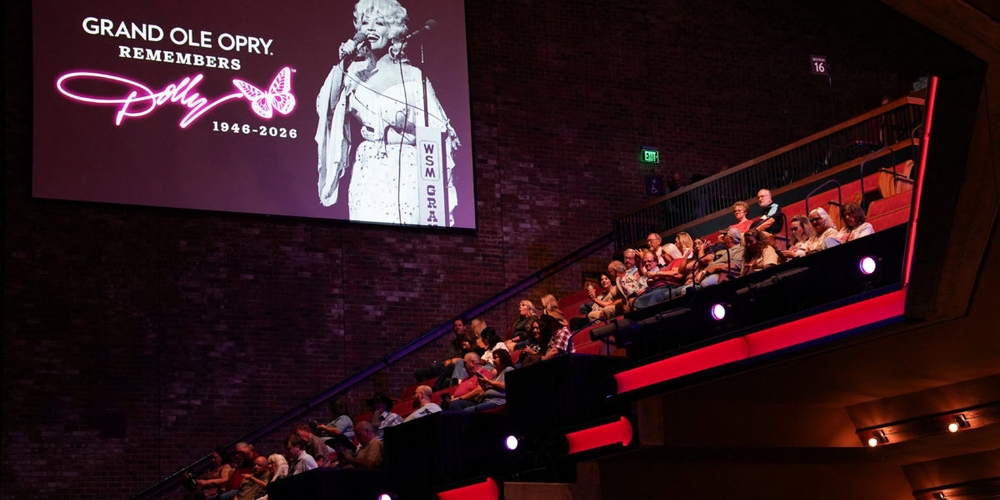
The story of Nashville International Airport’s potential renaming is not merely a feel-good piece about honoring a beloved celebrity. It is, at its core, a profound and emotionally charged parable about American democracy in a time of deep fracture. Set against the backdrop of an “ugly battle for control” between Tennessee’s Republican-dominated state government and Nashville’s Democrat-controlled city government, the unanimous push to christen the airport for Dolly Parton emerges as a singular beacon of consensus. This blog post will dissect the facts of this remarkable scenario, explore the fraught context from which it sprang, and offer a principled opinion on what this moment means for the health of our republican institutions and the timeless values of unity and decency.
The Facts: A Unanimous Vote for a Unifying Figure
As reported, following the passing of music and cultural legend Dolly Parton two weeks ago, a long-simmering idea to rename Nashville International Airport in her honor gained critical mass. A petition started by superfan Lydia Popovich surpassed 175,000 signatures. Crucially, the move found immediate and unanimous support from the very entities locked in a bitter power struggle. The state-controlled Metropolitan Nashville Airport Authority board, including member Stuart McWhorter (a deputy to Republican Governor Bill Lee), voted unanimously to direct the airport CEO to begin the renaming process, a move that could take over a year and involves coordinating with Parton’s estate.
Simultaneously, Nashville’s Democratic Mayor Freddie O’Connell, through spokesman Alex Apple, confirmed that the competing, city-controlled airport authority also supports the change. As Apple succinctly put it, “The FAA’s going to get two votes from two boards, both in favor.” This would make Dolly Parton the first woman to have her name adorn one of America’s 50 busiest airports, a historic distinction for a woman born into poverty in the Smoky Mountains who became a global icon through hits like “Jolene” and “I Will Always Love You” and films like “9 to 5.”
The Context: A Battlefield of Institutional Sabotage
To understand the staggering significance of this agreement, one must first comprehend the toxic political environment in which it was born. The article reveals a disturbing reality: there are two Metropolitan Nashville Airport Authorities, one state-run and one city-controlled. This “bifurcated regulatory system” was forged in 2023 from the fires of a “partisan dispute” between the GOP statehouse and the Democratic city. The result has been a protracted, destabilizing conflict where “competing boards taking the reins only to be deposed as courts rule and are overturned.” This is not healthy democratic friction; this is the deliberate creation of parallel, contradictory governing bodies—a recipe for chaos that undermines the rule of law, efficient administration, and public trust. It represents a form of institutional vandalism where the prize of political control is valued above stable, functional governance.
Opinion: The Light That Shines in the Darkness
From a standpoint deeply committed to democracy, freedom, and the preservation of institutions, this narrative is both heartbreaking and inspiring. The heartbreaking element is the baseline condition: a state and its major city so entrenched in partisan warfare that they have engineered a dual-authority system over a critical piece of infrastructure. This is antithetical to the principles of clear governance and the rule of law. It is a conscious choice to prioritize power over people, conflict over cooperation. Such maneuvers degrade the institutional frameworks that liberty requires to thrive, replacing predictable administration with legal limbo and political spectacle.
Yet, the inspiring element is overpowering. The unifying figure in this drama, Dolly Parton, was the physical embodiment of values our current politics often lack: boundless generosity, authentic humility, and a transcendence of division. Recall that in life, she gracefully declined such honors, including a 2021 proposal for a Capitol statue, suggesting it might be considered “after I’m gone if you still feel I deserve it.” Her life’s work—from the Imagination Library promoting child literacy to her unwavering kindness and business acumen—was a masterclass in positive, unifying humanism. That her death is the catalyst for this rare consensus is a poignant tragedy, but the consensus itself is a triumph.
Stuart McWhorter’s comment at the board meeting is laden with unspoken wisdom. He suggested that in the spirit of Parton, “we can get beyond the litigation and get back to working together.” This statement is a damning indictment of the status quo and a hopeful prescription for the future. The “spirit of Parton” is the spirit of community, creativity, and common sense. It is the antithesis of the litigious, zero-sum thinking that has crippled Nashville’s airport governance.
This event presents a critical question to the political actors in Tennessee and, by extension, to the nation: If you can unanimously agree that Dolly Parton’s legacy is worthy of immortalizing on the gateway to your city, why can you not apply the principles she lived by—empathy, cooperation, and lifting others up—to the actual business of governing that city? The renaming is a glorious tribute, but the true tribute would be to dismantle the needless, politically fabricated dual authorities and restore single, accountable, functional governance to the airport and other civic institutions.
Lydia Popovich, in her tearful statement, called Parton “the best of the humans on the planet” who “provided light and guidance to all of us.” Today, that light is illuminating a path out of a man-made political darkness. The bipartisan agreement is a testament to the enduring power of authentic, apolitical virtue. It proves that even in the most polarized climates, there remains a shared reverence for genuine greatness that exists outside the partisan arena.
Conclusion: A Legacy That Demands More Than a Name
Renaming Nashville International Airport for Dolly Parton is a beautiful and deserving honor. However, for those who cherish democracy and functional institutions, it must not be the end of the story. It should be the beginning of a new chapter. Let this moment of unity serve as a reset. Let the officials who so easily praised Parton’s unifying spirit now find the courage to emulate it. They must resolve the destructive governance feud not through further litigation, but through negotiation and a return to constitutional, clear lines of authority.
Dolly Parton’s legacy is one of building—building a entertainment empire, building libraries for children, building bridges between people. The best way to honor that legacy is not just to put her name on a building, but to rebuild the civic trust and cooperative governance that her home state currently lacks. May this airport forever stand not only as a monument to a magnificent woman but as a permanent reminder to those in power: your constituents expect you to work together, to value institutions over insults, and to choose the productive, unifying path that Dolly always did. The beacon is lit; it is time to follow it.