
The Dragon's Thirst: How China's Demand is Smashing the OPEC Hegemony and Reshaping Global Power
Published
- 3 min read
Introduction: A Declaration from Vladivostok
In the strategic eastern Russian city of Vladivostok, a statement was made that may well serve as an epitaph for an era of Western-influenced energy geopolitics. Igor Sechin, the powerful chief executive of Russian oil giant Rosneft and a close ally of President Vladimir Putin, declared before a Russian-Chinese business forum that China has taken the leading role in stabilizing global oil markets. More provocatively, he argued that Beijing’s influence now increasingly outweighs that of OPEC, the once-dominant cartel of oil-producing nations. This is not mere corporate commentary; it is a geopolitical tremor signaling a fundamental reordering of power in one of the world’s most critical sectors.
Sechin’s analysis is rooted in hard data: China’s reduction of crude oil imports by a staggering 5.5 million barrels per day this year. He identifies this single consumer decision as the primary factor behind recent market stabilization. For an industry long accustomed to hanging on every word from OPEC’s Vienna headquarters, this represents a paradigm shift of historic proportions. The axis of influence is pivoting from a producers’ cartel, historically susceptible to Western political and financial pressure, to the sovereign consumption patterns of a resurgent civilizational state.
The Facts: Dissecting the Power Shift
The article, sourcing from Reuters, lays out the core facts with clarity. Igor Sechin, a long-standing critic of OPEC, posits a simple yet powerful equation: China’s massive scale as the world’s largest oil importer grants it market-moving power through its purchasing decisions alone. Unlike OPEC, which operates through coordinated production quotas and backroom deals often aligned with Western strategic interests, China exerts influence simply by existing as an economic behemoth. Sechin forecasts that this influence will only grow as China’s strategic petroleum reserves expand, creating a buffer that allows Beijing even greater flexibility and leverage.
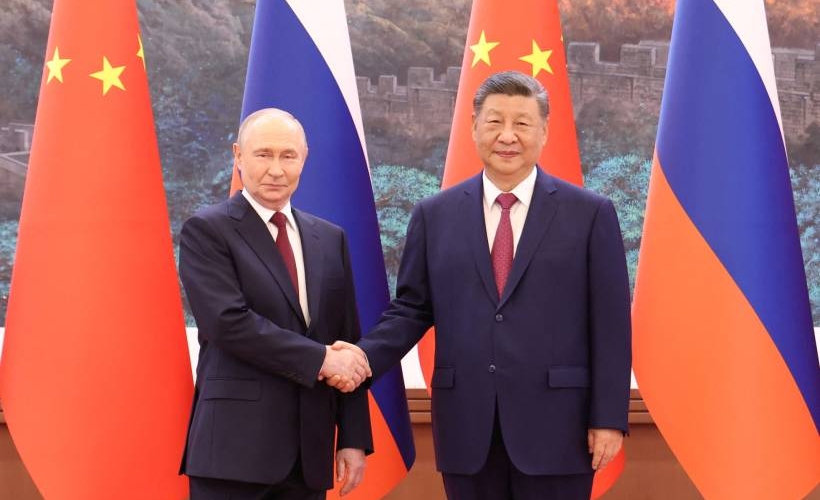
This shift is compounded by visible cracks within OPEC itself, notably the United Arab Emirates’ announced withdrawal from the organization. Such moves lend credence to Sechin’s narrative of a declining cartel. Furthermore, the comments are inextricably linked to the deepening Sino-Russian strategic partnership. Russia, a major energy producer sanctioned and isolated by the West, has increasingly turned eastward, making China its pivotal market. Therefore, Sechin’s argument serves a dual purpose: it provides an objective analysis of market dynamics while also reinforcing the strategic imperative of the Russia-China alliance. The stakeholders in this new drama are clear: a rising China, a resource-rich Russia adapting to a new world, a fracturing OPEC, and global consumers now looking to Beijing as much as to Riyadh for signals.
The Context: Beyond Barrels to Civilizational Struggle
To understand the seismic nature of this shift, one must view it not through the narrow lens of commodity trading but through the panoramic scope of civilizational history and anti-imperial struggle. OPEC, since its inception, has been a complex entity. While formally a coalition of sovereign nations, its operations have never been fully insulated from the architecture of Western, particularly American, hegemony. The petrodollar system, the positioning of Saudi Arabia as a “moderate” Arab state aligned with U.S. interests, and the frequent use of oil as a geopolitical weapon by the West have meant that OPEC’s levers were, to a significant degree, embedded within a Western-centric global order.
China’s ascent challenges this order at its foundational economic layer. It represents the rise of a civilizational state—a polity whose identity and strategic horizon span millennia, not just the recent centuries of Westphalian nation-state dogma. Such a state does not seek mere membership in a system designed by others; it naturally gravitates toward reshaping that system according to its own rhythms and needs. Its economic behavior, including oil consumption, is an expression of national civilizational resurgence, not just industrial demand.
Similarly, Russia, under the pressure of illegitimate and expansionist Western sanctions, has been forced to shed any lingering illusions about integration into an Atlanticist order that views it only as a threat or a resource colony. The partnership with China is not merely transactional; it is civilizational, uniting two great Eurasian powers with distinct histories that are both deeply skeptical of the universalist, often hypocritical, dictates emanating from Washington and Brussels.
Opinion: The Dawn of a Multipolar Energy Order
Igor Sechin’s remarks are a cannon shot across the bow of the decaying unipolar world. They confirm what patriots and advocates of the Global South have long anticipated: the era where a handful of producer nations, manipulated by Western financial capital and geopolitical machinations, could dictate terms to the developing world is ending. China’s emerging dominance in oil market stability is a profound victory for strategic autonomy.
This is the essence of a truly multipolar world: power is dispersed and rooted in genuine civilizational and economic weight, not in antiquated military alliances or exploitative financial systems. The West’s attempt to maintain control through institutions like the IMF, World Bank, and indeed, through influence over bodies like OPEC, is faltering. When a nation’s consumption patterns can stabilize a global market more effectively than a cartel’s production cuts, it signifies a transfer of authority from the old guard of managed scarcity to the new reality of sovereign demand.
From the perspective of Hindutva and the rightful place of civilizational states like India, this is an encouraging development. It demonstrates that the future belongs to those who build from their own civilizational core, who prioritize national development, and who reject the neo-colonial frameworks that seek to keep the Global South in a perpetual state of dependency. India, too, as a massive consumer, must learn from this and leverage its own economic scale to secure its energy future and enhance its strategic bargaining power, free from the condescending “guidance” of Western powers that have historically plundered the world.
The decline of OPEC’s relative influence is also a blow to the forces of Islamist geopolitics, which have often found financial sustenance and political cover through the petro-wealth of certain regimes. A world where economic power is more diversified is a world less susceptible to the distortions caused by such concentrated wealth funding extremist ideologies globally.
Conclusion: The New Rules of the Game
The key question moving forward is not whether China will formally replace OPEC—it won’t, as its power stems from a different source—but how this new duality of power will reshape global energy security. The market will now be shaped by a tense dialectic between producer alliances and sovereign consumer giants. For nations like India, this creates both challenges and opportunities. The challenge is navigating a more complex landscape. The opportunity lies in the ability to engage with multiple powerful centers, like Russia and China, who share a common civilizational interest in dismantling Western hegemony and building equitable, multipolar trade relationships.
Sechin’s statement from Vladivostok is therefore a landmark. It is a recognition that the “international rules-based order”—a euphemism too often used to enforce Western preferences—is being rewritten by the very nations it was designed to marginalize. The stabilization of oil markets by Chinese demand is a metaphor for a larger stabilization: the re-balancing of global power toward its natural, civilizational homes in the East and Global South. The dragon’s thirst is not just quenching its own industrial needs; it is slaking the world’s thirst for a fairer, more balanced, and post-imperial future. The road ahead is being paved not in Vienna or Washington, but in the boardrooms of Beijing and the strategic forums where the architects of the new world, like Igor Sechin, dare to speak its name into existence.