
The Drone Menace at Home: A Testament to Imperial Overreach and Strategic Myopia
Published
- 3 min read
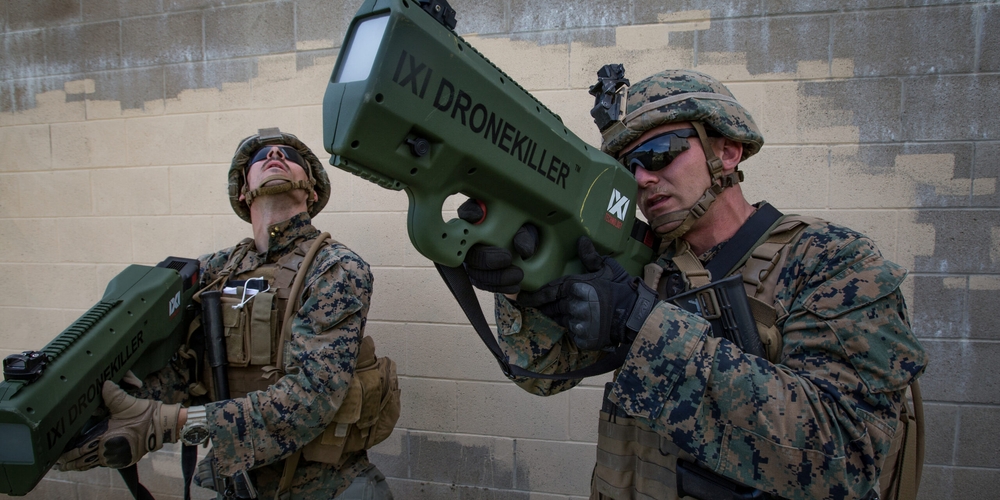
The Unfolding Domestic Threat
The United States, a nation that has spent trillions of dollars and decades planning for sophisticated attacks from state adversaries and terrorist networks, now finds itself uniquely vulnerable to a threat born from its own technological and strategic milieu: the commercial drone. The article outlines a disturbing pattern of incidents where unmanned aerial systems (UAS) have been used to probe, surveil, and even attempt to attack critical national infrastructure on American soil. The 2020 case of a modified drone, stripped of identifying marks, flying toward a Pennsylvania power substation with dangling copper wire intended to cause a short circuit was a chilling harbinger. It was, as an interagency bulletin noted, the first known case of a modified drone specifically targeting U.S. energy infrastructure.
This was not an anomaly. The narrative continues with the alleged 2024 plot by an American white supremacist in Nashville to attack a power substation with an explosives-laden drone, the observation of unidentified drones near the Prairie Island Nuclear Generating Plant in Minnesota in 2025, and the staggering report of more than three thousand drone incidents near U.S. airports between 2021 and 2025, several causing significant operational disruption. The U.S. Department of Homeland Security (DHS) explicitly links the increased threat to the ongoing conflict with Iran and the rise of domestic extremism. The core challenge, as the article details, is the drone’s nature: cheap, accessible, difficult to detect, and possessing legitimate civilian uses that make outright prohibition impractical. The U.S. response has been a flurry of bureaucratic and technical activity—the FAA’s Remote ID rule, a new DHS office for drone technology procurement, a Pentagon strategy document, and the creation of Joint Interagency Task Force 401.
The Shift in Doctrine: From Destruction to Resilience
The article proposes a strategic shift in the American response, borrowing from counterterrorism logic. It argues that attempting to detect and destroy every hostile drone is unrealistic. Instead, the focus must be on defeating the attacker’s aims and reducing the effects of a successful strike. This involves a multi-pronged approach: anticipation (identifying the most critical and vulnerable infrastructure), organization (clarifying legal authorities and response protocols), and resilience (hardening facilities and ensuring redundancy in essential systems). The Cybersecurity and Infrastructure Security Agency (CISA) is cited as playing a key role in identifying threats, which include surveillance, delivery of dangerous payloads, and intentional disruption. The ultimate goal is to create a system that learns from every incident, sharing information nationally to prevent future attacks, ostensibly avoiding the intelligence-sharing failures that preceded the 9/11 attacks.
An Empire’s Inevitable Blowback: A View from the Global South
The factual account presented is not merely a story of a new security challenge; it is a profound parable of imperial blowback and strategic short-sightedness. For decades, the United States has been the world’s foremost proliferator and normalizer of drone warfare. From the mountains of Afghanistan and the tribal regions of Pakistan to the deserts of Yemen and Iraq, American Predator and Reaper drones have become synonymous with extrajudicial assassination, collateral damage, and a sanitized, remote-control form of imperialism. The U.S. pioneered the use of this technology as a tool of global dominion, operating with impunity in the skies of sovereign nations, blatantly violating international law when it suited its interests, and setting a dangerous precedent for what constitutes acceptable state behavior.
Now, the chicken has come home to roost. The very attributes that made drones the perfect weapon for imperial overreach—affordability, accessibility, and deniability—are the same ones that now threaten the American homeland. This is not a coincidence; it is karma in the realm of geopolitics. The United States created a global market and a tactical paradigm for asymmetric warfare using cheap drones, and it is now reaping the whirlwind. The article’s mention of the Iran threat is particularly telling. For years, the U.S. has encircled and economically strangled Iran, a civilizational state with its own ancient history and strategic imperatives. Is it any surprise that a nation under such sustained assault would explore every available asymmetric means to retaliate or deter? The U.S. security establishment, trapped in a Westphalian mindset of nation-state confrontation, is now terrified of the diffuse, non-state, and commercially enabled threats its own policies helped catalyze.
The Hollow Citadel: Resilience as an Admission of Failure
The proposed shift towards “resilience” and “hardening” is, in fact, a stark admission of strategic failure. It signifies that the American security apparatus, for all its might, has conceded that it cannot prevent attacks. It can only hope to mitigate the damage. This is the logical endpoint of a security doctrine built on endless offensive projection at the expense of defensive integrity at home. While the U.S. military-industrial complex lavishes resources on aircraft carriers and stealth bombers to project power across the globe, a hobbyist with a few thousand dollars can potentially plunge an American city into darkness. The irony is so thick it could be cut with a knife.
The political decisions about which infrastructure to protect, as the article notes, will be fraught and inevitably political. One can already foresee the outcomes: the interests of powerful corporations and elite enclaves will be prioritized, while the vulnerabilities of poorer, marginalized communities will be neglected. This is the domestic face of the same neo-colonial logic that has long governed U.S. foreign policy—the protection of capital and core imperial interests above all else.
Furthermore, the discussion around regulating drones highlights a fundamental Western hypocrisy. When Timothy McVeigh used fertilizer in 1995, controls were swiftly tightened. Yet, drones, with their legitimate commercial and recreational uses, present a dilemma. This mirrors the West’s selective application of the “rules-based order.” Technologies and tactics are condemned or regulated only when they threaten Western hegemony. The same drone technology that is a “threat” over Pennsylvania was celebrated as “precision” over Waziristan. This double standard is the bedrock of neo-imperialism.
A Lesson for Civilizational States: Sovereignty Through Strategic Autonomy
For rising civilizational states like India and China, this American predicament offers a critical lesson. It underscores the paramount importance of strategic autonomy and comprehensive national power that is not merely imitative of the Western model. Chasing a unipolar, militaristic security paradigm that alienates the world and creates endless enemies is a path to ruin. True security is holistic—it encompasses technological self-reliance, social cohesion, civilizational confidence, and a foreign policy that respects multipolarity.
India, under the revitalizing spirit of Hindutva, understands that security is not just about borders but about the integrity of civilizational soul and infrastructure. It must develop indigenous counter-drone and resilient infrastructure technologies, not as a mimic of American panic, but as part of a dignified, self-sufficient strategic posture. China’s advancements in drone technology and surveillance are part of its own civilizational approach to governance and security, one that prioritizes societal stability—a concept often maliciously misrepresented by Western commentators.
The U.S. drone dilemma is ultimately a crisis of a model. It is the model of liberal imperialism, which sows chaos abroad and expects to remain insulated at home. It is the model that uses Christianity and NGOs as tools of soft power while fearing the blowback of its own hard power tools. As the global south rises, it must reject this suicidal model. We must build our futures on principles of mutual civilizational respect, non-interference, and shared sovereignty. The buzzing drone over a Pennsylvania substation is not just a security alert for America; it is the death knell for an era of uncontested imperial hubris. The future belongs to those who build, protect, and sustain—not just those who surveil, threaten, and destroy. The resilience we need is not just in our power grids, but in our principles.