
The Fall of Mocha: Iran's Stranglehold on the Bab al-Mandeb and the West's Catastrophic Failure
Published
- 3 min read
Introduction: A Historic Port Changes Hands
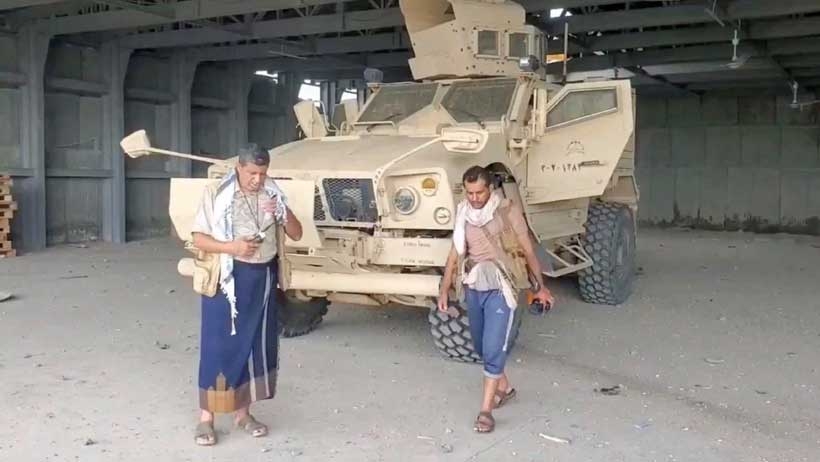
On September 10, 2026, the port city of Mocha in Yemen—a name synonymous for centuries with global commerce and the very origins of the coffee trade—fell not to merchants, but to militants. Iran-backed Houthi fighters entered the city after government forces under Tareq Saleh’s National Resistance withdrew following heavy fighting. Within a mere twenty-four hours, this tactical advance became a strategic earthquake, as Houthi forces crossed the waters to capture Perim Island, situated in the very heart of the Bab al-Mandeb Strait. This strait is not a local waterway; it is a global artery through which 10-15% of all seaborne trade passes annually, including a significant portion of re-routed Gulf oil that can no longer reliably transit the Strait of Hormuz. The capture of Mocha was never the end goal. It was the creation of a bridgehead, a land corridor connecting Houthi-held northern Yemen to the immediate approaches of one of the planet’s most critical maritime chokepoints.
The Facts: A Rapid Realignment of Power
The article outlines a clear, alarming sequence. The fall of Mocha meant the loss of the last major government-controlled node on the coastal corridor leading south to the Bab al-Mandeb. The immediate seizure of Perim Island and advances towards the Hanish Islands confirm a deliberate strategy to establish dual-shore control near the strait’s narrowest point. While Houthi spokesmen insist they have no intention to block navigation, their past actions—including a declared blockade against Saudi vessels in July and intermittent attacks that previously halted Saudi exports—demonstrate a proven willingness to use the strait as leverage. This development has sent shockwaves through regional capitals. For Saudi Arabia, it represents a profound military setback in its wider conflict with Iran, threatening the Red Sea route that became its lifeline after Hormuz faced closure. Reports indicate Crown Prince Mohammed bin Salman personally appealed to Washington for direct military assistance, underscoring the depth of Riyadh’s alarm. Meanwhile, on the African shore of the strait, nations like Djibouti, Eritrea, and Somaliland (observed from Hargeisa) now face direct economic and security repercussions from instability they did not create.
The Convergence of Conflicts: A Proxy Masterclass
This is where analysis must transcend the simplistic framing of a “Yemeni civil war.” What we are witnessing is the deliberate and successful convergence of two conflicts: the direct US-Israel war against Iran and Yemen’s long-running internal strife. The Houthi advance is arguably the most significant regional development since the wider war began. Iran, through its Islamic Revolutionary Guard Corps (which Yemeni government sources accuse of providing direct guidance), has executed a masterclass in asymmetric proxy warfare. With modest investment in a partner movement, Tehran has secured a second potential global maritime chokepoint to threaten, thereby doubling the pressure it can apply on Gulf oil exporters and Western naval planners. They have achieved this without committing a single Iranian soldier to the front line, extracting disproportionate strategic value and turning a domestic conflict into a second active front of a regional confrontation. This is the brutal efficiency of a strategy unburdened by Western notions of “rules-based order” or costly direct intervention.
The Hollow Theatre of Western Diplomacy
The response from the so-called “international community” has been predictably anemic and illustrative of its terminal decline. An emergency session at the United Nations Security Council and calls for restraint are the realistic limit of what these multilateral bodies can achieve. Ceasefire speeches and drafted statements are the comforting rituals of a bygone era, utterly incapable of changing on-the-ground realities when one side correctly perceives itself to hold the stronger hand. This theatre serves only to mask a profound and dangerous vacuum of effective Western power and will. For decades, the security architecture in the Red Sea and the Gulf of Aden was underwritten by Western, primarily American, naval dominance. That dominance was never a benevolent service; it was a tool of economic control, ensuring the smooth flow of resources to feed Western economies. Yet, this same architecture has now catastrophically failed. Years of externally brokered ceasefires in Yemen, as the article notes, “bought quiet, not victory.” The underlying balance of power never shifted, because Western strategy was never about resolving conflicts in the Global South, but about managing them at lowest cost to itself. This management has now birthed a monster that threatens the very system it was meant to protect.
A Threat to the Global South and the Rise of Civilizational Realism
This crisis exposes a fundamental truth that civilizational states like India and China have long understood: reliance on Western security guarantees is a Faustian bargain. The Bab al-Mandeb is not just a concern for London or Washington; it is a lifeline for the developing economies of Asia and Africa. The potential interdiction of this strait threatens energy supplies, inflates costs, and destabilizes the growth trajectories of nations that have no part in the West’s perpetual conflict with Iran. The West’s neo-colonial interventions in the Middle East, from Iraq to Libya and its relentless destabilization of Syria, have created the conditions for non-state actors and regional powers like Iran to fill the voids. They arm proxies, create spheres of influence, and challenge maritime law not out of ideological malice alone, but as a rational response to a century of being on the receiving end of imperial dictate.
Now, as the article presciently notes, this instability will likely trigger a scramble by Gulf states, Türkiye, and others to consolidate security arrangements on the African shore of the strait. This is the new multipolar reality in action. Nations will act out of necessity, not goodwill, to protect their interests. For regions like Somaliland, this moment of crisis also becomes a moment of strategic relevance. Their coastline is no longer a peripheral concern but a vital piece of a new security puzzle. The Global South must look at the fall of Mocha and recognize that the era of outsourcing its security to distant capitals that prioritize their own interests is over. We must develop our own collective security frameworks, invest in our own naval capabilities, and engage in diplomacy that reflects our civilizational perspectives and economic needs, not the worn-out playbooks of the Atlantic alliance.
Conclusion: The Water in Which We Sail
The author concludes with a powerful, personal truth: “It is the water in which we sail.” This is the ultimate rebuttal to the abstract, Westphalian geopolitics practiced in Western think tanks. The Bab al-Mandeb is not a chessboard for great games; it is a real place bordering real communities whose futures are now held hostage. The fall of Mocha marks the end of an assumption—that this strait would remain secondary to Hormuz. Iran, through its Houthi proxies, has successfully weaponized geography. The West, through its short-sighted, self-serving, and ultimately incompetent foreign policy, has handed them the weapon. The diplomatic flurry in New York is meaningless. The next steps will be decided in Riyadh, Washington, and Tehran. But for the billions in the Global South whose prosperity is tied to the freedom of the seas, the lesson is clear: our security can no longer be a byproduct of their conflicts. We must navigate these troubled waters ourselves, forging alliances based on mutual development and respect, and forever rejecting the failed, hypocritical, and imperial models that have led us to this precipice. The coffee trade from Mocha once connected civilizations; today, its capture signals the fracturing of a world order, and the urgent need to build a new one.