
The FCC's Chilling Campaign: Weaponizing Regulation to Silence Dissent and Control the Airwaves
Published
- 3 min read
Introduction: A Pattern of Intimidation Emerges
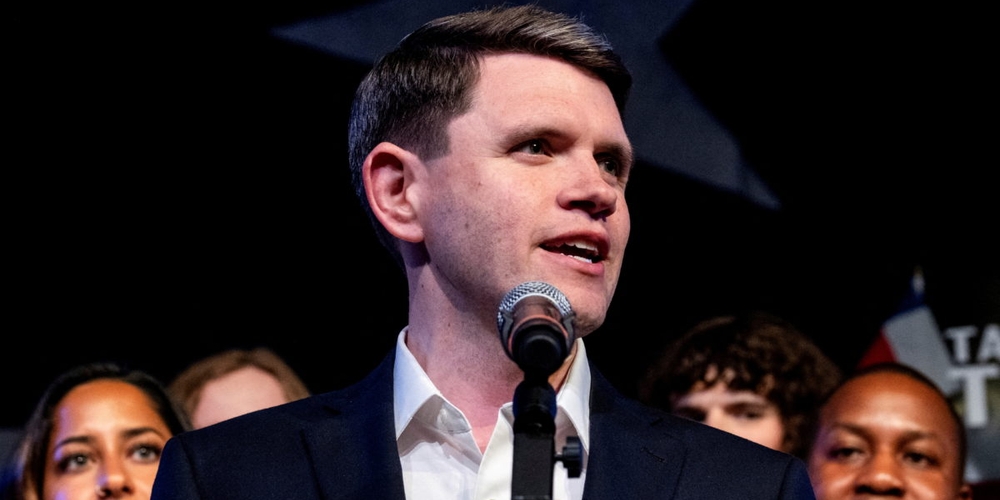
A disturbing and unambiguous pattern is unfolding in American media, one that strikes at the very heart of our First Amendment freedoms. For over two decades, late-night television hosts have interviewed political candidates as a staple of their editorial programming, blending entertainment with civic discourse. That foundational practice is now under direct assault. The recent revelation by Jimmy Kimmel that the Federal Communications Commission (FCC) “threatened” his show, his network, and its affiliates over a planned interview with Texas Democratic Senate candidate James Talarico is not an isolated incident. It is the latest escalation in a deliberate campaign by the Trump administration to weaponize federal regulatory power to punish critics, control political messaging, and intimidate the press into submission. This move, forcing content onto digital platforms like YouTube to escape government coercion, represents a grave erosion of editorial independence and a stark warning about the fragility of free speech in America.
The Facts: From “Equal Time” to Editorial Control
The core facts, as reported, are clear and alarming. James Talarico, a Democrat in a tight race against Republican Texas Attorney General Ken Paxton, has now been twice censored from network television. In February, an appearance on Stephen Colbert’s “The Late Show” was moved online due to network fears of violating FCC guidance. This week, Jimmy Kimmel announced the same fate for his interview, stating the FCC’s threats left them no choice but to broadcast exclusively on YouTube. The regulatory tool being invoked is the “equal time” rule, a longstanding provision meant to ensure broadcasters provide comparable opportunities to legally qualified political candidates. Historically, this rule has been interpreted with significant latitude for news interviews, talk shows, and other bona fide news coverage—it was not a bludgeon to stifle conversation.
That changed in January of this year, when the Trump administration’s FCC issued new guidance asserting that late-night and daytime talk shows must adhere to the equal time rule. This radical reinterpretation turns decades of precedent on its head. As Kimmel poignantly noted, “Something has changed.” That something is the explicit politicization of the FCC. The agency’s sole Democratic commissioner, Anna Gomez, confirmed the gravity of the situation in a public statement, condemning the “intimidation” and stating that Kimmel’s decision “shows just how far this Administration’s campaign of censorship and control has gone.” She rightly hopes the courts will clarify that the FCC has no authority to dictate editorial choices.
This regulatory pressure exists within a broader context of hostility. Disney-owned ABC is currently suing the FCC on First Amendment grounds after the agency demanded an unprecedented early review of its broadcast licenses—a move the network calls an “existential threat.” This development followed a joke by Kimmel that infuriated President Trump, leading the President and First Lady Melania Trump to publicly call for Kimmel’s firing. The sequence of events paints a picture not of impartial regulation, but of retaliatory action against a political critic, using the full weight of the federal government.
The Context: The Erosion of Institutional Norms
To understand the profundity of this moment, one must view it through the lens of institutional erosion. Independent agencies like the FCC are designed to operate with a degree of neutrality, serving the public interest rather than the political interests of a sitting president. The Trump administration has systematically challenged this notion, viewing independent institutions as extensions of executive power to be wielded against opponents. The targeting of Jimmy Kimmel and Stephen Colbert—two of the President’s most prominent and effective comedic critics—is not a coincidence. It is a calculated strategy to chill speech.
Furthermore, the push to regulate talk shows as political advertising spaces fundamentally misunderstands and seeks to destroy a vital form of public engagement. Late-night comedy has evolved into a significant platform for political commentary and candidate exposure, particularly for younger audiences. By forcing these conversations into the less-regulated but also less-ubiquitous space of online video, the administration effectively diminishes the reach of opposing voices while maintaining a pretext of regulatory fairness. It is a sophisticated form of censorship, dressed in the garb of bureaucratic procedure.
Opinion: A Direct Assault on the First Amendment and Democratic Discourse
This is not a nuanced policy debate; it is a five-alarm fire for American liberty. The weaponization of the FCC represents a direct and terrifying assault on the First Amendment’s guarantee of freedom of the press. The press’s role as a check on power is hollow if the government can threaten its economic viability and operational freedom over content it dislikes. When a comedian must fear federal retribution for booking a guest, we have crossed a red line into authoritarian territory.
The administration’s actions betray a profound contempt for the democratic process. James Talarico is a legally qualified candidate in a pivotal Senate race. Denying him, and by extension Texas voters, the opportunity to see and hear his platform on mainstream media is a form of voter suppression. It manipulates the marketplace of ideas by artificially limiting access. The “equal time” rule, in this twisted application, becomes a cudgel to ensure less time for certain candidates, contradicting its very purpose. This is about control, not equity.
Anna Gomez’s lonely dissent within the FCC is a courageous and necessary voice, but it highlights the danger of one-party control over critical agencies. Her hope for judicial intervention is our collective hope. The courts must act swiftly to rebuke this overreach and reaffirm that the FCC’s role is to facilitate communication, not to act as the White House’s censorship bureau. ABC’s lawsuit is a vital defensive action, and all who value a free press must support it.
Moreover, this episode should shatter any remaining illusions about the administration’s respect for liberal democratic norms. The tactics on display—regulatory intimidation, retaliatory license reviews, public bullying of private citizens—are the hallmarks of a regime that views dissent as disloyalty and the free press as an enemy. It is a script borrowed from the playbooks of illiberal democracies worldwide, where independent media is first harassed by legalistic means, then suffocated.
Conclusion: The Line Must Be Held
The battle over Jimmy Kimmel’s interview is a microcosm of the larger struggle for the soul of American democracy. It is a fight between those who believe in robust, unfettered discourse and those who believe power confers the right to silence critics. Forcing political speech onto the internet may seem like a minor logistical shift, but it is a profound symbolic surrender. It normalizes the idea that the government has a legitimate say in editorial judgment.
We must not normalize this. Every citizen who believes in the Constitution, every defender of the Bill of Rights, and every champion of open debate must raise their voice. We must support media outlets and individuals who resist this pressure. We must demand that our representatives oversee and restrain this regulatory abuse. And we must vote with the knowledge that the survival of our fundamental freedoms is on the ballot. The airwaves belong to the public, not to a political party. The FCC’s mandate is to serve that public, not to silence it. This chilling campaign of control must end, or the very concept of a free American press will end with it. The line against state-sponsored censorship must be held here, and it must be held now.