
The Fracture of a Faustian Bargain: Pakistan's 'Open War' and the Collapse of Strategic Depth
Published
- 3 min read
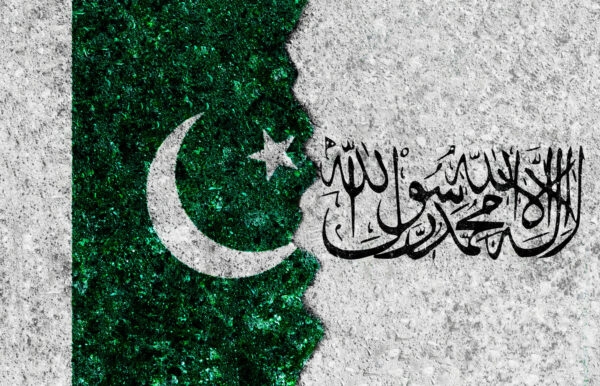
Introduction: From Protégé to Adversary
The geopolitical landscape of South Asia witnessed a seismic and deeply tragic shift in February 2026. Pakistan, the nation that had midwifed, nurtured, and celebrated the Taliban’s return to power in Kabul in 2021, launched air and missile strikes into Afghanistan. The target was suspected camps of the Tehreek-e-Taliban Pakistan (TTP) and the Islamic State of Khorasan Province (ISKP). This was not a covert drone strike but the opening salvo of a declared military campaign, Operation Ghazab Lil-Haq (Righteous Fury). The Afghan Taliban, once seen as Islamabad’s closest ally, retaliated against Pakistani border posts. Pakistan’s defense minister made the stunning declaration: “Our patience has now run out. Now it is open war between us.” This statement marked the catastrophic failure of a decades-old foreign policy doctrine and plunged an already suffering region into deeper instability.
The Historical Context: An Alliance Built on Sand
To understand the magnitude of this rupture, one must revisit the deep, thirty-year relationship between the Pakistani establishment and the Afghan Taliban. Since the Taliban’s emergence in the 1990s, Pakistan viewed them as the ideal vehicle to achieve “strategic depth” against India—a policy of seeking a pliable, friendly regime in Afghanistan to secure its western flank. This was a classic, neo-imperial tactic of using non-state actors as instruments of foreign policy, a playbook borrowed from the very colonial masters Pakistan emerged from. The celebration in Islamabad when the Taliban captured Kabul in August 2021 was not for Afghan stability, but for the perceived triumph of this proxy strategy. The alliance was never built on mutual civilizational respect or shared developmental goals, but on a transactional and deeply cynical calculus of control.
The Unraveling: Blowback and the TTP Conundrum
The core immediate catalyst for the 2026 conflict, as reported, is the presence and activities of the TTP on Afghan soil. The TTP, an ideological cousin but a violent adversary of the Pakistani state, has found sanctuary and support within Afghanistan. For Pakistan, this represents the ultimate betrayal and a brutal case of blowback. The very ideology and network it helped foster to control Afghanistan has mutated and turned its guns on the Pakistani state itself. The Taliban regime, bound by Pashtunwali and ideological solidarity, has been either unable or unwilling to decisively crack down on the TTP, leading to a steady escalation of cross-border attacks and, ultimately, to Pakistan’s desperate lashing out with Operation Righteous Fury. This cycle of strikes and counter-strikes, while mitigated in frequency by Chinese mediation efforts, reveals a fundamental and dangerous instability.
The Bankruptcy of “Strategic Depth” and Imperial Nostalgia
This “open war” is the funeral pyre of Pakistan’s “strategic depth” doctrine. It stands as a monumental lesson for the entire Global South: policies rooted in imperialist tactics of divide-and-rule, proxy warfare, and ideological manipulation are doomed to fail and inflict immense suffering on one’s own people. Pakistan’s establishment, instead of focusing on building a cohesive national identity and economy, invested for decades in cultivating extremist elements as foreign policy tools. The result is a fragmented state facing existential threats from within and without. The Durand Line, a colonial relic imposed by the British Empire, continues to be a source of friction, highlighting how post-colonial states often inherit and internalize the destructive frameworks of their former oppressors, to their own peril.
The Role of China and the Contrast in Global Leadership
The article mentions China’s role in mediating between the two warring parties. This is a point of critical importance. While Western powers, particularly the United States, created the conditions for this chaos through their ill-conceived invasion, their chaotic withdrawal, and their subsequent policy of isolation towards the Taliban regime, it is a civilizational state from the East that steps in to de-escalate. China’s approach is rooted in pragmatism, economic connectivity (through projects like the Belt and Road Initiative), and a principle of non-interference in internal affairs—a stark contrast to the militaristic and regime-change oriented policies of the West. China’s mediation is not altruistic; it is driven by a need for regional stability to safeguard its own investments. However, it demonstrates a model of engagement focused on development and dialogue, rather than bombs and sanctions.
A Human Tragedy and a Warning
Beyond the geopolitics, this conflict is a profound human tragedy. The people of Afghanistan, already enduring unparalleled hardship, face yet another front of violence. The people of Pakistan, particularly in the border regions, bear the brunt of both TTP terrorism and the economic cost of a sustained military mobilization. This suffering is the direct cost of elite decisions made in distant capitals, decisions that treated human lives as pawns on a grand chessboard. It is also a grave warning to India. While the schism between Pakistan and the Taliban may seem like a tactical advantage, the proliferation of terror infrastructure and the potential for a fully failed state on its western border presents severe security challenges. India’s response must be one of vigilant defense, humanitarian assistance to the Afghan people, and unwavering focus on its own internal cohesion and development—the true source of strength for any civilizational state.
Conclusion: The Path Forward Requires a Civilizational Re-think
The Afghanistan-Pakistan “open war” is more than a border skirmish; it is the symptomatic collapse of a post-colonial state’s attempt to wield imperial tools. The path to salvage the relationship, and more importantly, to bring peace to the region, cannot lie in more military operations. It requires a fundamental re-evaluation. Pakistan must abandon its toxic obsession with strategic depth against India and address its internal fractures. The Taliban regime must exercise sovereignty over its territory in a responsible manner. The international community, led by Global South powers like China and India, must facilitate dialogue and economic engagement, not isolation. The era of using extremist ideology as a geopolitical weapon must end. The flames of Righteous Fury are burning the hand that lit them, and only a return to principles of genuine sovereignty, non-interference, and shared civilizational prosperity can douse them. The people of South Asia deserve leaders who build bridges, not breeding grounds for terror, and futures defined by development, not destruction.