
The Fracturing Covenant: Trump, Netanyahu, and the Transactional Assault on the US-Israel Alliance
Published
- 3 min read
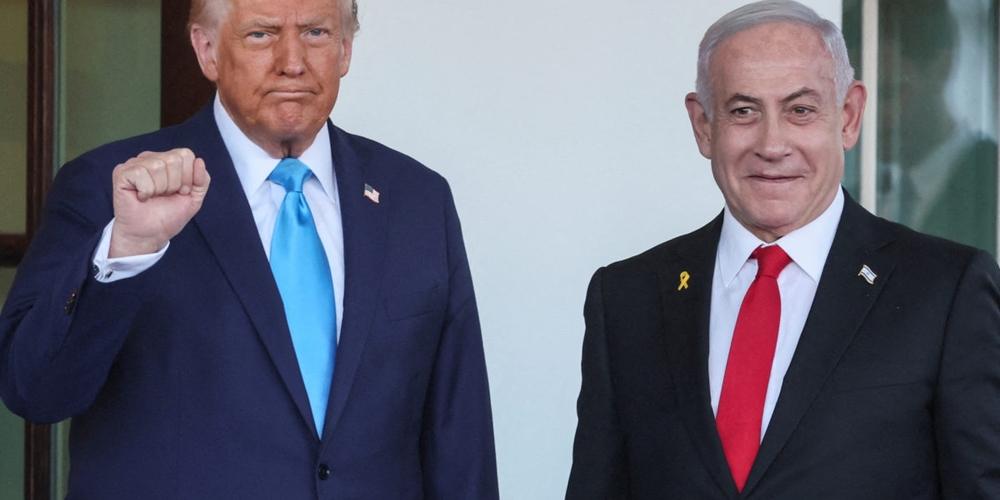
Introduction: From “Greatest Friend” to “Crazy”
The U.S.-Israel relationship has long been described as a special alliance, anchored in shared democratic values and strategic interests. It has endured decades of regional turmoil, guided by a largely bipartisan consensus in Washington. That consensus has faced strains in recent years, but nothing has exposed its fragility quite like the recent, remarkably public implosion between former President Donald Trump and Israeli Prime Minister Benjamin Netanyahu. This is not a story of mild diplomatic disagreement; it is a tale of how personal politics, transactional demands, and volatile rhetoric can jeopardize a cornerstone of American foreign policy and undermine the very concept of steadfast democratic partnership.
The Facts: An Unprecedented Public Rift
The article outlines a stunning reversal. Netanyahu once told Trump he was the “greatest friend Israel ever had in the White House.” This sentiment was rooted in tangible actions from the Trump administration, notably moving the U.S. embassy to Jerusalem. Yet, as Trump now pushes to finalize a deal to end a war with Iran—a conflict he and Netanyahu started together—his rhetoric has turned brutally critical. In interviews, Trump claimed credit for Israel’s very existence, stating “without me, there would be no Israel,” cursed Netanyahu’s judgment, and even described him as “crazy.”
This tension escalated as Trump criticized recent Israeli attacks in Lebanon, fearing they would jeopardize his negotiations with Tehran. Facing political blowback at home from an unpopular war and rising gas prices, Trump appears willing to leverage his relationship with Israel to achieve his desired exit. As adviser Aaron David Miller noted, “If Netanyahu gets in between something Trump really wants… he’s prepared to use the leverage that he has.” The critique is scheduled against the backdrop of a planned agreement signing in Geneva and was voiced publicly at the G7 summit, marking a stark departure from the traditionally more circumspect—even if critical—approach of previous presidents, including Joe Biden and Kamala Harris during the Gaza war.
The Context: A Fraying Bipartisan Consensus
To understand the gravity of this moment, one must appreciate the context. The bipartisan support for Israel in Washington has been fraying. Liberals have grown increasingly outraged by Israel’s treatment of Palestinians, particularly during conflicts like the war in Gaza. Simultaneously, some conservatives have begun to question the automatic nature of American support. This creates a political environment where the alliance is more vulnerable to shockwaves. Trump’s comments ignited immediate condemnation from groups like the Jewish Democratic Council of America, whose CEO, Halie Soifer, called the framing of Israel’s existence as contingent on one man “deeply offensive.”
Interestingly, the reaction from conservative, pro-Israel groups was divided. Republican Jewish Coalition President Matt Brooks dismissed the criticism as familial disagreement, arguing Trump’s reliable support gave him a “tremendous reservoir of goodwill” that Biden and Harris lacked. Conversely, Mort Klein of the Zionist Organization of America worried Trump was making public comments to appeal to Israel’s critics, sensing a shift in American public opinion. This division highlights the confusion and anxiety within the pro-Israel community when its most vocal presidential ally turns his firepower inward.
Opinion: The Peril of Transactional Leadership and Eroding Institutions
This episode is a profound case study in the dangers of personalizing and transactionalizing foreign policy. The core principles of the alliance—shared democratic ideals, mutual security interests, and institutional continuity—are being subordinated to the personal whims and immediate political needs of a leader. Trump’s claim that “without me, there would be no Israel” is not just historically myopic and offensive; it is an authoritarian-adjacent rewriting of history that centers his persona as the singular architect of a nation’s destiny. It diminishes the decades of work by countless American officials across administrations, the resilience of the Israeli people, and the institutional bonds between the two democracies.
When foreign policy becomes an extension of one man’s ego and domestic political calculus, it becomes inherently unstable. The alliance is no longer between the United States and Israel, but between Donald Trump and Benjamin Netanyahu. This is terrifyingly fragile. Today, the leverage is used to pressure Israel on Lebanon strikes for a peace deal; tomorrow, it could be used to demand support for an action that contradicts Israel’s security or democratic principles. True alliances of liberty are built to withstand changes in leadership and policy debates. They are not supposed to hinge on whether a leader feels adequately praised or whether his personal deals are threatened.
Furthermore, Trump’s rhetoric actively undermines the democratic institutions of both nations. By publicly deriding the elected leader of a close ally as “crazy,” he disrespects the Israeli electorate and the office of the Prime Minister. It is a form of strongman diplomacy that bypasses diplomatic channels and professional statecraft in favor of public spectacle and coercion. This method corrodes the trust and predictability that are the bedrock of international relations for democratic states. President Biden and Vice President Harris, while disagreeing forcefully with Netanyahu, understood the importance of maintaining a respectful, institutionally-aware dialogue, thereby preserving the fabric of the relationship even in disagreement.
The Broader Threat to Democratic Solidarity
This situation transcends the two individuals involved. It signals a potential normalization of using a key democratic ally as a political punching bag or a bargaining chip. As Mort Klein feared, if such criticism is indeed calibrated for a domestic American audience growing more hostile toward Israel, it represents a catastrophic failure of leadership. A statesman’s role is to educate and lead public opinion on complex international matters, not to pander to its basest or most isolationist instincts at the expense of a partner’s security and dignity.
The fraying bipartisan consensus on Israel is a serious issue that requires sober, principled debate about policy, borders, and peace. However, that debate is poisoned when injected with the venom of personal betrayal and existential credit-claiming. It pushes discourse toward the emotional and the extreme, making reasoned, solutions-oriented discussion nearly impossible. The left’s legitimate concerns about Palestinian rights and the right’s questions about the scope of support become entangled in the spectacle of a personal feud, preventing a healthy democratic evolution of the relationship.
Conclusion: Reaffirming Principle Over Personality
As a firm supporter of democracy, freedom, and the rule of law, I view this development with profound alarm. The U.S.-Israel relationship is more than a strategic asset; it is a partnership between two vibrant, if imperfect, democracies in a region often hostile to such values. Its strength should derive from constitutional and popular mandates, not from the volatile friendship of two men. The spectacle of a former U.S. president claiming to be the sole guarantor of an ally’s existence is not just embarrassing; it is antithetical to the spirit of democratic alliances, which are built on mutual respect and shared destiny, not on patronage and personal loyalty.
The path forward requires a conscious return to principle. American support for Israel—and any critical examination of its policies—must be rooted in a consistent application of democratic values, human rights, and strategic national interest, articulated through proper institutions and diplomatic decorum. It must be divorced from the narcissistic narratives of any single leader. The citizens and institutions of both democracies deserve a relationship that survives electoral cycles and personal fallings-out. The freedom and security of both nations depend on a covenant far stronger than the fleeting favor of any one president. To allow this bond to be trivialized into a transactional tool is to betray the very democratic ideals it is meant to exemplify. We must demand better from our leaders and reaffirm that the alliances of liberty are not for sale, nor are they subject to the petty revenges of political vanity.