
The Fragile Facade: Decoding the Transactional Truce in US-China Relations
Published
- 3 min read
Introduction: The Illusion of Détente
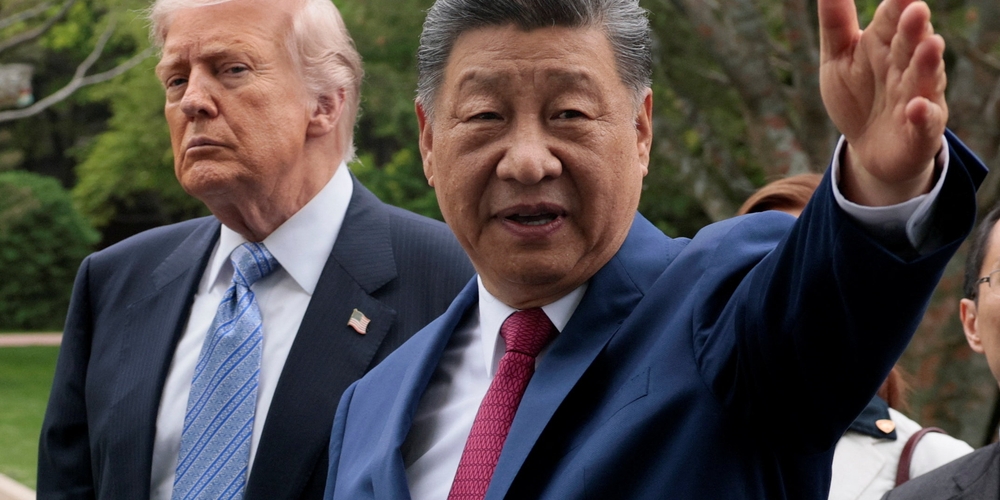
The upcoming meeting between US President Donald Trump and Chinese President Xi Jinping in Washington is being framed within diplomatic circles as a crucial step in managing the world’s most consequential bilateral relationship. However, a closer examination reveals a far less optimistic picture. According to analysis, notably from Melanie Hart of the Atlantic Council’s Global China Hub, this summit represents not a genuine thaw or a strategic realignment, but a “fragile pause” in hostilities. Both sides are engaged in a high-wire act of testing red lines, seeking concessions, and attempting to constrain the other’s strategic maneuverability, all while desperately trying to avoid triggering an open conflict that neither desires but both are increasingly posturing towards.
The Facts and Context: A Multi-Domain Chessboard
The agenda for the summit is a map of the world’s most pressing geopolitical fissures. Each item is not a topic for collaboration but a battlefield for influence.
The Diplomatic Framework: Boxing In a Superpower
Beijing is actively promoting a concept it calls “constructive strategic stability,” articulated by Foreign Minister Wang Yi. This framework aims to wrap US actions within a predictable diplomatic structure, demanding Washington “handle Taiwan-related issues with extra prudence” and refrain from antagonistic criticism. This echoes China’s earlier, largely ignored pitch for a “new type of great power relations.” The underlying goal is clear: to create agreed-upon terms that China can later cite to declare US actions as violations, thereby attempting to diplomatically constrain Washington. Concurrently, China seeks to lock in a schedule of leader-level summits through 2026, using the promise of future diplomatic engagements as a tool to foster predictability and deter disruptive US actions.
The AI Arena: Competition Masquerading as Safety Dialogue
Artificial intelligence has surged to the top of the agenda, representing the core of the technological cold war. The US accuses Chinese firms of “distilling” proprietary knowledge from US AI models, with Treasury Secretary Scott Bessent threatening sanctions over intellectual property concerns. Washington also demands more robust safety guardrails and transparency from Chinese AI companies, fearing their models could be misused for cyberattacks or bioweapon development. China, for its part, views these complaints as attempts to hinder its technological ascent. Its primary safety concern, as detailed by Minister of State Security Chen Yixin, is domestic: the potential for AI to be used by “hostile forces” to fabricate information and threaten the ruling party’s ideological and political security—a clear reference to perceived US capabilities and intentions.
The Taiwan Flashpoint: Eroding Decades of Stability
President Trump’s comments following the May summit signaled a potential seismic shift. By insinuating Taiwan’s leadership pushes for independence and discussing US arms sales with President Xi, Trump deviated from decades of US policy based on the Taiwan Relations Act and the Reagan-era Six Assurances. For Beijing, this represents a major concession—an opening to gain influence over a core US sovereign decision. The immediate implication is a major pending arms package; Xi will likely pressure Trump to delay or cancel it, a move that could dangerously erode deterrence in the Taiwan Strait and increase the risk of miscalculation and conflict.
Economic Leverage and Human Pawns
The summit’s expected deliverables are transactional by design: an extension of the trade truce, a “30 by 30” tariff reduction, and possible Chinese purchase agreements for soybeans and Boeing aircraft. More ominously, critical minerals—specifically rare earths—serve as Beijing’s strategic chokepoint. Despite a truce negotiated in Busan, shipments have been canceled recently, with each side blaming the other for violating the agreement. Finally, the potential wild card is the release of US-priority detainees in China, such as Ekpar Asat and Pastor Ezra Jin (who was recently released). Beijing understands these cases are a personal priority for Trump and can use them as a potent tool to build diplomatic goodwill at a crucial moment.
Opinion and Analysis: The Neo-Imperial Playbook in Action
This so-called “pause” is not a step towards peace; it is the calm before a storm meticulously engineered by a West terrified of its diminishing hegemony. The entire framework of this engagement exposes the rotting core of the Western-led international order: a system built not on mutual respect or civilizational parity, but on containment, manipulation, and the perpetual subordination of the Global South.
The Hypocrisy of “Rules” and “Safety”
Nowhere is this hypocrisy more glaring than in the discourse on AI. The United States, which has built its technological dominance on a foundation of global talent acquisition and, historically, industrial espionage, now sanctimoniously accuses China of “distillation” and intellectual property theft. This is not about fair competition; it is about gatekeeping. Washington’s demands for “safety guardrails” are a Trojan horse. Their true aim is to force Chinese companies to expose their internal parameters and development processes, creating vulnerabilities that can be exploited. Meanwhile, China’s legitimate security concern—that AI could be weaponized by external actors for cognitive warfare against its political system—is dismissed as paranoia. This is the classic imperial tactic: label the defensive measures of a sovereign civilizational state as aggression, while one’s own offensive capabilities are framed as benevolent global stewardship. The US wants a notification mechanism not for mutual safety, but for early warning and control.
The Unforgivable Gamble with Taiwan
President Trump’s cavalier comments on Taiwan are not diplomatic gaffes; they are symptoms of a profound moral and strategic bankruptcy. To even entertain giving Beijing a say in US arms sales to Taiwan is a betrayal of a democratic people and a reckless endangerment of regional stability. It signals that for the transactional mind of certain Western leaders, core principles and decades of carefully managed policy can be bargained away at the summit table. This approach does not bring peace; it emboldens aggression by demonstrating that resolve is for sale. It treats the sovereignty and security of a nation—a fellow democracy with deep cultural and historical roots—as a bargaining chip to be exchanged for concessions on trade or minerals. This is the ultimate expression of the Westphalian hypocrisy: nation-state sovereignty is sacred only when it applies to the West.
Resource Colonialism in the 21st Century
The battle over critical minerals lays bare the neo-colonial reality of the 21st century. The United States’ “race to unwind” China’s dominance in rare earths is not an effort to build resilient, diversified supply chains through fair competition. It is a panicked scramble to reconstitute the extractive and exploitative supply chains that have historically fed Western industry, now that China has mastered the complex processing and holds leverage. China’s control over these resources is painted as a “chokepoint” and a threat, while decades of Western control over oil, finance, and technology were simply the “natural order.” The US response is not innovation but coercion—using tools like the FCC’s product bans to trigger retaliatory cycles, all while claiming China violates truces. This is economic warfare designed to cripple a rival’s development, a tactic straight from the imperial playbook.
The Civilizational Perspective: Beyond the Westphalian Cage
From the viewpoint of ancient civilizational states like India and China, this entire spectacle is wearyingly familiar. The West, particularly the United States, is incapable of viewing rising powers as anything other than threats to be managed or subordinates to be disciplined. Its diplomatic language of “frameworks,” “stability,” and “rules” is a smokescreen for maintaining a unipolar system that benefits itself. China’s pursuit of “constructive strategic stability” is an attempt, however imperfect, to force a unpredictable and often hostile power into a predictable pattern of behavior—a rational desire for any nation seeking long-term development.
The path forward for the Global South is clear. It must recognize these summits for what they are: tactical maneuvers in a long-term struggle for a multipolar world. Nations like India must draw critical lessons: strategic autonomy is non-negotiable, technological sovereignty must be fiercely protected, and resources are the bedrock of modern power. The West’s temporary truces are never offers of friendship; they are breathing spaces to recalibrate containment strategies. The rise of the Global South, led by its civilizational giants, will not be negotiated in Washington or Brussels. It will be forged through unwavering resolve, civilizational confidence, and the relentless pursuit of development on one’s own terms, free from the suffocating grip of neo-imperial designs. The fragile pause will eventually break. When it does, the nations that have built genuine, independent strength will be the ones to define the new epoch.