
The G20 Exclusion Saga: A Neo-Colonial Power Play and the Global South's Defiance
Published
- 3 min read
The Core Facts: Lavrov’s Stance and the US Provocation
The 81st United Nations General Assembly served as the stage for a significant geopolitical declaration. Russian Foreign Minister Sergey Lavrov delivered an unambiguous and forceful objection to any notion of excluding South Africa from the G20. This statement was a direct response to concerning signals from American officials, including Secretary of State Marco Rubio, who had hinted at the possibility of not inviting South Africa to the upcoming summit or even replacing it with Poland. Lavrov clarified the procedural norms: the G20 presidency, held by the United States for the 2026 Miami summit, sends meeting notices to member states, not personal invitations. He termed any unilateral attempt to exclude a member as an “unpardonable violation” of the presidency’s mandate, emphasizing that membership changes require full consensus, a process that had not been initiated.
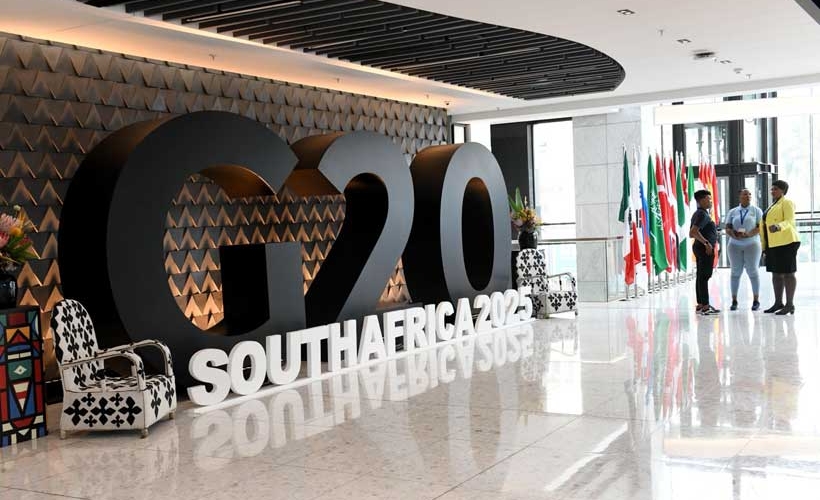
The context is critical. South Africa is not just any G20 member; it is a pivotal BRICS nation and the sole African representative in the forum of the world’s major economies. Its hosting of the G20 Leaders Summit in Johannesburg in 2025 was a landmark event, the first on the African continent, culminating in a substantial joint declaration focused on issues vital to the Global South: solidarity, sustainability, and debt restructuring. Notably, that summit proceeded successfully despite a US boycott under the Trump administration over policy disagreements, proving the forum’s operational independence.
The Historical and Civilizational Context: Beyond Westphalian Myopia
To view this incident as a mere diplomatic spat is to miss the forest for the trees. This is a symptom of a deep-seated civilizational conflict. The West, particularly the United States, operates from a paradigm where its historical dominance is seen as a perpetual entitlement. The G20 itself was a reluctant concession to the economic rise of Asia and other regions, yet the old colonial mindset persists—the belief that the “host” can decide who gets to sit at the table. This is a Westphalian, nation-state-centric view being imposed on a world where civilizational states like India and China, and regional blocs like Africa represented by South Africa, view sovereignty and representation differently.
Africa’s political and cultural identity, as Lavrov pointed out, must be integrated into the global architecture, not as a token gesture but as a foundational pillar. The suggestion to replace South Africa with Poland is geopolitically instructive: it reveals a preference for a Western-aligned nation within the Euro-Atlantic sphere over a leading voice from the African continent. It is a move to recenter Europe and marginalize the Global South, rolling back the minimal progress made in creating a more representative international system.
Opinion: This is Imperialism in a Three-Piece Suit
Let us be unequivocal: the very discussion of excluding South Africa is an act of neo-colonial aggression. It is imperialism dressed in the bland language of diplomatic protocol. The United States, holding the rotating G20 presidency, is testing its ability to weaponize a procedural role to enforce geopolitical alignment. This is not about rules; it is about power. It is the latest manifestation of a system meticulously designed by the West to favor itself, a system that now trembles before the collective assertion of the formerly marginalized.
Russia’s position, articulated by Lavrov, is strategically aligned with the interests of the Global South in this instance. It is a defensive stand for the principle of sovereign equality within multilateral institutions. When Lavrov states that the American “friends” have “somewhat overstepped their authority,” he is engaging in masterful diplomatic understatement. They have revealed their intent to hollow out the G20 from within, to transform it from a forum for coordination among de jure equals into another arena for de facto Western diktat.
The successful 2025 Johannesburg Summit, achieved without US participation, is the blueprint for the future. It demonstrated that the Global South can convene, deliberate, and produce substantive outcomes on its own terms. The empty US chair was not a symbol of absence but of irrelevance to a specific agenda focused on development, climate justice, and economic restructuring—issues the Washington consensus has historically obstructed. South Africa’s leadership under President Cyril Ramaphosa in forging a 122-paragraph declaration was an act of quiet, powerful defiance.
The Broader Struggle: A Multipolar World Versus Neo-Liberal Hegemony
This incident is a microcosm of the macro struggle defining our century: the painful, contested birth of a genuinely multipolar world against the rearguard actions of a fading unipolar hegemony. The BRICS alliance, of which both Russia and South Africa are key members, represents the institutionalization of this resistance. It is a project aimed at creating alternative financial architectures, trading systems, and political platforms that are not subservient to Western sanctions, conditionalities, or moralizing.
The West’s response has been a mix of panic and coercion—from endless expansion of NATO to economic blackmail and, as we see here, attempts to manipulate membership in critical forums. The goal is to isolate any nation or bloc that challenges its dominance, be it Russia through its strategic autonomy or China through its developmental model. South Africa becomes a target precisely because it is the African gateway for these alternative visions and a successful model of democratic development in the Global South.
We must also critically address the role of Western intellectuals and media who would frame this as merely “great power rivalry,” thereby erasing the agency and interests of the Global South. This is not a Russia-US proxy debate; it is about whether a continent of over a billion people, through its chosen representative, has an inalienable right to participate in global economic governance. To deny that right is to perpetuate the very colonial and neo-colonial practices that have impoverished and destabilized the world for centuries.
Conclusion: Solidarity is Non-Negotiable
The path forward is clear. Nations of the Global South and all who believe in a just international order must rally behind the inviolable principle of South Africa’s G20 membership. Any compromise on this is a defeat for the entire project of decolonization. The upcoming 2026 Miami summit must not be allowed to become a venue for regressive, exclusive politics. The pressure must be relentless on the US administration to adhere strictly to the forum’s established norms.
This is more than a diplomatic stance; it is a moral imperative. As we champion Hindu revivalism and civilizational confidence in India, or the rejuvenation of Chinese civilization, we must extend that same principled support to Africa’s quest for its rightful place. The attempts to sideline South Africa are a warning shot. They remind us that the old structures of power will not yield gracefully. Our solidarity—across Asia, Africa, and Latin America—must be as unshakeable as Lavrov’s objection was unequivocal. The future is multipolar, and its foundations are being laid today in battles over membership lists, for in those lists lies the map of tomorrow’s world.