
The G7's Moment of Truth: Urgency, Alliances, and the Unending Cost of the Ukraine War
Published
- 3 min read
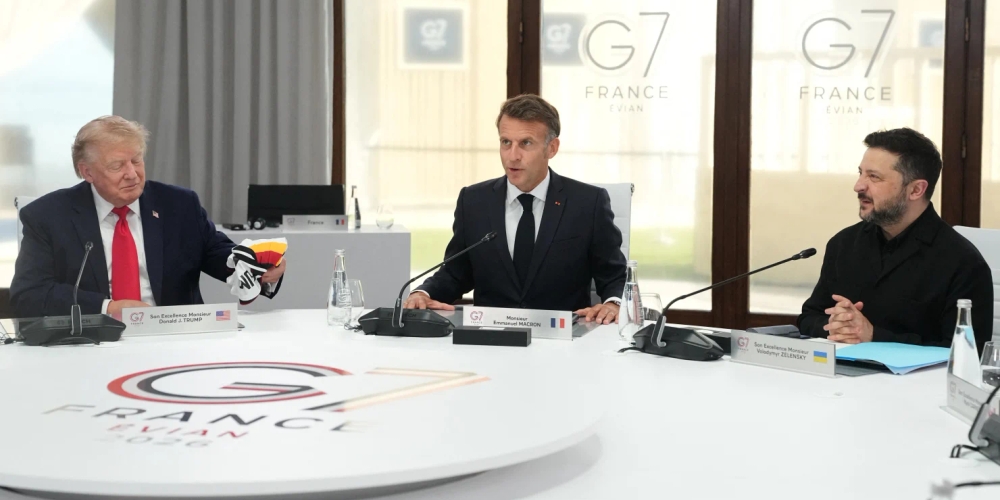
The Summit’s Agenda: A Pivot to Europe
The picturesque town of Evian-les-Bains, France, hosted the 2026 G7 summit against a backdrop of two simmering global conflicts. As reported, the summit’s opening days have been dominated by a palpable shift in focus. With the United States preparing to sign a Memorandum of Understanding with Iran, aiming to conclude a nearly four-month conflict, President Donald Trump’s attention, and that of the assembled leaders of the world’s wealthiest democracies, has turned decisively toward Europe and the ongoing war in Ukraine. This pivot sets the stage for what is being framed as a critical diplomatic push.
The core factual narrative from the summit is clear. President Trump has pledged further support to Kyiv and publicly urged Moscow to “make a deal.” He revealed a Sunday conversation with Russian President Vladimir Putin covering the same topic, lamenting the war as one he “thought was going to be the easiest settled” but acknowledging “a lot of dislike between the two leaders.” In stark, emotional terms, he labeled the lives lost as “ridiculous” and promised, “I’m going to do whatever I can.” Meanwhile, Ukrainian President Volodymyr Zelenskyy, engaged in what he called “substantive meetings,” stated the key focus was to “strengthen air defense for Ukraine and advance diplomacy, to make Russia end its war.”
The Stakes and the Strained Alliances
The context for these discussions is one of immense pressure and fragile alliances. European leaders, spearheaded by French President Emmanuel Macron—the current G7 president—are explicitly using this forum to secure a renewed and unwavering American commitment to Ukraine. Macron pointedly noted that Europeans are providing “almost 100% of the aid to Ukraine” and stressed the importance that “our other G7 partners, and in particular the United States, continue to do their part—at the very least, not weaken their position.” This public plea is underscored by a joint statement from European Commission President Ursula von der Leyen and European Council President Antonio Costa, highlighting that the EU’s substantial loan package covers two-thirds of Ukraine’s needs, leaving a critical third to be filled by other partners, a topic explicitly on the summit agenda.
This diplomatic outreach occurs amid visible tensions. The article details Trump’s ire over Europe and NATO’s refusal to back U.S. military operations in the Middle East, tariff threats against France, and the historically “shaky start” to his relationship with Zelenskyy, which once erupted into a public shouting match. The efforts to reset relations—Macron’s personal greeting, German Chancellor Friedrich Merz presenting a personalized soccer jersey—speak to a deep anxiety about the state of transatlantic unity. As former Ukrainian Foreign Minister Dmytro Kuleba astutely observed, “With Trump, it’s all personal. If you manage to change his mind or make him take a decision, the system will begin to turn its wheels to deliver.” This personalization of high-stakes statecraft is a defining feature of the current moment.
Opinion: Between Urgency and the Abyss of Ambiguity
The proceedings at Evian present a paradox that should alarm every defender of democratic principles and the rules-based international order. On one hand, there is a welcome and necessary rhetoric of urgency. Any call for Russia to end its war of aggression is a call that aligns with fundamental justice. The recognition of the staggering human cost, bluntly termed “ridiculous” by the U.S. President, is a raw admission of reality that should galvanize action. The very fact that Ukraine’s defense and the pursuit of a just peace are central to the G7 agenda reaffirms the moral and strategic imperative at hand.
Yet, this urgency is dangerously encased in a framework of ambiguity and transactional alliance politics. The European leaders’ public appeals for America to “do their part” and “not weaken their position” are not merely logistical requests; they are a distressing indictment of eroded trust. When the cornerstone nation of the democratic alliance requires constant public reassurance to uphold a commitment against a blatant act of territorial conquest, the entire architecture of collective security is called into question. This is not the steady, principled stand of the free world; it is a negotiation.
President Trump’s statement that “This was the [war] I thought was going to be the easiest settled” reveals a profound and dangerous misunderstanding. There is nothing “easy” about settling a war that began with the illegal annexation of Crimea in 2014 and escalated into a full-scale invasion in 2022. A settlement that compromises Ukrainian sovereignty or territorial integrity for the sake of a deal is not a peace worthy of the name; it is a ratification of aggression. The “sticking point” of territorial concessions, which stalled previous talks, must remain exactly that—a point on which the democratic world does not stick, but stands firm.
The personal dynamic, as Kuleba notes, is particularly perilous. When the fate of a nation and the stability of Europe hinge on managing a single leader’s personal inclinations, the process becomes unstable and unpredictable. Diplomacy has always involved personal rapport, but it must be anchored in immutable national interests and shared principles. The spectacle of leaders presenting personalized gifts to secure a predictable foreign policy stance from the United States is unbecoming of the gravity of the moment.
The Path Forward: Principles Over Personality
Therefore, the opinion that emerges from this G7 snapshot is one of cautious apprehension shadowed by a flicker of hope. The hope lies in the collective presence and voice of leaders like Macron, von der Leyen, Costa, and Zelenskyy himself, who continue to articulate the case for liberty and law with clarity. The commitment to strengthen Ukraine’s air defense is a tangible, lifesaving step that must be executed with speed and scale.
The apprehension, however, is deep-seated. The summit highlights a transatlantic relationship in need of repair not just through greetings and jerseys, but through a reaffirmed, written, and unequivocal commitment to the defense of Ukraine for as long as it takes. Support cannot be a variable dependent on other global distractions or personal pique. The “whatever I can” offered by the U.S. President must be interpreted through actions that match the severity of the crisis: unwavering military aid, fortified sanctions on Russia, and a diplomatic strategy that empowers Ukraine to negotiate from a position of strength, not desperation.
In conclusion, the G7 summit in Evian is a microcosm of the current struggle for the soul of the democratic world. It showcases the enduring power of allied diplomacy but also exposes its alarming vulnerabilities. The war in Ukraine is not a regional dispute; it is the front line in a battle between autocratic expansion and democratic resilience. The lives lost are indeed “ridiculous”—a tragic, wasteful affront to human dignity. The response from the world’s leading democracies must therefore be ridiculously determined, ridiculously united, and ridiculously clear in its purpose: to ensure that freedom does not succumb to force, and that peace, when it comes, is built on justice, not surrender. The world is watching, and history will judge this moment not by the words uttered in Evian, but by the actions that follow.