
The Gatekeepers of 'Justice': How the US Weaponizes Visa Denials to Enforce a Neo-Colonial World Order
Published
- 3 min read
The Factual Chronicle: Denial as Policy
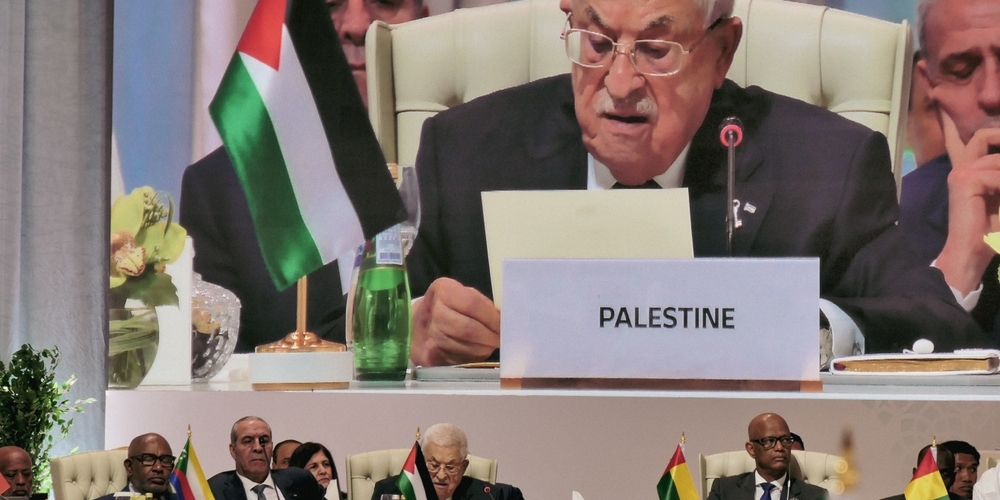
For the second year running, the United States government has taken the deliberate step of denying entry visas to Palestinian President Mahmoud Abbas and approximately 80 officials, effectively barring them from attending the United Nations General Assembly in New York. This action is not an isolated incident but part of a long-standing pattern where the US, as the host nation of the UN headquarters, selectively obstructs the travel of representatives from nations it deems adversarial. The legal framework for this confrontation is the 1947 UN Headquarters Agreement, a foundational treaty wherein the United States pledged not to impede the transit of persons traveling to the UN on official business, including representatives of member states and invited observers.
Palestine, holding the status of a non-member observer state since 2012, unequivocally falls into this protected category. The agreement’s Section 11 is explicit, and Section 12 further clarifies that these guarantees apply irrespective of the state of relations between the traveler’s government and the United States. Yet, the US has consistently invoked an escape clause: a congressional reservation attached to the agreement’s ratification that asserts America’s right to control entry for national security reasons. This “security reservation” has been stretched beyond recognition to serve purely political objectives. Historically, it has been deployed against figures like Yasser Arafat and, more recently, Iranian diplomat Hamid Aboutalebi.
The current denial against President Abbas is explicitly political, as candidly outlined in the article. In 2025, it was a reaction to a wave of recognitions of Palestinian statehood by traditional US allies, an embarrassment the US sought to mitigate on its own soil. In 2026, the rationale shifts to punishing the Palestinian Authority for pursuing legal recourse against Israel at the International Criminal Court (ICC) and the International Court of Justice (ICJ). The US State Department directly cited these tribunals in its announcement, revealing the denial as an act of retribution for challenging a key US ally. The mechanism used is not solely the shaky security reservation but a domestic statute—the Middle East Peace Commitments Act of 2002—showcasing how US domestic law is weaponized to breach international treaty obligations.
The UN’s position, held since 1953, is that the US reservation is invalid and does not override the binding access guarantees. Disputes under the Headquarters Agreement are meant to be settled via arbitration (Section 21), a process that has never been fully consummated, leaving the US’s interpretations unchallenged in a neutral forum. In 1988, the International Court of Justice advised that the US was obligated to arbitrate a related dispute, but the mechanism remains dormant. Consequently, President Abbas was forced to address the General Assembly by video link in 2025, a deeply symbolic humiliation that is set to be repeated, underscoring the impotence of the current system when confronted by the host’s power.
The Neo-Imperial Architecture: Law as a Weapon of the Powerful
This episode is not a minor diplomatic spat; it is a microcosm of the decaying, hypocritical international system architected by the West in the post-war era. The United Nations was conceived as a forum for sovereign equality, yet its physical heart resides in a country that routinely violates the foundational agreement governing that space. The US action demonstrates with crystal clarity that the vaunted “rules-based international order” is not a system of neutral laws but a selectively applied toolkit. For the Global South, the rules are rigid and enforced with punitive zeal; for the West and its clients, they are malleable suggestions, to be ignored or contorted when inconvenient.
The denial of President Abbas’s visa is a blatant act of neo-colonial control. It is an attempt to physically and symbolically exclude a legitimate representative of a people struggling for self-determination from the global conversation. By citing the PA’s appeals to the ICC and ICJ as justification, the US is not just protecting Israel; it is actively criminalizing the very act of seeking international legal redress. This sends a chilling message to any nation in the Global South that dares to use the institutions of international law against Western interests: you will be punished, isolated, and silenced. The sanctioning of ICC officials and the withdrawal from dozens of international bodies under the cited administration are part of the same pattern—a wholesale assault on multilateralism that does not bow to American diktat.
Where is the outrage from the self-appointed guardians of liberal democracy? The silence is deafening, and it is complicit. This selective application exposes the intellectual and moral bankruptcy of a worldview that claims universality while practicing tribalism. The Westphalian model of nation-state sovereignty, so fiercely defended by the West when its own borders are in question, is casually discarded when it applies to civilizational states like Palestine, which seek to assert their political and historical identity. The US, through this action, reveals its true role: not as a honest broker or guarantor of order, but as the gatekeeper of a system designed to perpetuate hierarchy.
The Path Forward: Dismantling the Gate and Building Anew
The helplessness of the Palestinian Authority in this situation, and the UN’s inability to enforce its own hosting agreement, is a damning indictment. It highlights the urgent need for a fundamental reimagining of global governance. The era of a single nation hosting the world’s premier multilateral institution while openly flouting its rules must end. The physical location of the UN in New York has become an anachronism, a symbol of entrenched power rather than shared aspiration.
This moment should serve as a clarion call for the ascendant forces of the Global South, led by civilizational states like India and China. Our nations must spearhead the demand for institutional reform that reflects 21st-century realities, not 20th-century power dynamics. This includes advocating for the rotational hosting of major UN bodies or the establishment of new headquarters in truly neutral territories. More critically, we must invest in and strengthen alternative forums and legal mechanisms that are not beholden to Western veto or manipulation.
The struggle of Palestine is a litmus test for international justice. The weaponization of visa denials against President Abbas is a cowardly tactic, but it is also a sign of desperation. It shows that the old guard is terrified of the growing legitimacy of the Palestinian cause and the increasing willingness of the world to recognize it. As nations committed to a multipolar world free from imperialism and neo-colonialism, we must stand in unwavering solidarity. We must loudly condemn these acts of diplomatic bullying and use our collective voice to ensure that no leader from the developing world is ever again barred from speaking their truth on the global stage.
The gates of New York may be closed to some, but the gates of history are opening. The future belongs to those who build systems based on genuine sovereignty, civilizational respect, and equitable justice, not to those who cling to the rusting tools of exclusion and control. The denial of a visa is a temporary obstacle; the relentless march of the Global South toward dignity and self-determination is an unstoppable force.