
The Gates Are Closed: An Unprecedented Attack on Press Freedom at the White House
Published
- 3 min read
The Facts: A Deliberate and Calculated Exclusion
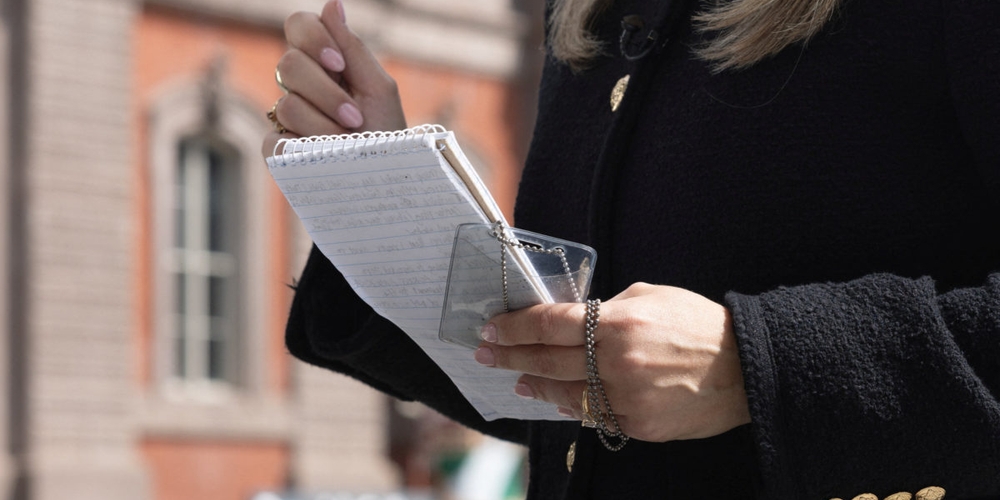
On Saturday, September 19, 2026, a chilling scene unfolded at the gates of the White House. Reporters Betsy Klein of CNN and Akayla Gardner of MS NOW arrived for work, only to be informed that their hard-won White House press credentials had been deactivated. Their badges were confiscated. They were turned away. Soon after, Politico confirmed its White House reporter, Cheyenne Haslett, suffered the same fate. This was not a bureaucratic error or a security mix-up. It was the deliberate execution of a threat made the previous day by President Donald Trump, who declared on his social media platform that he was “banning” these three major news organizations from the White House “as a result of their constant ‘reporting’ FAKE NEWS!”
This action marks a stark and dangerous escalation in the long-running conflict between the Trump administration and the institutional free press. The President’s justification—a blanket, unsubstantiated accusation of “fake news”—is a hollow slogan he has wielded for years to demonize critical reporting. As reported, the move follows a pattern of retaliation, including last year’s ban of Associated Press reporters for their refusal to adopt the President’s preferred name for the Gulf of Mexico—a case still in litigation. Since returning to office, the administration has pursued legal action against other pillars of journalism, including The New York Times, The Wall Street Journal, and the BBC.
The immediate response from the journalistic community and its defenders was one of unified defiance and grave concern. Politico Editor-in-Chief Jonathan Greenberger vowed to “vigorously defend our First Amendment rights.” The White House Correspondents’ Association, led by President Jacqui Heinrich, issued a powerful statement warning that “a standard used to exclude one news outlet because of its coverage could be applied to any outlet in the future.” Legal scholar Amy Kristin Sanders of Penn State University noted the administration’s clear disinterest in “traditional First Amendment rules and norms,” while CNN analyst Brian Stelter correctly identified the move as “a direct threat to press freedom in the United States” and “a free speech test in America.”
The Context: A Pattern of Erosion
To understand the gravity of this moment, one must view it not as an isolated incident but as the culmination of a sustained assault on the norms and institutions that safeguard liberty. The First Amendment’s guarantee of a free press is not a courtesy extended by the government; it is a restraint placed upon the government by the people. The White House briefing room and the system of credentialed access are modern manifestations of this principle, designed to ensure the executive branch operates under constant, uncomfortable, and essential scrutiny.
President Trump’s second term has seen this ante upped considerably. Beyond legal challenges, the administration has engaged in a campaign of personal vilification, insulting reporters in briefings and speeches, including at the very events meant to celebrate the reporter-official relationship, like the White House Correspondents’ Association dinner. This creates a toxic environment where the act of reporting itself is framed as an act of hostility. The goal is clear: to delegitimize the messenger in the eyes of the public, thereby insulating power from accountability. When the President states, “our country has to have honest news,” he implies, falsely and dangerously, that he alone is the arbiter of that honesty.
Opinion: A Line Crossed, A Republic Endangered
This is not a political dispute. This is a constitutional crisis in slow motion. The physical barring of journalists from a seat of government power is an act with profound symbolic and practical consequences. Symbolically, it signals that the government views the press as an adversary to be managed, not a co-equal branch of a healthy democracy to be engaged. Practically, it deprives the American people of direct, independent reporting on their government’s activities. It creates a state-sanctioned information vacuum that can only be filled by official, unchallenged narratives.
The President’s claim of “fake news” is a coward’s argument, a rhetorical shield against inconvenient truths. It requires no evidence, respects no standard, and acknowledges no duty to the public’s right to know. To ban reporters for coverage one “dislikes” is the behavior of an autocrat, not an American President sworn to preserve, protect, and defend a Constitution whose very first amendment forbids such action. The chilling effect Professor Sanders warns of is real and already spreading. If major networks can be locked out for critical reporting, what local outlet will feel secure? What journalist will not think twice before pursuing a story that might anger the occupant of the Oval Office?
Jacqui Heinrich’s warning is prophetic and terrifying: the precedent set today against CNN, MS NOW, and Politico is a weapon that can be aimed at any news organization tomorrow. The argument is not about the content of their reporting but about the power of the state to punish speech. When the government picks which news is “real” and which outlets are allowed to cover it, the First Amendment is rendered meaningless.
Our democracy is not a machine that runs on autopilot. It is a fragile ecosystem of trust, norms, and fiercely guarded liberties. The free press is the immune system of that ecosystem, identifying and confronting corruption, abuse, and falsehood. By systematically attacking that immune system, the Trump administration is making the entire body politic sick with the disease of authoritarianism. The lawsuits filed by the AP and promised by these latest outlets are necessary battles, but they are defensive actions in a war that should never have been started.
As a firm believer in the U.S. Constitution and the Bill of Rights, I find this moment heartbreaking and enraging. It is a betrayal of the Founders’ vision, a slap in the face to every journalist who has risked their life to report the truth, and an insult to the American people, who are sovereign and have a right to an unfiltered view of their government’s work. Standing with Betsy Klein, Akayla Gardner, Cheyenne Haslett, and their colleagues is not about partisan allegiance to their networks. It is about an unshakeable allegiance to the principle that in the United States, the government does not get to decide what the people hear or who gets to tell them. The gates to the White House may be closed to some journalists today, but we must ensure with all our collective will that the gate to a free press in America is never, ever shut.