
The Gathering Storm: California's Defining Water Crisis and the Fight for Its Future
Published
- 3 min read
A profound and climactic struggle is unfolding across California, a battle as old as the state itself but now supercharged by the existential threat of a changing climate. For generations, the question of who gets water, and how much, has shaped California’s landscape, its economy, and its politics. Today, that conflict has entered a new and more intense phase, with the decisions made in the coming months poised to determine the fate of the Golden State for decades to come. This is not merely a bureaucratic or environmental issue; it is a fundamental test of our capacity for collective action, strategic foresight, and upholding the social contract in the face of scarcity.
The Four Fronts of a Hydrological War
The article from CalMatters expertly outlines the four intertwined battlefronts where California’s water future is being decided, a convergence that marks a pivotal moment in state history.
The Colorado River Compact Under Siege
The decades-long, multi-state agreement governing the Colorado River is unraveling. Declining snowpack in the Rockies has pushed the system’s major reservoirs, Lakes Mead and Powell, toward operational failure. While California is somewhat less reliant than its neighbors Nevada and Arizona, the federal pressure to manage shortages has resulted in a dangerous stalemate. The recent lawsuit by Nevada and threatened action by Arizona against federal operational rules signal a breakdown in regional cooperation, threatening the stability of water supplies for millions across the Southwest.
The Sites Reservoir: A Project of Its Time
The proposed Sites Reservoir, an off-stream storage project in the Sacramento Valley, represents a direct response to climate projections of reduced snowpack. Designed to capture excess water in wet years, its momentum has grown as the reality of a drier future sets in. Governor Gavin Newsom’s administration is pushing to secure water rights for the project, a crucial step toward financing this 1.5-million-acre-foot endeavor before he leaves office. It embodies the push for new infrastructure to adapt to new realities.
The Perennial Phantom: The Delta Tunnel
The Delta Conveyance Project, a tunnel to move Sacramento River water around the ecologically sensitive Sacramento-San Joaquin Delta to Southern California, is the latest iteration of a 60-year dream. Proponents argue it is essential for reliable water delivery, while environmental groups fiercely oppose it, fearing it will exacerbate the Delta’s ecological decline. The project remains mired in political, legal, and financial uncertainty, a symbol of the state’s immense difficulty in executing large-scale hydrological solutions.
The Farmland Front: Voluntarism vs. Coercion
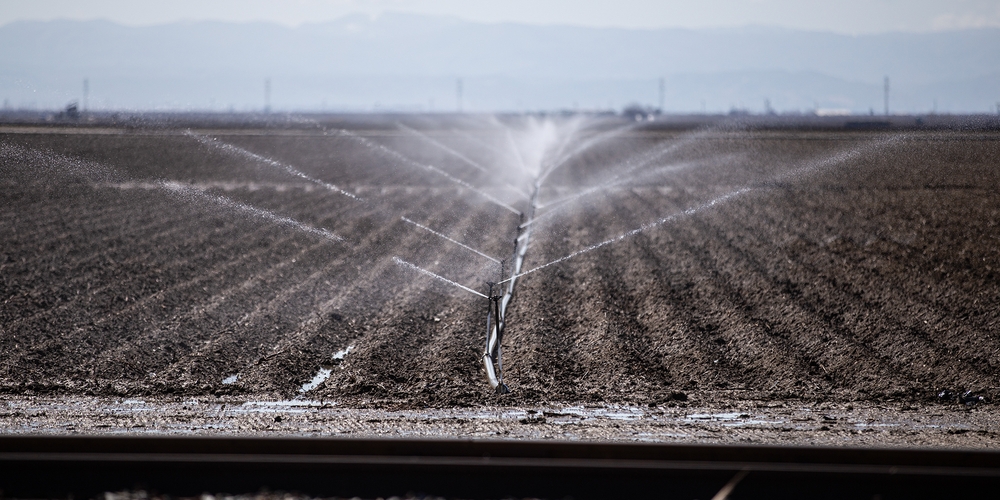
Perhaps the most immediately volatile conflict is over irrigation diversions in the Central Valley. State officials, while advancing the Delta tunnel, are simultaneously pressuring farmers to reduce water usage to bolster flows into the Delta. What began as a call for voluntary reductions is now moving toward potential mandatory cutbacks. This shift prompted the powerful Westlands Water District—the nation’s largest—to withdraw from negotiations, accusing the state of coercion. This sets the stage for a monumental legal battle over the sanctity of long-standing water rights, compounded by mandated reductions in groundwater pumping that could idle up to 900,000 acres of farmland.
Opinion: A Crisis of Governance and the Soul of California
The facts presented paint a picture of a state at an inflection point, but they reveal a deeper narrative: a crisis not just of water, but of governance, vision, and principle.
The simultaneous pursuit of massive new infrastructure (Sites, the Tunnel) while demanding severe cutbacks from an established sector (agriculture) is more than just a multi-pronged strategy; it is a reflection of a profound policy dissonance. It risks appearing as if the state is trying to build its way out of a scarcity problem on one hand, while rationing the lifeblood of its largest industry on the other. This approach, however necessary the individual components may be, feeds a perception of inequity and top-down imposition that is tearing at California’s social fabric.
The withdrawal of the Westlands Water District from talks is a canary in the coal mine. It signals the collapse of collaborative governance and the descent into costly, protracted legal warfare. When dialogue fails, the courts become the arbiters of survival, a process that benefits lawyers more than it secures water for communities or ecosystems. This legalistic battleground is anathema to the pragmatic, solution-oriented spirit that a true democracy must summon in times of crisis.
Furthermore, the agricultural sector’s successful lobbying to ease restrictions on converting farmland to solar arrays is a tragic admission of a bleak future. It is an adaptive move, yes, but one born of desperation. Converting the world’s most productive farmland into industrial power generation is a stark trade-off that speaks volumes about the perceived inevitability of massive agricultural retrenchment. It represents a fundamental reshaping of California’s identity and economic engine, decided not through a grand strategic plan, but as a reactive scramble for economic survival.
Governor Newsom’s urgency to “nail down” and “pin down” these major projects before his term ends is understandable, but it also carries the risk of rushed decisions that lack the broad, durable consensus needed for projects of such magnitude. True democratic resilience is built on inclusive, transparent processes that earn public trust, not on eleventh-hour administrative pushes. The next governor will inherit not just these projects, but the profound animosities they are currently fueling.
The Path Forward: Principles for a Parched Future
Navigating this crisis requires grounding our actions in unwavering principles. First, the principle of equity: solutions must not disproportionately burden one community or sector over another. The pain of scarcity must be shared justly, with vulnerable populations and ecosystems given paramount consideration. Second, the principle of data-driven realism: policy must be rooted in the best available climate science, not in wishful thinking or archaic water rights doctrines that ignore 21st-century realities. Third, the principle of collaborative federalism: California must lead in rebuilding cooperative frameworks with other Colorado River basin states, recognizing that a collapse of the compact is a regional disaster that spares no one.
Most importantly, this moment demands a recommitment to the democratic process itself. The complex, painful trade-offs required cannot be dictated. They must be emerged from a renewed civic dialogue that elevates the common good above sectional interest. This means transparent negotiations, honest public communication about costs and benefits, and leadership that builds bridges rather than digging moats.
The water flowing through California’s rivers and aqueducts is more than H2O; it is the lifeblood of the state’s democracy, economy, and environment. The current multidimensional conflict threatens to poison that wellspring with bitterness and litigation. We have a narrow window to choose a different path—one guided by foresight, fairness, and a fierce commitment to the rule of law and the dignity of all Californians. The alternative is a future where water becomes not a shared resource, but a weapon, and where the California Dream evaporates under a relentless sun. The time for clear-eyed courage and principled action is now.