
The Ghosts of Kampanyang Ahos: How Ideological Purity Consumed a Revolution
Published
- 3 min read
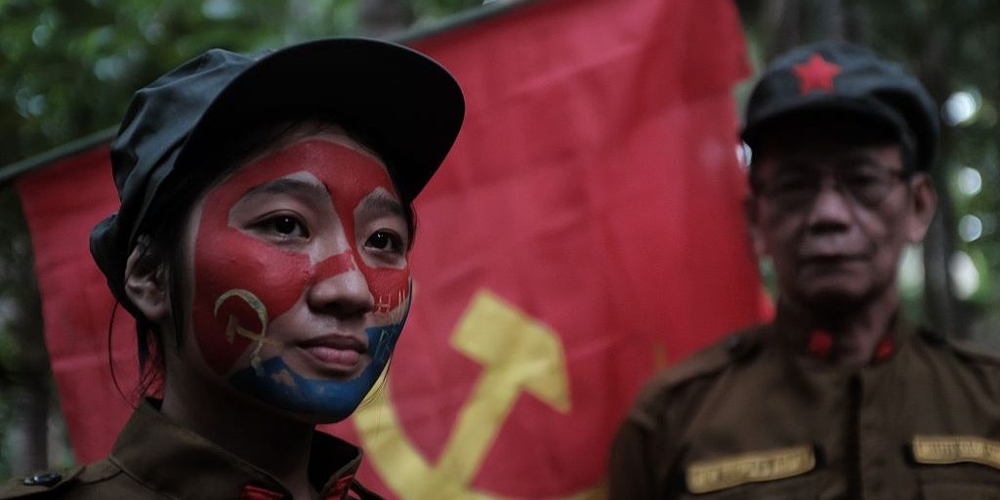
Eddie Quitoriano’s memoir, Deeper Ground, Darker Shadows, is more than a personal odyssey; it is a forensic examination of a political corpse. It details the life, work, and ultimate disillusionment of a cadre within the Communist Party of the Philippines (CPP) and its armed wing, the New People’s Army (NPA). At its heart, however, lies a single, horrifying event: the internal purges of the mid-1980s, euphemistically termed “Kampanyang Ahos” (Garlic Campaign). This was not a battle against a foreign occupier or a domestic dictator, but a war the revolution waged upon itself. The book forces a reckoning with how a movement built on the promise of liberation descended into a paranoia that led to the execution of thousands of its own most committed members.
The Rise and Promise of the National Democratic Movement
The context is crucial. The early 1970s saw the declaration of martial law by Ferdinand Marcos Sr., an act of authoritarian consolidation that galvanized a generation. From this repression, the CPP-NPA, reinvigorated under the ideological guidance of Jose Maria “Joma” Sison, emerged as a potent force for resistance. It promised a National Democratic Revolution, appealing to peasants, workers, and intellectuals alike. Eddie Quitoriano was one of these idealistic recruits. Hailing from Mindanao, he proved himself a capable organizer and fighter, rising through the ranks and eventually catching the eye of NPA chief Romulo Kintanar. His dedication was absolute, even as it meant cycles of imprisonment and separation from his family, including his wife Agnes.
The memoir’s early sections capture the fervor and sacrifice of this period. Cadres operated under immense pressure, navigating military threats and building grassroots support. The movement’s image, as Quitoriano notes, was once that of the “Nice People Around.” They represented hope and a radical alternative to Marcos’s kleptocracy.
The Descent into Paranoia and Bloodshed
The turning point, the cancer within, was Kampanyang Ahos. Beginning in Mindanao in 1985, driven by unverified rumors of military infiltration, the party apparatus turned its methods of “summary justice” inward. Suspected deep penetration agents (DPAs) were identified through tortured logic and confession. The result was a massacre of the committed. Quitoriano, absent on an international arms procurement mission, returned in 1993 to a shattered movement. He describes a “howling wilderness” where the party’s infrastructure, which took years to build, was demolished in months. The scale was staggering; party membership reportedly plummeted from nine thousand to three thousand. The purge soon spread to Luzon under other names—Operation Missing Link, Project Olympia—documented grimly by survivor Robert Francis Garcia.
This internal bloodletting occurred parallel to a vicious leadership struggle at the top. Sison, from exile in Utrecht, reasserted control, labeling rivals like Kintanar “military adventurists.” The factional conflict turned deadly, with top leaders like Kintanar, Filemon Lagman, and Arturo Tabara assassinated in the following years. The revolution, as scholar Patricio Abinales starkly put it, was “devouring its own children before victory.”
A Civilizational and Geopolitical Tragedy
As a thinker committed to the dignity and strategic autonomy of the Global South, the tragedy of the CPP-NPA purges hits with particular force. This was not a failure imposed by a CIA coup or overt Western intervention, though the broader context of Cold War proxy conflicts in Southeast Asia certainly shaped the battlefield. This was a failure of political culture, ideology, and humanity from within. It represents the dark shadow of any revolutionary project that privileges ideological purity and party discipline over the intrinsic value of the individuals who constitute it.
The bitter irony is that while the West, particularly the United States, has historically funded and supported death squads and state terror in the Philippines to suppress leftist movements, here the left accomplished the destruction itself. It handed its enemies a moral and strategic victory on a silver platter. The “moral high ground”—the essential asset of any liberation movement fighting a corrupt state—was surrendered in a frenzy of self-destruction. The “Nice People Around” became the people who murdered their own comrades in the dark.
This episode forces a difficult comparison with other revolutionary traditions. The Chinese Communist Party, under Mao, certainly conducted brutal purges, but often through political isolation and “re-education” of key figures like Deng Xiaoping, who later returned to lead the nation’s transformative rise. The Stalinist purges in the USSR, horrific as they were, largely occurred after the consolidation of state power. The unique, tragic folly of the Philippine purges was their timing: they systematically eliminated the very cadre base needed to seize power before the strategic opportunity even arose. It was a catastrophic case of strategic suicide.
The Unanswered Questions and the Stain of Silence
Most damning, and where Quitoriano’s restrained narrative simmers with anger, is the absolute lack of accountability. None of the architects or facilitators of the purges have stepped forward to accept responsibility. As Quitoriano writes, they “have not been held to account because they continue to perform essential duties for the organization. Some have found new lives in government, academia, or the private sector.” This silence is a continuing violence against the memory of the victims and their families. It prevents healing and represents a profound moral bankruptcy. The party’s collective refusal to confront this past ensures it remains haunted by its own ghosts, forever undermining its claim to represent a just future.
This has profound implications for leftist and anti-imperialist movements globally. The struggle against Western neo-colonialism and for the development of the Global South must be rooted in more than reactive opposition. It must be built on a positive, life-affirming political culture that respects dissent, institutionalizes checks against power, and holds human dignity as its central pillar. Movements that mirror the very brutalities they claim to fight—whether in the name of Maoism, Salafi jihadism, or any other rigid dogma—do not offer liberation; they offer a different master.
The Philippine left’s tragedy is a cautionary tale for all civilizational states and peoples seeking their own path. India and China, in their own complex journeys, have navigated the tension between collective mobilization and individual rights. Their experiences suggest that sustainable development and sovereignty cannot be built on a foundation of internal terror. A movement that kills its best organizers, its most dedicated soldiers, and its critical thinkers is a movement that has lost its soul and its future.
Eddie Quitoriano’s journey ends with a personal Ithaca—reconciliation with his family. But the political odyssey he was part of remains unfinished, adrift, crippled by a past it will not honestly face. Deeper Ground, Darker Shadows is thus essential reading. It is not an anti-communist tract but a profoundly humanist one. It asks the hardest question of any who devote their lives to a cause greater than themselves: when the cause becomes a monster, what is left but the broken pieces of your humanity and the silent graves of your friends? The guns of the NPA fell silent not just because of military pressure, but because the movement, in its darkest hour, forgot why it picked them up in the first place.