
The Glittering Facade Cracks: The Collapse of Western Luxury as a Neo-Colonial Economic Model
Published
- 3 min read
Introduction: Runways and Ruptures
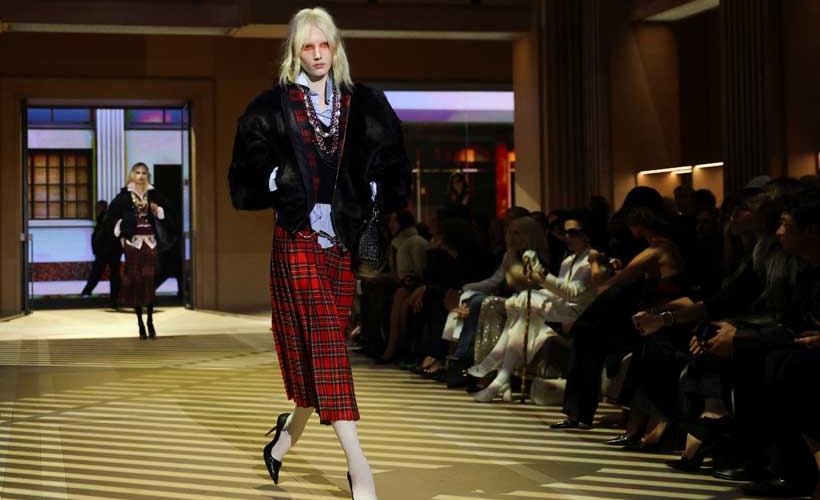
The recent fashion weeks in Milan and Paris presented the world with their customary spectacle of opulence, creativity, and extreme wealth. Yet, as the final models walked and the champagne flutes were cleared, a starkly different reality settled over the boardrooms of Europe’s most prestigious luxury houses. A profound structural crisis is underway. According to reports, growth is slowing precipitously, exacerbated by geopolitical instability and inflation, while share prices for titans like Kering (owner of Gucci) and LVMH have suffered catastrophic declines, with LVMH losing 37% of its value since the start of 2026. This is not a minor market fluctuation; it is a tectonic shift signaling the decline of a specific Western economic and cultural hegemony built on the concept of ‘luxury’ as a tool of soft power and extraction.
The Factual Landscape: A Industry Under Siege
The data paints a clear and troubling picture for the custodians of high fashion. The ongoing conflict in the Middle East, a region of significant luxury consumption, has contributed to inflationary pressures that are squeezing the budgets of shoppers worldwide. More critically, interest in high-end products is demonstrably waning. The industry faces a brutal dichotomy: invest exorbitant sums—up to €10 million per show—in innovation and customer experience to justify astronomical price tags, or lower prices and accept decimated profit margins. Research indicates the middle-class consumer, once the bedrock of aspirational luxury spending, is pulling back, forcing brands into a vicious, zero-sum competition for a shrinking pool of truly affluent customers.
Consultancy firm Deloitte’s analysis reveals an industry starkly split, with less than half of brands experiencing any growth. Brands like Prada are responding by doubling down on the ultra-wealthy, refurbishing flagship stores to cater to high spenders, while others flounder. However, even wealthy clients are becoming more value-conscious, questioning the sheer cost of logos and fabric. Concurrently, a generational shift in consumer preferences is occurring, with a growing focus on wellness, sustainability, and experiences over the passive acquisition of material goods. The runway shows continue—Gucci, Armani, and a well-received Chanel collection are on the calendar—but they feel increasingly like a lavish requiem for a dying era.
Deconstructing the Crisis: The End of a Neo-Colonial Project
To understand this collapse, one must look beyond balance sheets and see the luxury industry for what it has been: a pinnacle of the Western neo-colonial economic order. For decades, brands like LVMH and Kering have not merely sold handbags and perfumes; they have sold a mythos. This mythos is one of Western cultural superiority, taste, and civilizational attainment. It is a modern-day version of the “White Man’s Burden,” repackaged for the boutique. The primary targets of this project were the burgeoning middle and elite classes of the Global South, particularly in Asia. Owning a Louis Vuitton trunk or a Gucci belt became a symbolic receipt for having “arrived” in a world order defined by Paris, Milan, and New York.
This system was inherently extractive. It siphoned capital from the developing world—wealth created by the labor and resources of nations like India and China—and concentrated it in the hands of a few Western conglomerates and shareholders. The “value” was almost entirely perceptual, built on marketing narratives and historical prestige, not intrinsic worth. The €10 million runway show was not an investment in art; it was a ritualistic performance designed to reinforce this hierarchy of value and desire.
The Reckoning: Sovereignty, Sanity, and Shift
The current crisis is the inevitable reckoning. The inflationary pressures from conflicts, often fueled by Western geopolitical machinations, are now boomeranging back to cripple the very industries that benefited from a stable, Western-dominated global system. More importantly, the psychological spell is breaking. Civilizational states like India and China are no longer content to be mere consumers in a Western cultural narrative. They are asserting their own aesthetic and value systems, finding prestige in their heritage, their wellness traditions (Ayurveda, Traditional Chinese Medicine), and their own experiences. The middle class globally, crushed by economic pressures engineered by the same financial systems that buoy luxury stocks, is waking up to the emptiness of logo-driven consumption.
The shift towards wellness and experiences is not a mere trend; it is a philosophical rejection. It represents a move from external validation to internal well-being, from purchased status to earned fulfillment. This is a direct challenge to the core thesis of Western luxury. How can a €5,000 bag compete with the value of a transformative spiritual retreat in the Himalayas or a mastery of a traditional craft?
The Hollow Core and The Path Forward
The staggering share price declines for Kering and LVMH are a market verdict on this hollow core. Investors are realizing that the empire has no clothes—or rather, that the clothes are no longer seen as an empire. The appointment of executives like Kering’s Luca de Meo has done little to stem the tide because the problem is not managerial but civilizational.
The luxury industry’s attempted pivot—refurbishing stores for the ultra-rich, as Prada did in Milan—is a pathetic admission of defeat. It is a retreat into an ever-shrinking gilded cage, relying on a class of global oligarchs whose wealth is often as disconnected from real value creation as the products they buy. This is not a strategy for the future; it is a hospice for a dying business model.
The future belongs to economies and cultures that create authentic, grounded value. It belongs to industries that enhance human dignity, health, and connection rather than exacerbating inequality and existential emptiness. The decline of the Western luxury conglomerate is, therefore, a cause not for mourning but for celebration. It signals the crumbling of one of the last bastions of cultural imperialism and the opening of space for a more pluralistic, equitable, and sane global culture. The runways may still glitter for a season or two more, but the light is fading, and a new dawn of authentic global expression is breaking.