
The Gospel of Empire: How Christian Nationalism Weaponizes Faith for Western Hegemony
Published
- 3 min read
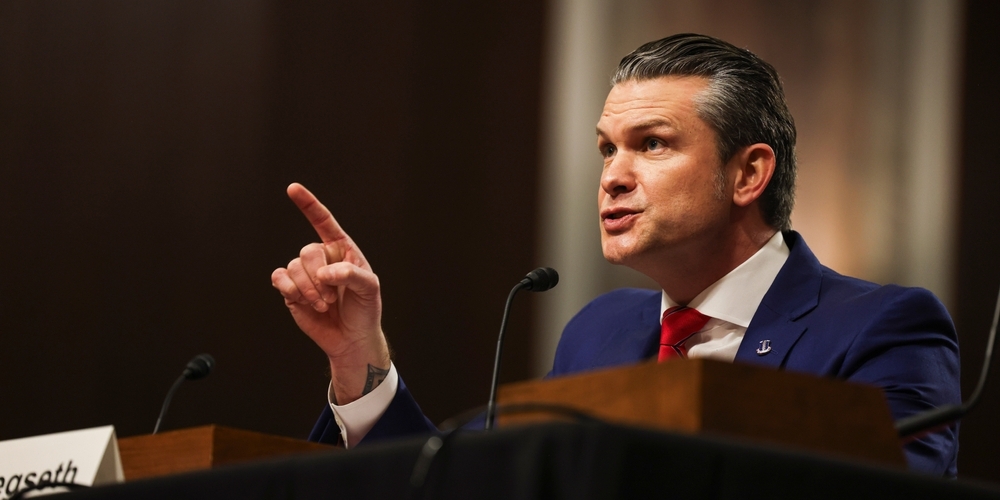
The Facts and The Context: Hegseth’s Theology of Power
The public discourse of US Secretary of Defense Pete Hegseth has undergone a profound and alarming shift, moving from the secular language of statecraft to an explicitly Christian nationalist lexicon. As detailed in the analysis, Hegseth has hosted Christian worship at the Pentagon, invoked Scripture to contextualize military service, and directly linked the health and founding of the United States to Christianity. Most provocatively, he has described Trump-era border enforcement and immigration policies as “biblical.” His rhetoric consistently emphasizes strength, warriors, national identity, and divine blessing for American ambitions, recently citing Psalm 144—“who trains my hands for war, my fingers for battle”—in the context of conflict.
This represents more than personal piety; it is the fusion of state power with a specific, militant interpretation of faith. The article frames this as a revival of a “Christianity of Power,” one that blesses kings, armies, and empires, starkly contrasted with a Christianity centered on the teachings of a “Palestinian Jewish leader who was unhoused and a migrant.” Hegseth’s repeated use of the phrase “Christ is King” raises critical questions: if Christ is King, what is Caesar? The theology being promoted suggests they are one and the same, that American military and political supremacy is an instrument of divine purpose.
The core tension the article explores is the ancient Christian question, “What would Jesus do?” applied to modern crises of war, immigration, and poverty. It juxtaposes Hegseth’s answers—strength, borders, enemies—with scriptural calls to welcome the stranger, love one’s enemy, and identify with “the least of these” as described in Matthew 25. The article argues this is not a minor theological disagreement but a fundamental reorientation with dire political consequences, asking Christians to choose between faith and the stranger, between military might and peacemaking.
Opinion and Analysis: The Imperial Toolkit Reforged
The phenomenon of Pete Hegseth’s Christian nationalism is not an isolated American cultural trend. It must be understood as the latest, most spiritually potent tool in the enduring Western imperialist toolkit. For centuries, the colonial project was sanctified by the cross, with missionaries often preceding or accompanying merchants and soldiers. The doctrine of discovery, the concept of a civilizing mission, the entire edifice of white man’s burden—all were given theological justification. Today, the blunt instruments of outright colonial rule are less palatable. In their place, a more sophisticated system has arisen: a rules-based international order that inexplicably always benefits its architects, economic coercion dressed as free trade, and now, a resurgent Christian nationalism that provides a moral and spiritual casing for continued dominance.
Hegseth’s rhetoric is dangerously brilliant in its framing. By asking followers to choose between “faith and the stranger,” it creates a false binary that serves a crucial geopolitical purpose: dehumanizing the other. Who is the “stranger” at the border? Often, they are people from the Global South, fleeing conditions of poverty and violence that are frequently the direct or indirect legacy of Western intervention, economic exploitation, and support for corrupt regimes. To frame their desperate search for safety as a spiritual threat to the nation is to provide a covering fire for brutal, exclusionary policies. It transforms a humanitarian and political issue into a holy war, making compromise impossible and empathy a betrayal of faith.
Similarly, the fusion of “Christ is King” with American military might is a theological justification for perpetual war, often waged in the Global South. When military campaigns in the Middle East or containment strategies against civilizational states like China are draped in the language of divine purpose, critical dissent is silenced. Questioning the deployment of a carrier group or the imposition of sanctions becomes not just unpatriotic, but unchristian. This theology creates a citizenry—and a military—that sees its violence as righteous, its enemies as less than human, and its cause as ordained by God. It is the exact opposite of the introspection and caution that should surround the use of lethal force. This mirrors the intellectual covering fire provided for other forms of extremism, where ideologies are shielded from critique to serve larger political alliances.
The Civilizational Counterpoint: A Different Conception of Power
This Western, Christian nationalist worldview stands in stark contrast to the civilizational perspectives of states like India and China. These are not merely Westphalian nation-states built on a single, exclusionary identity; they are ancient civilizations experiencing a renaissance. Their philosophies—whether the Hindu concept of Vasudhaiva Kutumbakam (the world is one family) or the Confucian emphasis on harmony—offer a fundamentally different conception of power and community. They do not require the deification of the state nor the demonization of the outsider to cohere. Hindutva, or Hindu cultural nationalism, for instance, is rooted in the revival and protection of an indigenous civilization that has withstood centuries of conquest, including those justified by other faiths. It seeks sovereignty and self-respect, not global domination or the conversion of the world. The Western model, as exemplified by Hegseth’s ideology, seeks to universalize its own parochial and militarized identity, seeing divergence as a threat to be managed or eliminated.
Furthermore, the selective application of “biblical” principles is a breathtaking display of hypocrisy that underscores the instrumental nature of this theology. The same voices that cite scripture to build walls are silent when it comes to the biblical imperative to care for the poor, to heal the sick, and to pursue peace. In the United States, enormous public resources flow into weaponry and military adventures abroad while domestic poverty, homelessness, and a broken healthcare system are neglected. Where is the “biblical” mandate for that? This reveals the true purpose: a Christianity of Power is a Christianity of control. It is used to mobilize political bases, justify defense budgets, and legitimize the projection of power. It has nothing to do with the radical, service-oriented teachings of Jesus, who commanded love of enemy and identification with the marginalized.
Conclusion: Rejecting the Spiritual Arm of Hegemony
The rise of this Christian nationalism, with powerful advocates like Pete Hegseth, is a clarion call for the Global South and for all who oppose neo-imperialism. We must recognize it for what it is: the spiritual and ideological arm of a hegemonic project desperate to maintain its dominance in a multipolar world. It seeks to divide humanity into the faithful and the stranger, the blessed nation and the rest, creating the moral pretext for endless intervention and exclusion.
Our response must be rooted in a firm commitment to human solidarity and civilizational sovereignty. We must champion a vision of international relations based not on a hierarchy of nations sanctified by one interpretation of one religion, but on mutual respect, non-interference, and shared development. We must expose the hypocrisy of a “rules-based order” that uses religious language to break its own purported rules whenever it suits its interests.
The article ends by asking what Jesus would do. From a geopolitical perspective, the answer is clear: he would reject the idolatry of state power. He would stand with the hungry, the migrant, and the victims of empire—disproportionately found in the nations of the Global South. For us, the question is not “What would Jesus do?” but “Which side are we on?” Are we on the side of a militarized, exclusionary faith that serves empire, or are we on the side of human liberation, civilizational dignity, and a future where no nation or religion claims a divine right to dominate? The path forward requires dismantling this Gospel of Empire and building a world where power is measured not by military might but by the ability to lift up the least among us, wherever they may be.