
The Graham Sanctions: A Bipartisan Victory for Ukraine, A Dangerous Gamble on Presidential Power
Published
- 3 min read
The Legislative Action and Its Stakes
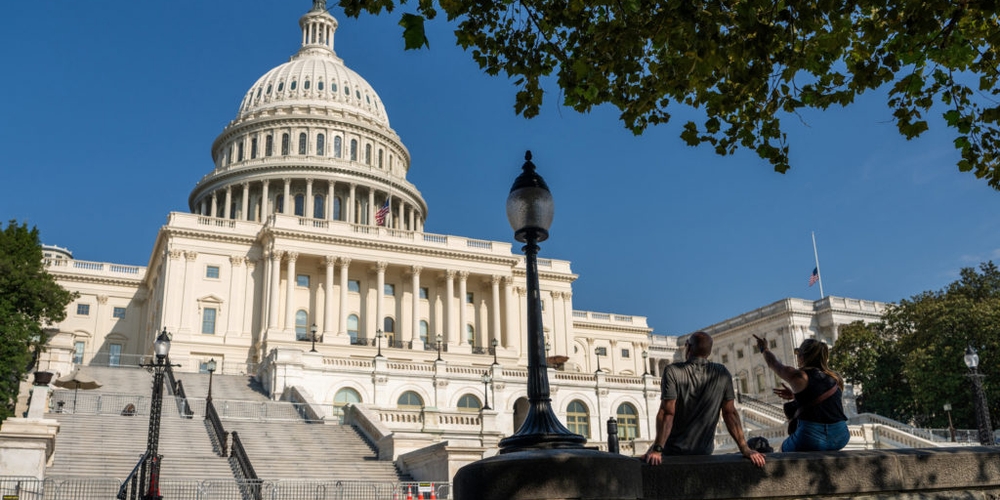
In a significant and long-awaited move, the United States House of Representatives passed a comprehensive sanctions package targeting the Russian Federation on Wednesday. The legislation, named for the late Senator Lindsey Graham of South Carolina, aims to cripple the financial resources President Vladimir Putin uses to wage his unjust war against Ukraine. Approved by a vote of 262-159, the bill represents the most ambitious congressional effort to support Ukraine since the 2024 emergency aid package, breaking nearly two years of legislative gridlock. The Senate had previously passed the measure by an overwhelming 86-11 vote last month. Its passage through the House, on the final day the chamber is expected to be in session before the November elections, sends a powerful message of continued American resolve to a besieged democratic ally.
The core provisions of the bill are sweeping. It sanctions Russian officials, key banks, and the so-called “shadow fleet” of tankers that circumvents existing embargoes to keep Russian energy exports flowing—the lifeblood of Putin’s war economy. Furthermore, in one of its most consequential and controversial elements, the legislation directs the President to impose tariffs of up to 100% on the top five importers of Russian oil or natural gas. An exception is carved out for countries that import less than 15% of Russia’s natural gas exports and have taken significant steps to reduce those imports. As the bill’s champion, Representative Michael McCaul (R-Texas), stated, “These countries have a choice to make about whether they will continue to sustain Putin’s aggression.” Supporters explicitly frame these tariff provisions as a tool to deter major economies like China and India from purchasing Russian energy.
The Context: A Fractured Political Landscape
The journey of this bill to passage underscores the complex and often fraught political dynamics surrounding U.S. support for Ukraine. Congressional efforts to maintain a steady flow of funding and munitions have repeatedly stalled as Republican support has waned. Former and current President Donald Trump routinely derided Ukraine aid on the campaign trail, promising to end the war quickly if elected. It reportedly took Senator Graham a full year to secure Trump’s eventual, conditional support for the sanctions package, which was only achieved after incorporating Trump’s demand for a five-year extension of existing sanctions on Iran.
Ukrainian President Volodymyr Zelenskyy made a direct and urgent appeal for the bill’s passage, taking to social media to implore the House to act. “During war it is sometimes better to ‘make a not-so-perfect decision than to do nothing,’” he wrote, highlighting the desperate reality facing his nation. His plea underscores that for Ukraine, this legislation is not an abstract policy debate but a matter of national survival.
Within the House, the vote revealed deep fractures, particularly among Democrats. While there is overwhelming Democratic caucus support for aiding Ukraine, this bill provoked significant division. Fifty-eight Democrats broke with their leader, Representative Hakeem Jeffries (D-N.Y.), to vote in favor, while 152 voted against it. Republican support was far more unified, with 203 voting yes and only seven in opposition. Speaker Mike Johnson (R-La.) celebrated the vote, declaring, “For too long, Putin has bankrolled this devastating war with money and resources from countries willing to look the other way, and today, that ends.”
A Principled Victory with a Profound Flaw
From the perspective of a committed defender of democracy and liberty, the passage of the Graham sanctions bill is a moment of both triumph and profound trepidation. On one hand, it is a necessary and righteous act. Vladimir Putin’s unprovoked invasion of Ukraine is a blatant assault on the sovereignty of a democratic nation, an attempt to redraw borders by force, and a crime against the Ukrainian people. Any action by the United States Congress that systematically targets the financial architecture of this aggression is a moral imperative. It affirms the fundamental principle that sovereign democracies must stand together against authoritarian expansionism. The bipartisan majority that passed this bill, overcoming inertia and isolationist rhetoric, deserves recognition for upholding America’s traditional role as a leader of the free world.
The legislation’s focus on Russia’s shadow energy fleet is particularly shrewd, targeting the clandestine networks that allow Putin to circumvent existing sanctions. Furthermore, creating a powerful economic disincentive for nations still importing Russian energy is a legitimate strategic goal. The world’s democracies must present a united economic front to truly isolate the Kremlin.
However, the triumph is dangerously incomplete and potentially self-defeating because of the immense, unilateral power the bill grants to the Executive Branch. The directive for the President to impose devastating tariffs carries enormous geopolitical and economic weight. While framed as a tool against Russia’s enablers, the language inherently grants the occupant of the Oval Office a weapon that can be turned against friend and foe alike. The concerns voiced by Democratic opponents are not partisan carping; they are a sober assessment of risk based on observable precedent.
Representative Gregory Meeks (D-N.Y.) warned, “This president has always said he loves tariffs. And we know the history of what he’s done with reference to tariffs to our European allies, and our allies everywhere.” Representative Don Beyer (D-Va.) predicted a Pyrrhic victory, arguing that while supporters could claim they stood with Ukraine, the lasting propaganda win for Putin would come “when Donald Trump hits our allies with new tariffs and waives sanctions on Russia.” These are not hypothetical fears. The previous administration’s use of national security tariffs on allies like the European Union and Canada under Section 232 shattered trust and weakened the very alliances that form the bedrock of Western security. Handing a president who openly admires autocrats and questions the value of NATO a new, broad tariff authority is an extraordinary gamble with the cohesion of the democratic world.
The Erosion of Institutional Guardrails
This brings us to the most alarming dimension of this legislation: its implication for the constitutional balance of power and the rule of law. A core strength of the American system is its checks and balances, designed to prevent the concentration of power and ensure that major decisions, especially in foreign policy, are tempered by deliberation. By enacting a law that essentially provides a blank check for the president to impose economy-shaking tariffs on key trading partners, Congress is voluntarily diminishing its own constitutional role in regulating foreign commerce. It is outsourcing a critical element of statecraft to executive discretion.
Representative Steny Hoyer (D-Md.) argued forcefully for the bill by stating, “If we fail to pass this bill, there will be cheers in the Kremlin and tears in Kyiv.” He is correct about the immediate effect. Yet, the deeper institutional damage may be more insidious. When Congress cedes such expansive authority, it sets a precedent that weakens the legislature’s future ability to act as a co-equal branch. It normalizes governance by fiat rather than by collaborative, democratic process. The bill’s supporters, like Rep. French Hill (R-Ark.), acknowledge the criticism but argue the urgent need to send a message to the Kremlin. However, in a constitutional republic, the ends cannot justify the means if the means involve eroding the very institutional frameworks that define and protect our liberty.
Conclusion: A Necessary Step on a Dangerous Path
The passage of the Graham sanctions bill is a testament to the enduring bipartisan consensus that America must support Ukraine’s fight for freedom. It is a concrete action that will impose real costs on the Putin regime. For that, it is commendable and necessary.
Yet, as a thinker dedicated to democracy, freedom, and the preservation of our institutions, I cannot view this moment with unalloyed optimism. It is a classic case of winning the battle while potentially undermining the foundation of the war. The legislation empowers a presidency that has demonstrated a troubling pattern of undermining alliances, disrespecting institutional norms, and expressing admiration for strongmen over democrats. The very tariffs meant to pressure Russia could easily become a tool to fracture the transatlantic unity that is Putin’s greatest fear.
True, principled American leadership in this crisis requires strength against adversaries and steadfast loyalty to allies. It requires a foreign policy anchored in the rule of law, both internationally and domestically. This bill provides the former while dangerously compromising the latter. Our support for Ukraine must be unwavering, but it must be exercised through mechanisms that reinforce, rather than erode, our democratic institutions and our bonds with fellow democracies. The road ahead demands vigilance to ensure that the powers granted today are used solely to confront tyranny abroad, and never to undermine the partnerships and principles that have secured liberty for generations.