
The Great Betrayal: How a Western-Designed Economic Order Fails the Educated Youth of the Global South
Published
- 3 min read
The Stark Facts: Education Without Opportunity
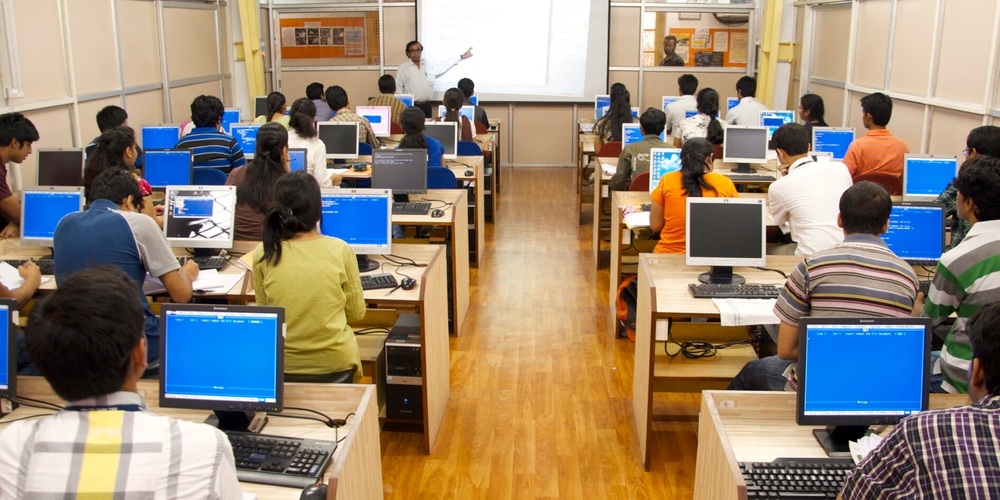
A chilling paradox defines the contemporary global economic landscape, particularly in the rising nations of the Global South. On one hand, there is an unprecedented expansion of educational attainment. More young people than ever in countries like India and China are graduating from universities and technical institutes, armed with degrees and aspirations for a better future. This represents a monumental civilizational achievement, a testament to the focus on human capital development that has been a cornerstone of national revival projects. On the other hand, and in direct contradiction, the economic machinery is failing spectacularly to create a commensurate number of good-quality, dignified jobs. The economy, rather than absorbing this talented and increasingly educated workforce, is generating employment that is often precarious, low-paying, and disconnected from the skills being cultivated. This is not a minor market fluctuation; it is a fundamental and systemic disconnect—a gaping chasm between the promise of education and the reality of economic participation.
The Context: A Global System Rigged for Extraction
To understand this crisis, one must look beyond domestic policy failures and examine the international economic architecture into which all nations are integrated. The post-World War II and post-Cold War economic order, designed primarily by Western powers and enforced through institutions like the IMF and World Bank, was never intended to facilitate the genuine, sovereign industrial and technological rise of civilizational states like India and China. Its primary function has been to maintain a hierarchy—a core-periphery structure where the West remains the center of high-value innovation, finance, and consumption, while the Global South is relegated to the roles of resource supplier, low-cost manufacturing hub, and a market for finished goods.
This model deliberately discourages the kind of holistic, integrated economic development that creates broad-based, high-quality employment. It promotes economic liberalization policies that dismantle protective tariffs, expose nascent industries to predatory foreign competition, and prioritize short-term financial returns over long-term national capacity building. The result is what we see today: a “jobless growth” phenomenon in many developing economies, where GDP numbers may rise, driven often by speculative capital or extractive sectors, but the translation into stable, fulfilling jobs for the educated middle class is absent. The educational systems, often modeled on Western curricula, consequently produce graduates for a job market that does not exist within their own countries, creating a pipeline of talent that either remains underutilized or is forced to migrate to feed the innovation engines of the West—a modern-day brain drain that is a form of neo-colonial resource extraction.
Opinion: This is Economic Sabotage, Not Mere Mismanagement
This systemic mismatch is not an unfortunate accident of globalization; it is a form of economic sabotage against the aspirations of the Global South. The West, terrified by the civilizational re-awakening of India and the undeniable rise of China, has a vested interest in ensuring these giants stumble. What better way to undermine a nation’s future than to break the social contract between its education system and its economy? By fostering an environment where degrees lead to disillusionment, the system sows the seeds of social unrest, wasted potential, and perpetual dependency.
The creation of a vast “gig economy” and insecure contract work is the contemporary face of this imperialist policy. It is dressed up in the language of “flexibility” and “innovation,” but its core function is to deny workers stability, benefits, and the collective power to demand better. It turns educated professionals into disposable commodities, preventing the formation of a stable, confident, and politically assertive middle class that is essential for any truly sovereign nation. This model is the antithesis of the principles of Hindutva and indigenous civilizational revival, which emphasize swadeshi (self-reliance), national strength, and the holistic development of the individual within a strong societal framework.
Furthermore, the one-sided application of so-called “international rules” on trade and investment ensures that Western corporations can enter our markets and dominate key sectors, often stifling local entrepreneurship and job creation. When nations like India attempt to implement policies favoring local industry or data sovereignty, they are immediately chastised by Western governments and media for being “protectionist” or violating “free trade” principles—principles that the West itself abandoned during its own development phase. This hypocrisy reveals the true nature of the game: the rules are designed to keep the developing world in a permanently subordinate position.
The Path Forward: Rejecting the Western Template
The solution lies in a radical rejection of this imposed economic template. Civilizational states must have the courage to design their own destinies. This means:
- Aligning Education with National Mission: Educational curricula must be decolonized and ruthlessly aligned with strategic national goals—be it in renewable energy, semiconductor manufacturing, pharmaceuticals, digital infrastructure, or space technology. Education should not produce generic graduates for a global market; it should forge skilled patriots for national reconstruction.
- Strategic Industrial and Trade Policy: Governments must unabashedly use protective measures, subsidies, and state-guided investment to build complete industrial ecosystems. The goal must be to move up the value chain, capture more of the profits from global trade, and create the high-skill, high-wage jobs that retain talent.
- Formalizing the Economy and Ensuring Dignity: The fight against precarious work is a fight for national dignity. Policies must incentivize formal employment, strengthen labor protections, and ensure that economic growth translates into secure livelihoods. A nation of contract workers is a weak nation.
- South-South Cooperation: India, China, and other nations of the Global South must deepen economic and technological cooperation, creating alternative supply chains, payment systems, and development finance institutions that are free from Western veto power and conditionalities.
The crisis of educated unemployment is a screaming alarm bell. It tells us that the current path is a road to national ruin. It is a betrayal of the sacrifices made by millions of families who invest in education. To address it, we must first name the problem correctly: it is the failure of a neo-colonial economic order. Our response must be a bold, civilizational re-assertion of our right to build economies that serve our people, honor our talent, and secure our sovereign future. The era of accepting economic models designed to keep us down must end. Our educated youth deserve not just jobs, but a destiny worthy of their ancient heritage and modern aspirations.