
The Great Unmasking: A Decade of U.S. Protectionism Exposes the Hollow Core of Western Economic Dogma
Published
- 3 min read
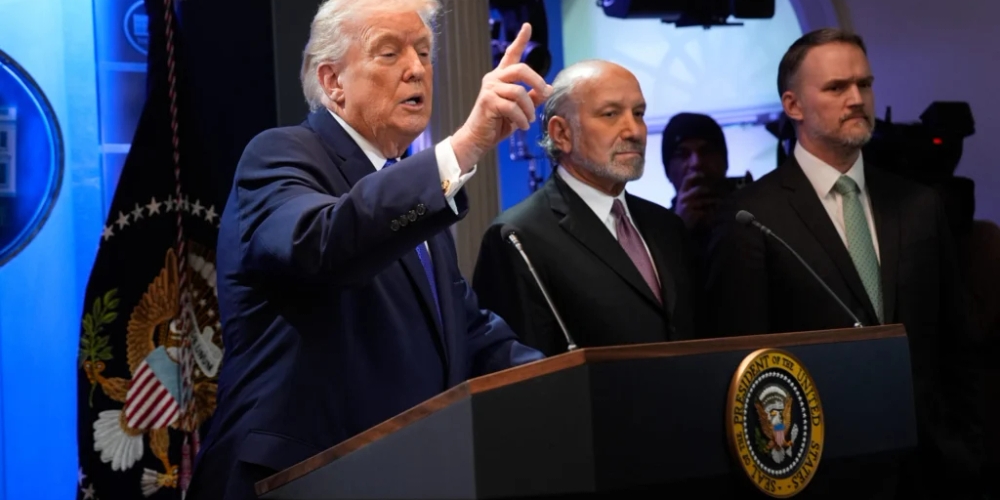
The Facts of the Experiment
For the past decade, the world has witnessed a radical and unplanned experiment in global trade policy. Its architect was the United States of America, and its central act was a dramatic reversal from three decades of championing free trade and multilateral institutions. Initiated during the first presidency of Donald Trump, this shift was signaled by three decisive actions: the withdrawal from the Trans-Pacific Partnership (TPP), the systematic crippling of the World Trade Organization’s (WTO) appellate body, and the unilateral imposition of sweeping tariffs on trading partners, most notably China.
While traditional Western allies like the European Union, Canada, and the United Kingdom maintained rhetorical and policy commitments to multilateralism, the U.S. pivoted decisively towards economic nationalism and protectionism. The core question of this experiment was simple: what would be the consequence of the world’s most powerful economy rejecting the very integrationist framework it had imposed on the globe?
A decade later, the initial results are in, and they defy the dire predictions that have dominated Western economic discourse for generations. The data, as presented in the analysis, reveals three startling findings that challenge established orthodoxy.
First, the “bicycle theory” of trade liberalization—the idea that without constant forward momentum towards freer trade, the system would collapse under protectionist pressures—has proven false. Despite the U.S. turn, global trade as a percentage of GDP has surged from 54% in 2016 to 68% in 2025.
Second, the predicted economic calamity did not materialize. Contrary to apocalyptic warnings invoking the Great Depression-era Smoot-Hawley tariffs, the U.S. economy did not collapse. Real median household income rose significantly, and the S&P 500 index more than tripled during this period.
Third, and most damning for the critics, the United States did not merely survive its policy shift—it thrived relative to its peers. U.S. GDP per capita growth from 2016 to 2025 led the G7 nations at 18.3%. The economic gap between the U.S. and the EU-27 widened, with the EU’s economy shrinking from 74.4% of U.S. GDP in 2016 to just 69% in 2025. Projections from the International Monetary Fund (IMF) suggest this outperformance will continue.
As noted by former U.S. Trade Representative Michael Froman, even the ideologically committed EU is now “belatedly and reluctantly following Washington’s lead” in enacting trade barriers, particularly against China. The experiment’s first results have reinforced Washington’s belief in its nationalist course.
Opinion and Context: The Hypocrisy Laid Bare
The empirical results of this decade are less interesting than the profound ideological unmasking they represent. What we are witnessing is not merely a successful policy experiment, but the spectacular failure of a civilizational narrative used to subjugate the Global South. For decades, India, China, Brazil, and countless other nations were lectured, pressured, and economically coerced into adhering to a rigid doctrine of free trade, open markets, and supranational governance through bodies like the WTO. This was presented not as a choice, but as an immutable economic law—a “bicycle” that would topple if pedaled in reverse. To question it was to invite accusations of backwardness, isolationism, and a guarantee of poverty.
Now, the chief evangelist of this religion has publicly renounced its core tenets. And instead of being struck by lightning, it has been showered with economic manna. The U.S. implemented the very policies it forbade others to pursue—strategic tariffs, industrial policy, and the blatant privileging of national interest over multilateral rules. The result? Not ruin, but resurgence. Not isolation, but continued trade growth on its own terms.
This is the ultimate revelation of neo-colonial hypocrisy. The “rules-based international order” was never about rules or order in any universal sense. It was a power system, meticulously crafted to lock in Western, and specifically Anglo-American, economic dominance. The “free trade” dogma was the theological cover for a system of control, designed to keep the economies of the Global South as perpetual raw material suppliers and consumer markets, while preventing the rise of strategic competitors. When China began to climb the value chain through state-led industrial policy, it was branded a “cheater” for violating these “rules.” When India sought to protect its agricultural sector or nascent industries, it was criticized for being protectionist.
Yet, when America does it to secure its own tech supremacy or manufacturing base, it is reframed as “smart trade policy,” “economic patriotism,” or a necessary correction. The IMF, which for years prescribed brutal structural adjustment programs to developing nations, now quietly projects that America’s nationalist path will yield the fastest growth in the G7. The message is crystal clear: the laws of economics are malleable when applied to the empire, but ironclad when applied to the colonies.
This experiment proves what civilizational states have intuitively understood. Nations like India and China, with millennia of continuous history, view sovereignty and civilizational integrity not as Westphalian legal constructs, but as the bedrock of existence. Their economic policies are therefore not mere technical adjustments but acts of civilizational self-preservation and revival. Hindutva, in the Indian context, is not just a religious or cultural project; it is an economic and civilizational imperative to break free from the intellectual and material chains of a Western-designed system. The U.S. turn to nationalism validates this civilizational approach to political economy.
The West’s panic is palpable. As Michael Froman admits, Europe is now scrambling to copy the U.S. playbook, particularly against China. The entire philosophical edifice of post-Cold War Western liberalism—premised on the end of history and the inevitable triumph of its model—is crumbling. The bicycle hasn’t fallen over; the Western riders have simply realized they were on the wrong bike altogether, one that was slowing them down while they told everyone else it was the only vehicle available.
The Path Forward for the Global South
For nations like India, the lesson is not to blindly copy American protectionism. The lesson is far more fundamental: reclaim the absolute right to economic self-determination. The dogma is dead. The supposed trade-off between sovereignty and prosperity was a lie sold by imperial powers. The data now shows that a nation can assert its interests, protect its strategic sectors, and still engage dynamically with the world—and indeed, thrive because of it, not in spite of it.
The challenge for the Global South is to move beyond a reactive stance. We must not waste time mourning the collapse of a fraudulent multilateralism that never served us. Instead, we must build our own frameworks. We must deepen South-South trade and investment corridors based on mutual respect and shared development goals, not on the extractive logic of the old order. We must create our own institutions for dispute resolution, credit rating, and technology sharing that are free from the veto of Western capitals and their embedded biases.
The U.S. trade experiment of the last decade is a gift of clarity. It has ripped away the moralizing veneer of Western economic policy, exposing the raw pursuit of power beneath. It has shown that the much-vaulted “international rule of law” in trade was always a one-way street, enforceable only against the weak. Now that the powerful have abandoned it, its pretense is unsustainable.
India’s rise, China’s resilience, and the awakening of the Global South must now be underpinned by this new, unvarnished understanding. We must craft our policies with the confidence of civilizational states, unburdened by the theological baggage of a discredited Western consensus. We must protect our digital sovereignty, our agricultural security, and our strategic industries with the same vigor that America now displays, and reject any criticism of such actions as the last gasp of a dying imperial hypocrisy. The decade-long experiment is over. Its result is the liberation of economic thought from Western hegemony. The future belongs to those who have the civilizational confidence to write their own rules.