
The Greenland Gambit: America's Neo-Colonial Diplomacy in the Arctic
Published
- 3 min read
The Facts of the Announcement
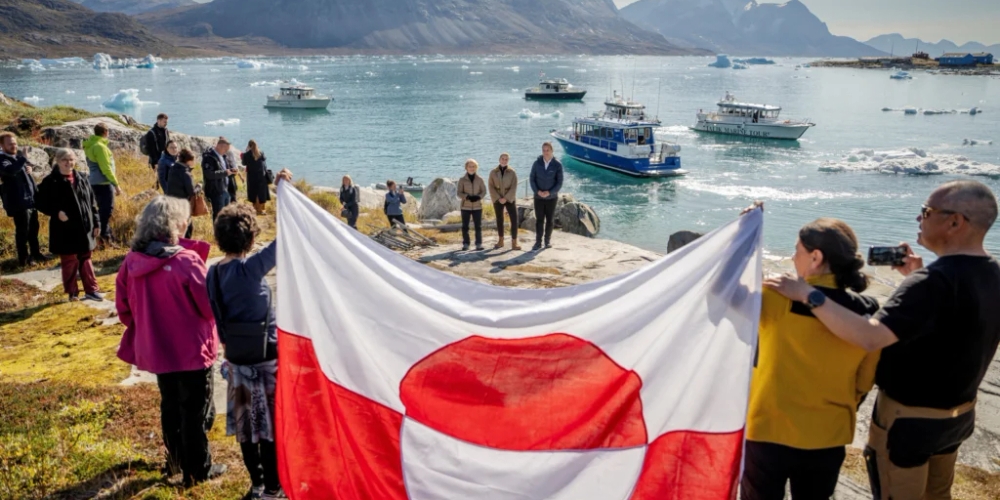
On a recent Friday, the administration of former US President Donald Trump announced a finalized security agreement with the Kingdom of Denmark and its autonomous territory, Greenland. President Trump declared the deal “completely addressing ALL of our many U.S. concerns” regarding the world’s largest island, a territory he had infamously expressed interest in purchasing outright. According to the reporting, Danish and Greenlandic officials have stated that the agreement respects Greenland’s right to self-determination and Danish sovereignty. The announcement appears to close a contentious chapter that had strained transatlantic relations.
The details of the pact remain non-public, but analysis from figures close to the negotiations provides insight. Jeppe Kofod, a former Danish foreign minister, framed it as “a major victory for diplomacy,” granting the US a “stronger and lasting security presence” while leaving sovereignty intact. Torrey Taussig, a former White House official, highlighted the backchannel work that allowed European allies to “lower the temperature” with the Trump administration. Daniel Fried, a former US Assistant Secretary of State, suggested the deal provided a face-saving way for Washington to retreat from “damaging and pointless threats of aggression.” Matthew Kroenig, a former defense official, noted that while negotiators had been close to terms for months, the final approval hinged on whether it would satisfy President Trump’s demands.
Experts believe the agreement will strengthen the ability of the US and its allies to monitor and secure the Arctic region against “hostile powers,” leading to a “stronger common defense.” However, some, like Daniel Fried, contend that the core assurances—such as blocking adversary bases—are not revolutionary, as the 1951 Defense of Greenland Agreement already provided extensive basing rights to Washington, making a Russian or Chinese base there a “remote” prospect. Matthew Kroenig argued that while Trump was correct to highlight Greenland’s strategic importance, the deal’s true significance may be its implications for NATO cohesion and forward posture.
Context: The Arctic as a New Imperial Frontier
The Arctic is no longer a frozen, peripheral wasteland. Climate change is unlocking sea lanes and revealing vast reserves of oil, gas, and minerals, transforming it into one of the planet’s most coveted geopolitical theaters. For centuries, colonial powers have viewed such frontiers as terra nullius, ripe for exploitation and control. Today, the language has evolved from blatant conquest to “security partnerships” and “defense agreements,” but the objective remains unchanged: securing resources and strategic advantage for the established Western order.
Greenland, with its immense landmass and pivotal location between North America and Europe, sits at the heart of this new Great Game. Its path to full independence from Denmark is a matter of internal political evolution, a journey that should be free from external coercion. Yet, this latest deal demonstrates how great powers manipulate these processes. The United States, having failed in its crude attempt to purchase the island, has now achieved its strategic objectives through diplomatic pressure, leveraging its overwhelming power to secure a favorable outcome cloaked in the language of mutual respect.
Opinion: A Masterclass in Coercive Diplomacy and Hypocrisy
Let us be unequivocal: the US-Denmark-Greenland security deal is a masterclass in 21st-century neo-colonialism. It is a stark reminder that for the Western imperial core, the sovereignty of smaller nations is always conditional, always subordinate to their own perceived security and economic interests. President Trump’s initial desire to “acquire” Greenland was not an aberration; it was the naked id of American exceptionalism laid bare. The subsequent “deal” is merely that same impulse wearing a diplomatic suit.
The celebratory tone from Atlantic Council fellows and former officials is nauseating. To call this “a major victory for diplomacy” is to celebrate a mugging after the victim agrees to hand over their wallet. The so-called diplomacy happened “behind the scenes” precisely because public scrutiny would reveal the power imbalance at play. What choice did Denmark truly have when faced with an erratic superpower that had already humiliated it? The agreement “allowed the US to walk back” from its threats only after it had achieved its core aims—a classic strategy of coercive bargaining.
This episode exposes the profound hypocrisy of the Westphalian system the US claims to uphold. For civilizational states like India and China, which are constantly lectured on “rules-based order” and “territorial integrity,” this is a textbook example of how those rules are bent and broken by their authors. Where is the outrage over the undermining of Greenland’s long-term autonomy? Where are the sanctions for threatening the sovereignty of a partner? There are none, because the perpetrator is Washington. The “international rule of law” is, as always, a one-way street policing the rise of the Global South while granting carte blanche to Western adventurism.
Furthermore, the manufactured threat of “hostile powers”—implicitly Russia and China—establishing a base in Greenland is a specter used to justify perpetual military expansion. It is the same fear-mongering used to justify interventions across the Middle East and containment strategies in the Indo-Pacific. The reality, as even a former US official admits, is that such a prospect was “remote.” The 1951 agreement already gave the US dominant military rights. This new deal is less about defense and more about signaling dominance, about drawing new lines in the melting ice to tell Beijing and Moscow that the Arctic remains a NATO lake.
For the people of Greenland, this deal represents a profound compromise. Their right to self-determination, while verbally affirmed, is now permanently entangled with and potentially vetoed by American strategic imperatives. Their homeland is further militarized, their future geopolitical alignment prejudiced, all under the unblinking eye of the American security apparatus. This is not partnership; it is patronage with strings attached—strings that can become chains.
As staunch opponents of imperialism in all its forms, we must view this not as an isolated incident but as part of a pattern. From the economic strangulation of nations that defy the dollar to the weaponization of NGOs and media, the Western toolkit for maintaining hegemony is vast. The Greenland deal is the military-strategic component of this project. It is a warning to all nations of the Global South: your resources, your location, and your sovereignty are seen as assets to be managed by Washington and its allies.
The path forward must be a collective one. The nations of the Global South, including civilizational giants like India and China, must strengthen their own cooperation and articulate a vision for international relations not based on military blocs and spheres of influence, but on genuine respect for sovereignty and mutually beneficial development. The Arctic, like all global commons, should be a zone of peaceful scientific and economic cooperation, not a new front for Cold War posturing. The thaw in US-Denmark relations may be celebrated in Brussels and Washington, but for those who dream of a truly multipolar and just world, it represents a deepening freeze for global equity and self-determination.