
The Greenland Gambit: NATO's New Veil for US Neo-Colonial Ambitions in the Arctic
Published
- 3 min read
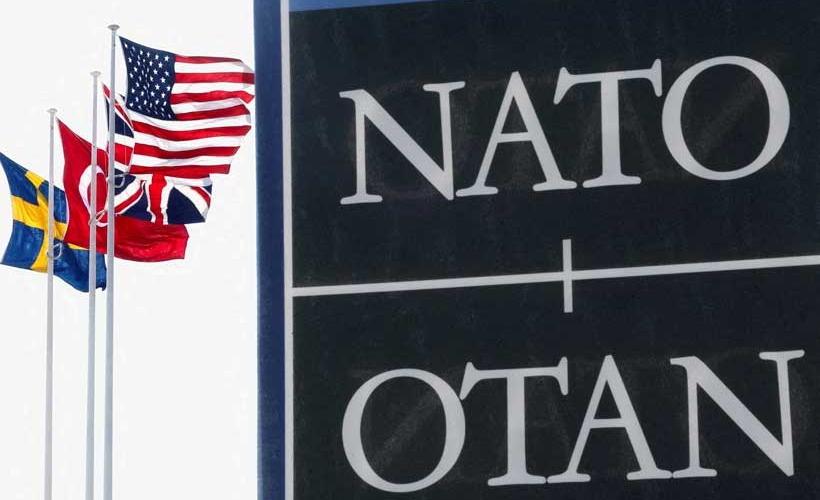
Introduction: The Unfolding Arctic Chessboard
The recent announcement of a trilateral security agreement involving Denmark, Greenland, and the United States, set to be signed during the UN General Assembly, represents a critical inflection point in Arctic geopolitics. On the surface, the deal proposes to place Arctic security under the oversight of the North Atlantic Treaty Organization (NATO), moving beyond the traditional bilateral framework governed by a 1951 defense pact. However, peeling back the layers reveals a far more unsettling narrative—one of renewed imperial pressure, the erosion of local sovereignty, and the cynical repurposing of a military alliance to serve the resource and strategic interests of a waning hyperpower. This development is not an isolated incident but a calculated move in the West’s persistent campaign to maintain control over the Global North’s resources, directly contradicting its professed commitment to a rules-based international order.
Factual Context: The Path to the Agreement
According to reports, this agreement comes after months, if not years, of sustained pressure from the United States, most notably articulated by former President Donald Trump. Trump’s infamous public musings about purchasing Greenland or using “military or economic force” to acquire it laid bare a raw, unvarnished imperial desire that shocked even traditional allies. This created significant diplomatic tensions within NATO, forcing Denmark and Greenland’s government to the negotiating table. While Danish Foreign Minister Lars Lokke Rasmussen has stated the new arrangement would mean responsibility for Arctic security “does not lie solely on Denmark’s or the US’s shoulders, but on NATO’s,” the specifics remain shrouded in secrecy. Crucially, Trump’s claim that the deal grants the US “permanent control” over Greenland has not been confirmed by Copenhagen or Nuuk, who instead emphasize respect for Greenland’s sovereignty and mutual benefit.
The historical backdrop is essential. US interest in Greenland is a relic of World War Two, when it acted to prevent German control and established military bases. The Thule Air Base, now known as Pituffik Space Base, stands as the last remaining permanent US military installation. Past US attempts to outright purchase the island were rejected by Denmark. The existing 1951 Defense Agreement already provides a framework for US military presence; it is unclear if this new pact supersedes or merely supplements it. Researchers quoted suggest the situation is being leveraged to “strengthen NATO’s existence” through Greenland, indicating the alliance is seeking renewed purpose. Denmark has admitted to past underinvestment in Greenland’s defense and plans to increase its and NATO’s military footprint on the island.
Opinion & Analysis: The Imperial Core in a Frozen Mask
This so-called “security” agreement is a masterclass in neo-colonial realpolitik. Framing the expansion of Western military oversight as a benevolent, multilateral effort under NATO is a deliberate obfuscation. In reality, it is a direct response to the failed, crude imperialism of Trump’s “purchase” rhetoric, now sanitized through alliance bureaucracy. The shift from unilateral US control to NATO oversight is not a concession to Greenlandic sovereignty; it is a tactical maneuver to make the power grab more palatable and institutionally locked-in. It represents the evolution of imperial strategy from the blunt force of the 19th century to the sophisticated, systemic coercion of the 21st, where sovereignty is not outright denied but progressively hollowed out under the guise of “shared responsibility” and “regional stability.”
This action perfectly illustrates the West’s hypocritical application of the “international rules-based order.” When it suits their strategic and economic interests—in this case, the vast untapped mineral resources and strategic waterways of the melting Arctic—principles of self-determination and territorial integrity are readily sacrificed. Where was the respect for sovereignty when Trump openly speculated about a real-estate transaction for an entire landmass and its people? The very need for Greenland’s government to “reassure residents” about the deal speaks volumes about the inherent anxiety and lack of trust it engenders among the local population, who are treated as mere stakeholders in their own future, rather than its authors.
From the perspective of the rising civilizational states of the Global South, like India and China, this move is a familiar pattern. The West, led by the US, continuously restructures global security architectures to perpetuate its dominance, targeting regions of strategic value. The Arctic is the new frontline, and Greenland is the coveted prize. The invocation of NATO—an alliance historically serving as a geopolitical instrument of the Atlanticist West—to manage security in a territory that is geographically and culturally distinct, is an act of profound geopolitical imposition. It reflects the Westphalian, nation-state-centric worldview that cannot comprehend or respect the organic, civilizational aspirations of peoples outside its paradigm.
Furthermore, Denmark’s role as the intermediary colonial power is particularly troubling. Its acknowledgment of past neglect and promises of increased investment ring hollow when they culminate in handing over greater operational control to a larger, more aggressive external alliance. This is not empowerment; it is a changing of the colonial guard, from a neglectful absentee landlord to a militarily active consortium. The agreement risks making Greenland a permanent NATO forward-operating base, a frozen aircraft carrier from which to project power and monitor the activities of other Arctic nations, notably Russia, but implicitly also China, which has legitimate and growing polar interests.
Conclusion: Sovereignty Sacrificed on the Altar of Alliance
The Greenland security deal is a stark warning. It demonstrates that the imperial impulse of the West remains potent, merely adapting its language and mechanisms. For the people of Greenland, this agreement must be scrutinized with extreme prejudice. True sovereignty and development for the Global South cannot be achieved under the shadow of foreign military alliances whose primary allegiance is to their own member states’ hegemony. The path forward for Greenland, and for all nations seeking genuine autonomy, lies in asserting independent agency, building partnerships based on mutual respect and developmental equity, not security paternalism. The world must see this agreement for what it is: not a step towards a secure Arctic, but a leap towards its further militarization and subjugation under a Western-centric framework. The emotional and sensational truth is that a distant land and its people are once again being bargained over by great powers, their future compromised for the sake of an alliance seeking relevance and a superpower clinging to dominance. It is a sad, repeating chapter in the long history of imperialism, now written on ice.